Boutique
Hotel Morgan
Boutique
Hotel Morgan
Transformation of a Stone House into a Boutique Hotel
Boutique Hotel Morgan was created through the transformation of an existing traditional Istrian house into an intimate and visually distinctive hospitality destination. The project encompassed both the interior and exterior design of the property, with a focus on the reception area, apartment suite, individually designed guest rooms, bathrooms, circulation spaces, and outdoor lounge and pool areas.
The design concept is based on a balance between the building’s original character and contemporary comfort. Existing stone elements, wooden flooring, dark accents, gold details, wallpapers, textiles, and carefully selected statement furniture pieces create an atmosphere that bridges the charm of a historic home with the expectations of a modern boutique hotel.
The 277 m² interior was conceived as a sequence of connected yet distinctive spaces—from the striking reception area to guest rooms with individual identities, and exterior areas that extend the hotel experience towards the pool, scenic views, and the surrounding Mediterranean landscape.
Boutique hotel
Bracanija,
Buje, Istra
Interior and Exterior Design
277 m²
Reception Area, Apartment Suite, Guest Rooms, Bathrooms, Pool Area, and Outdoor Lounge Spaces
Reception as the First Impression
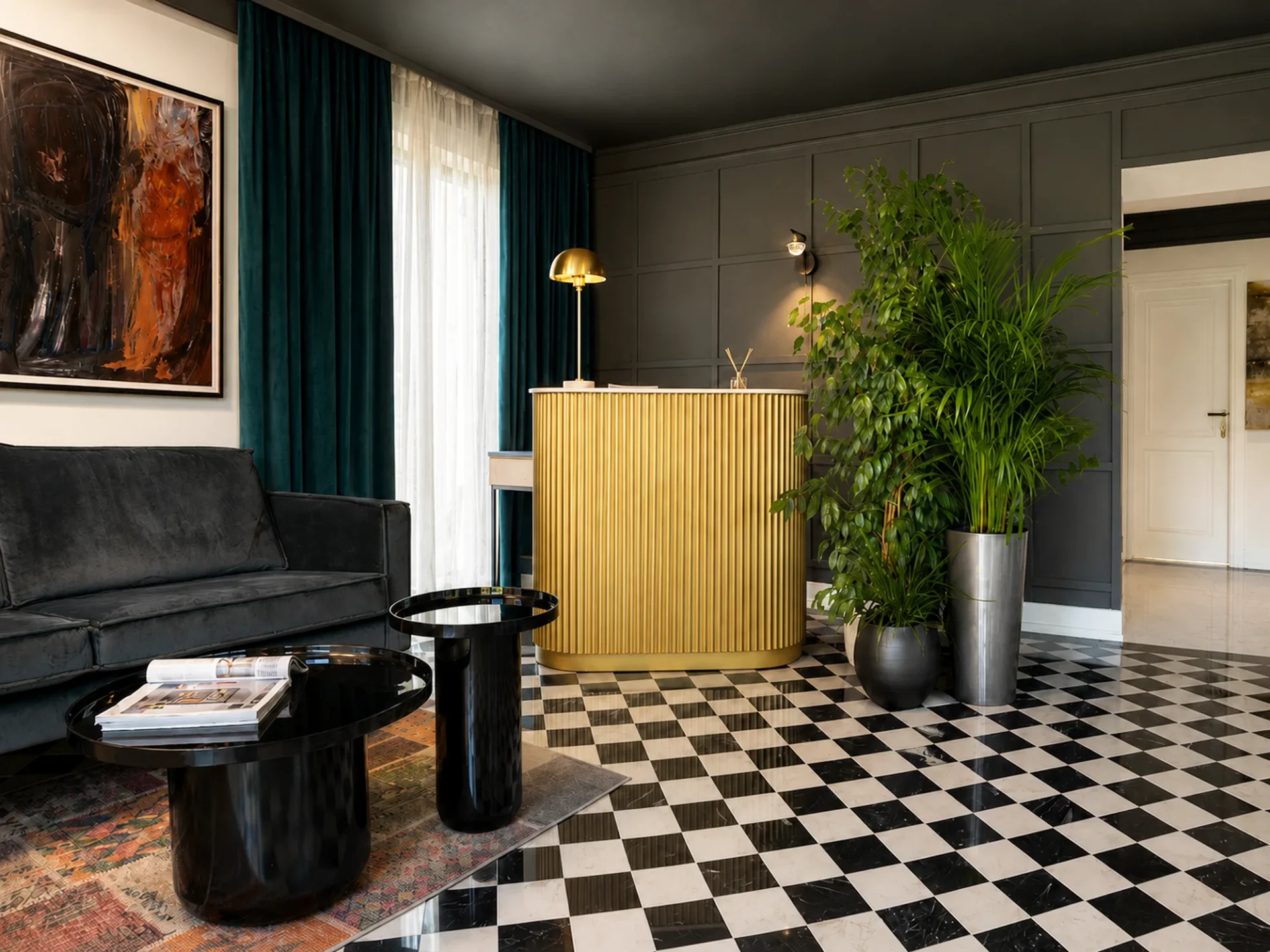
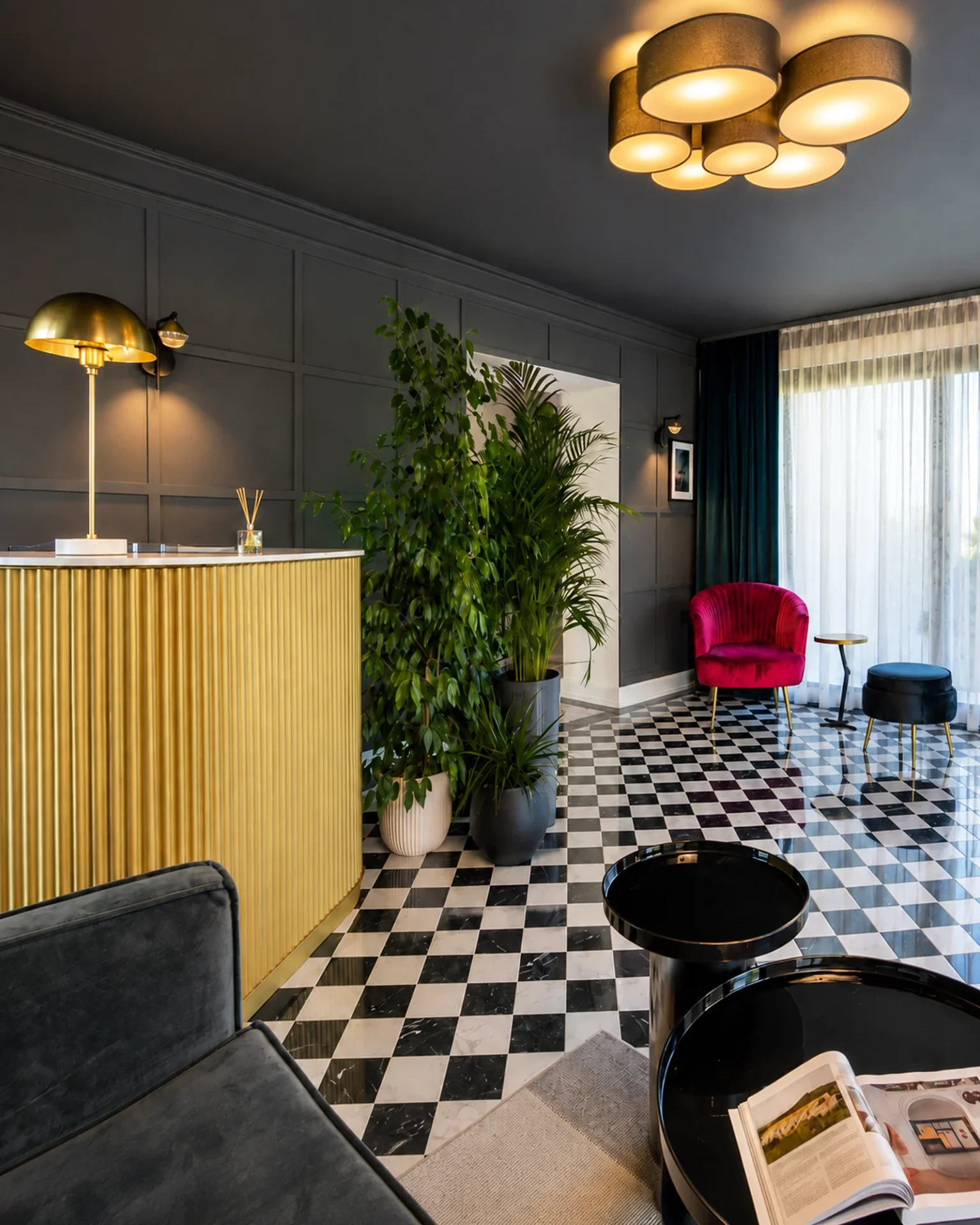
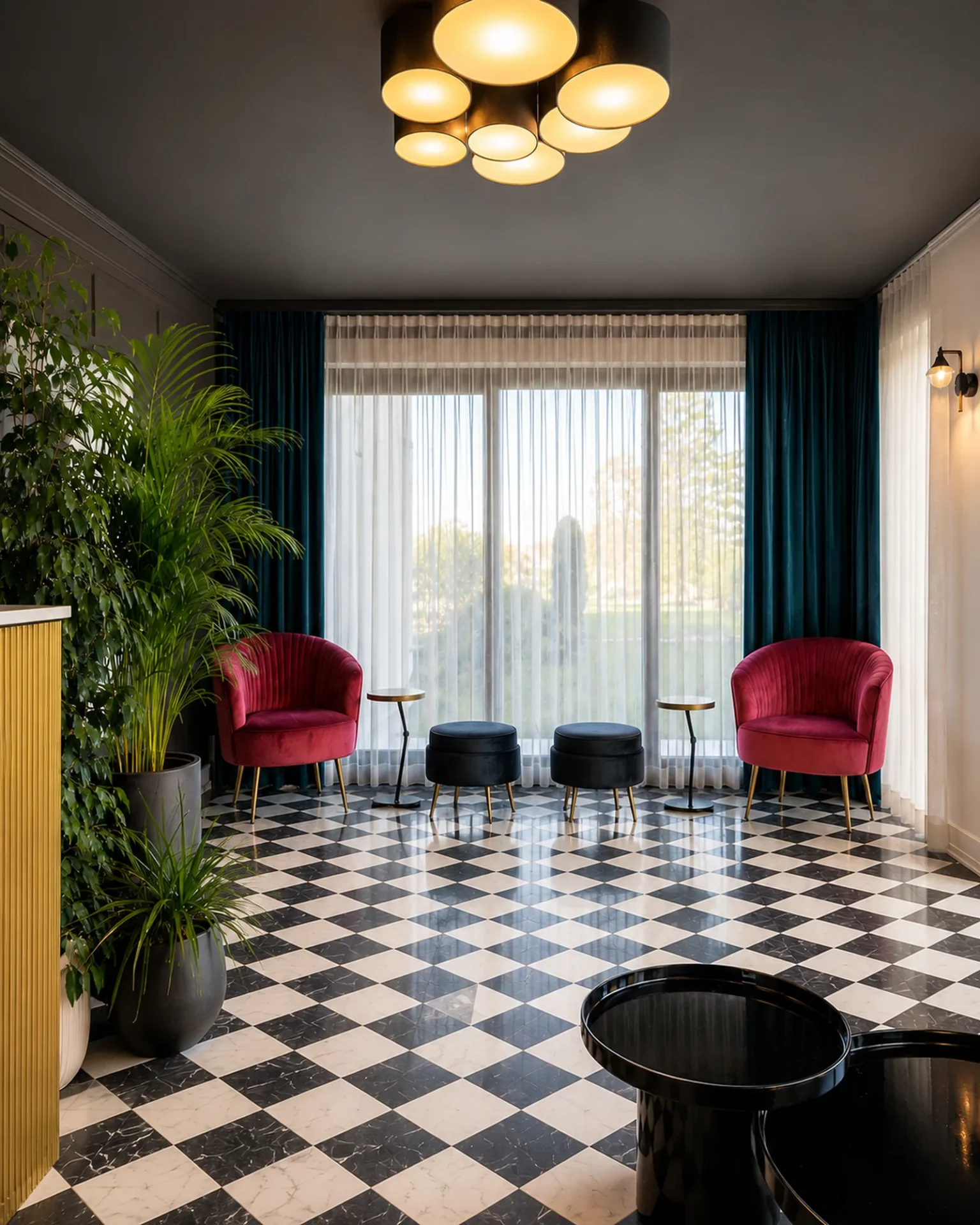
The reception area is designed as the guest’s first strong encounter with the hotel’s identity. Dark wall surfaces, a gold reception counter, a checkerboard stone floor, plush accents, plants, and salon-style furniture create a space that functions not only as a point of arrival, but as an introduction to the hotel’s overall atmosphere.
The contrast between classical elements and contemporary details is most pronounced here: the space is dramatic, yet restrained; decorative, yet functional; hotel-like, yet with the feeling of a private residence.
A Space Between Arrival and Stay
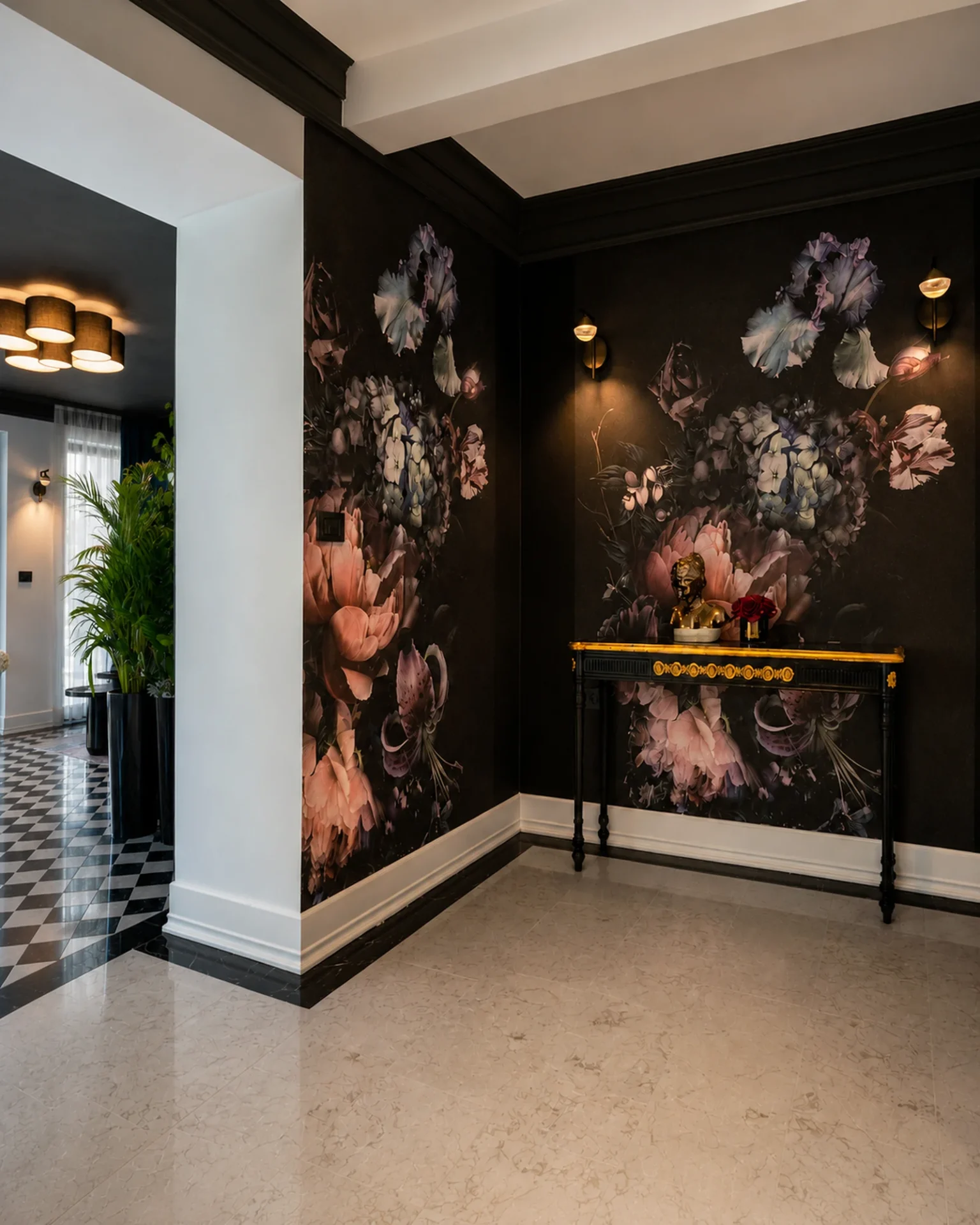
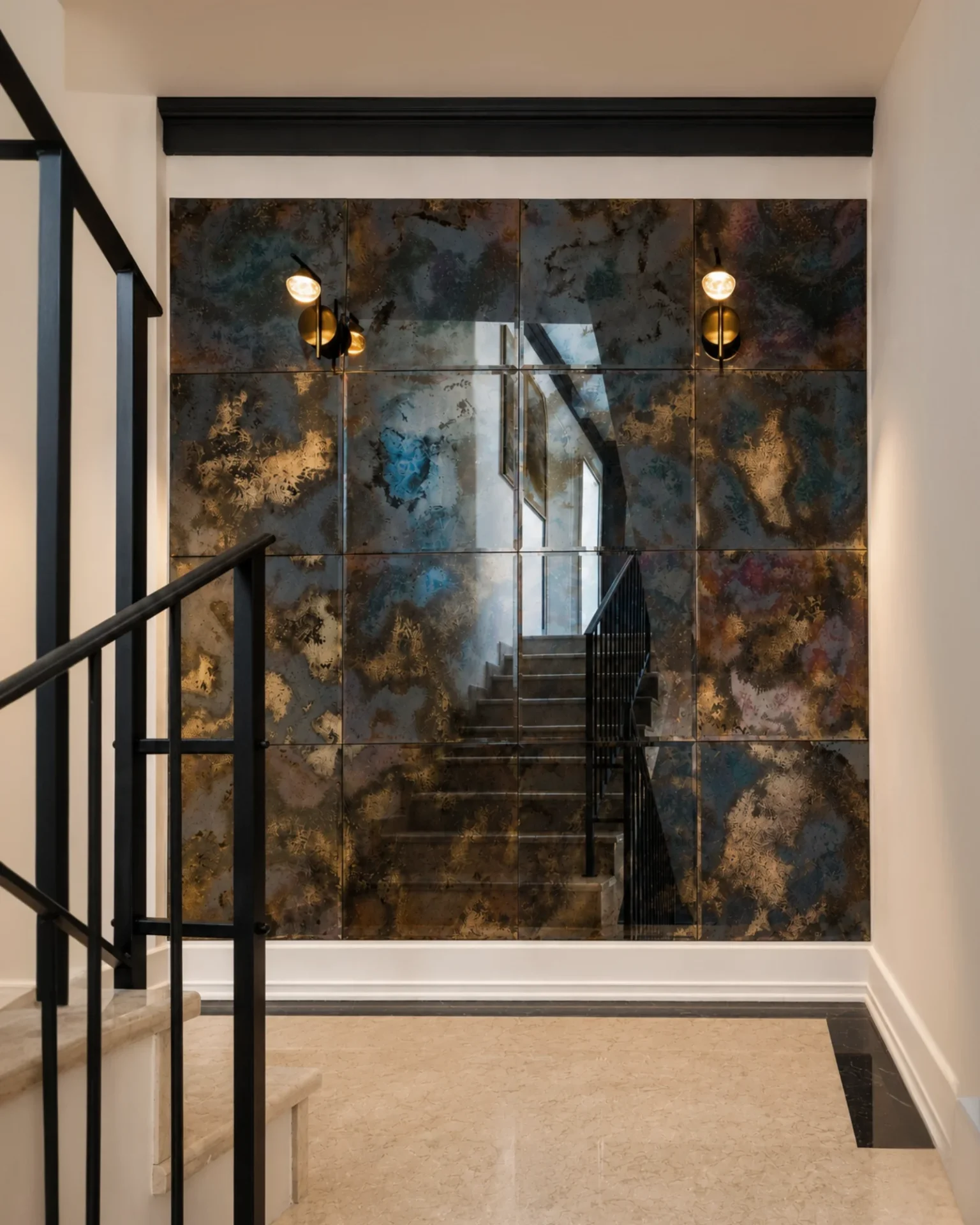
The circulation spaces are not treated as neutral passageways, but as an integral part of the hotel’s atmosphere. The hallway, staircase, dark floral wallpapers, mirrored panels, black railing, and carefully positioned lighting connect the more public and private areas of the building into a continuous spatial experience.
It is precisely these transitional moments that give the project a sense of layering—the guest does not simply move from one room to another, but passes through a series of carefully composed ambiences
Royal Suite
An apartment unit with the character of an old stone house.
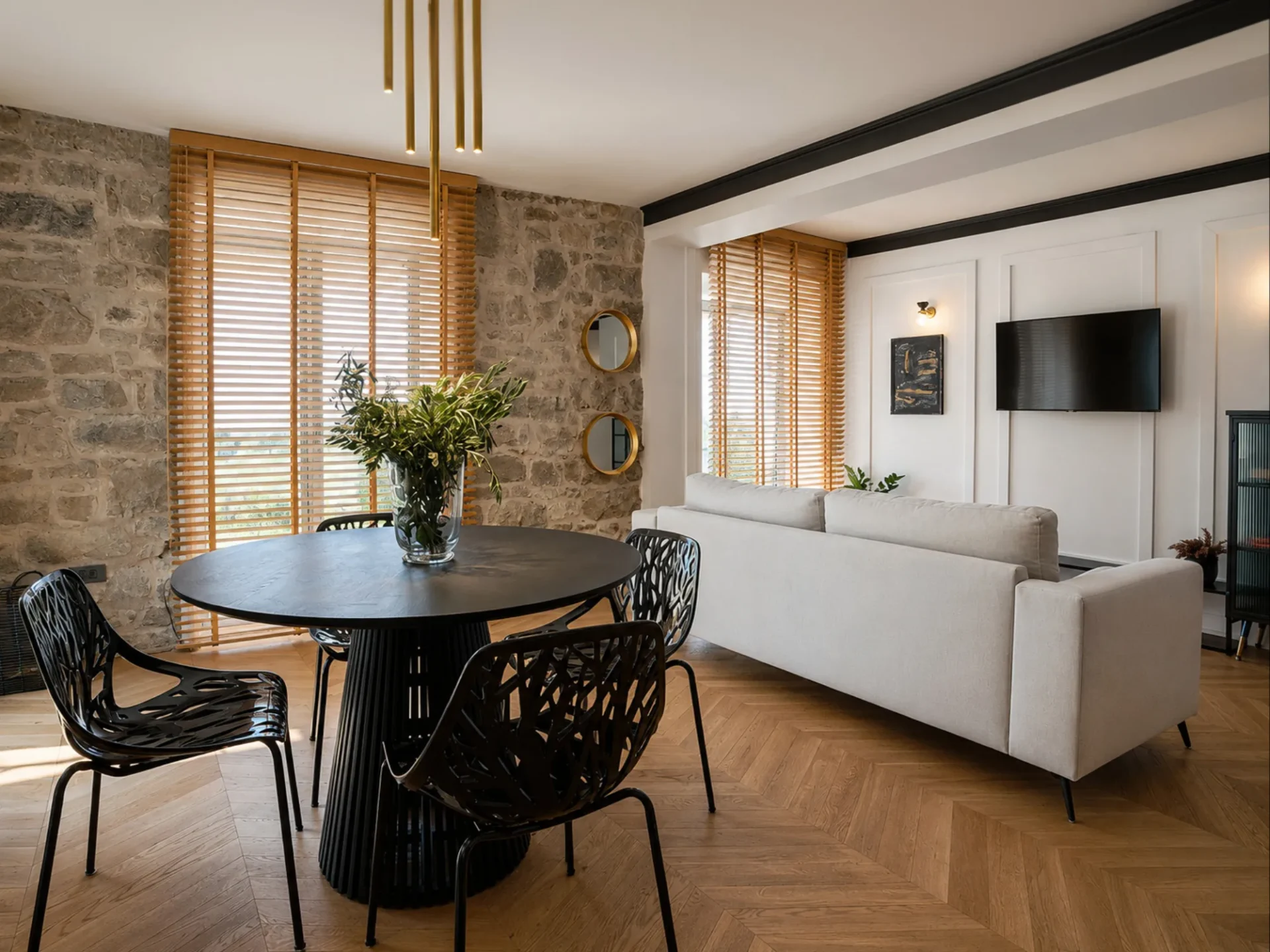
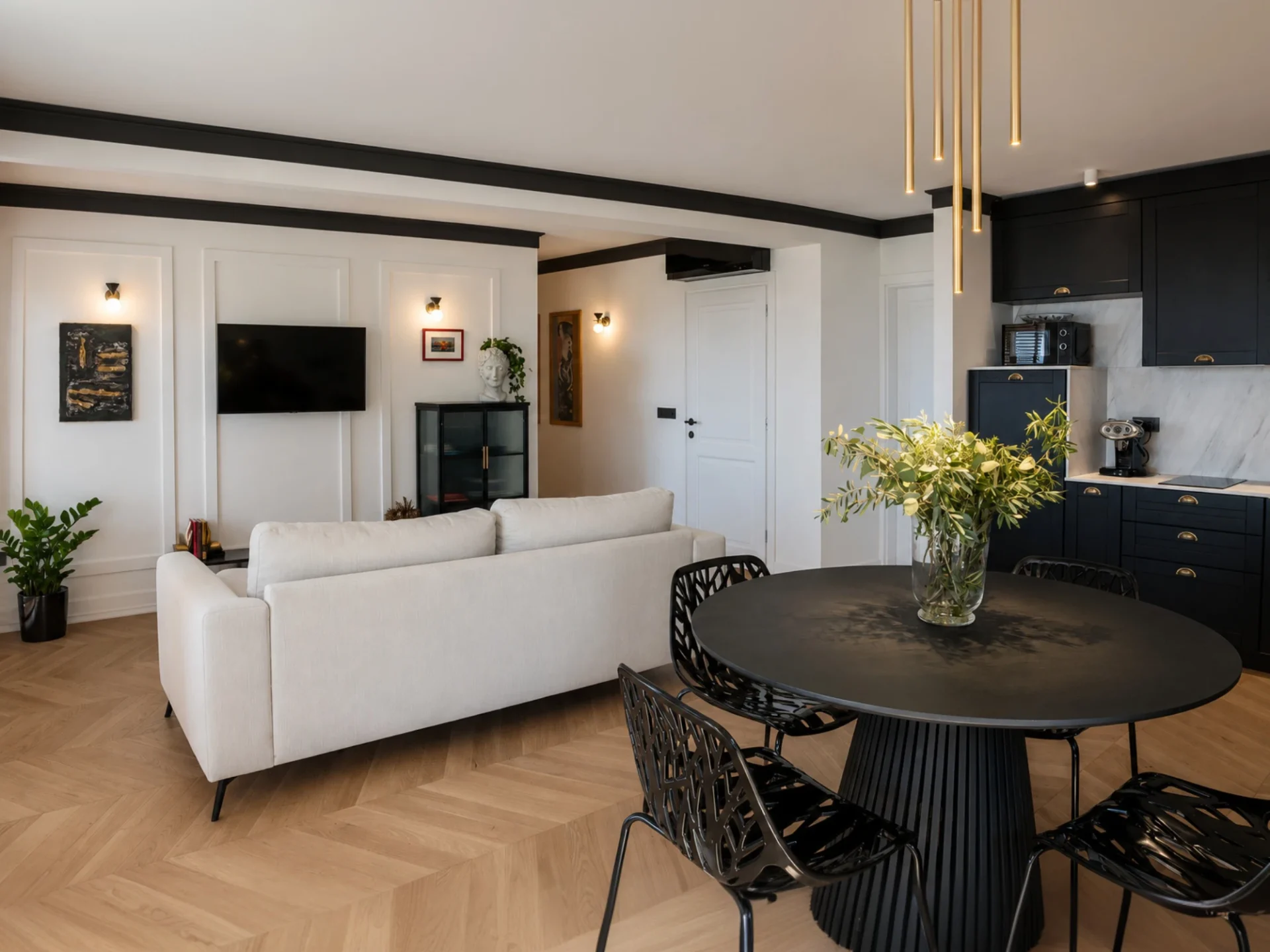
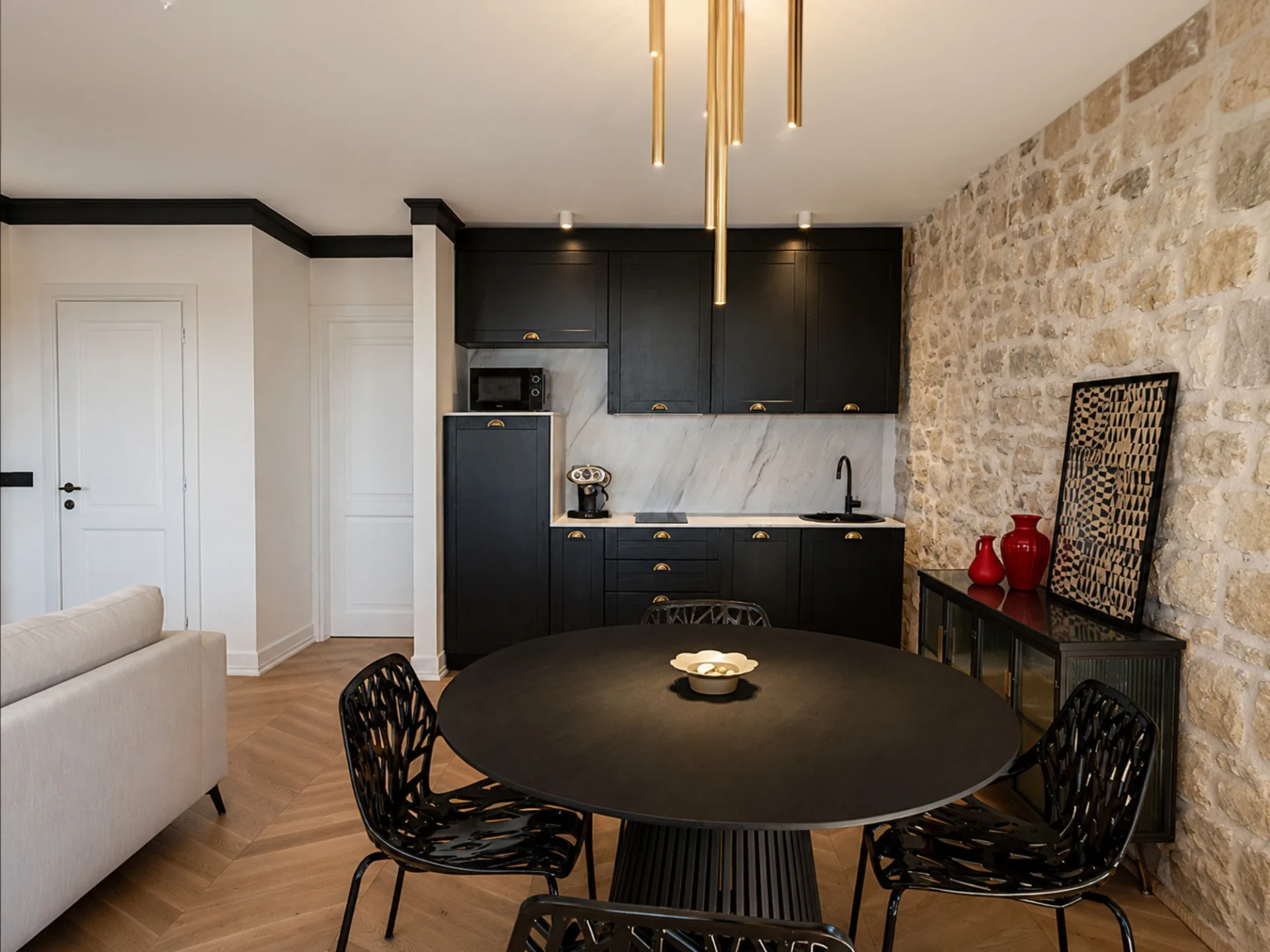
The apartment suite is designed as a more open, residential part of the hotel. It clearly expresses the relationship between the original stone structure and the contemporary interior: stone walls, chevron wooden flooring, a black kitchen, a geometric dining table, gold details, and soft textiles create a space that preserves the essence of a historic home while functioning as a refined hospitality unit.
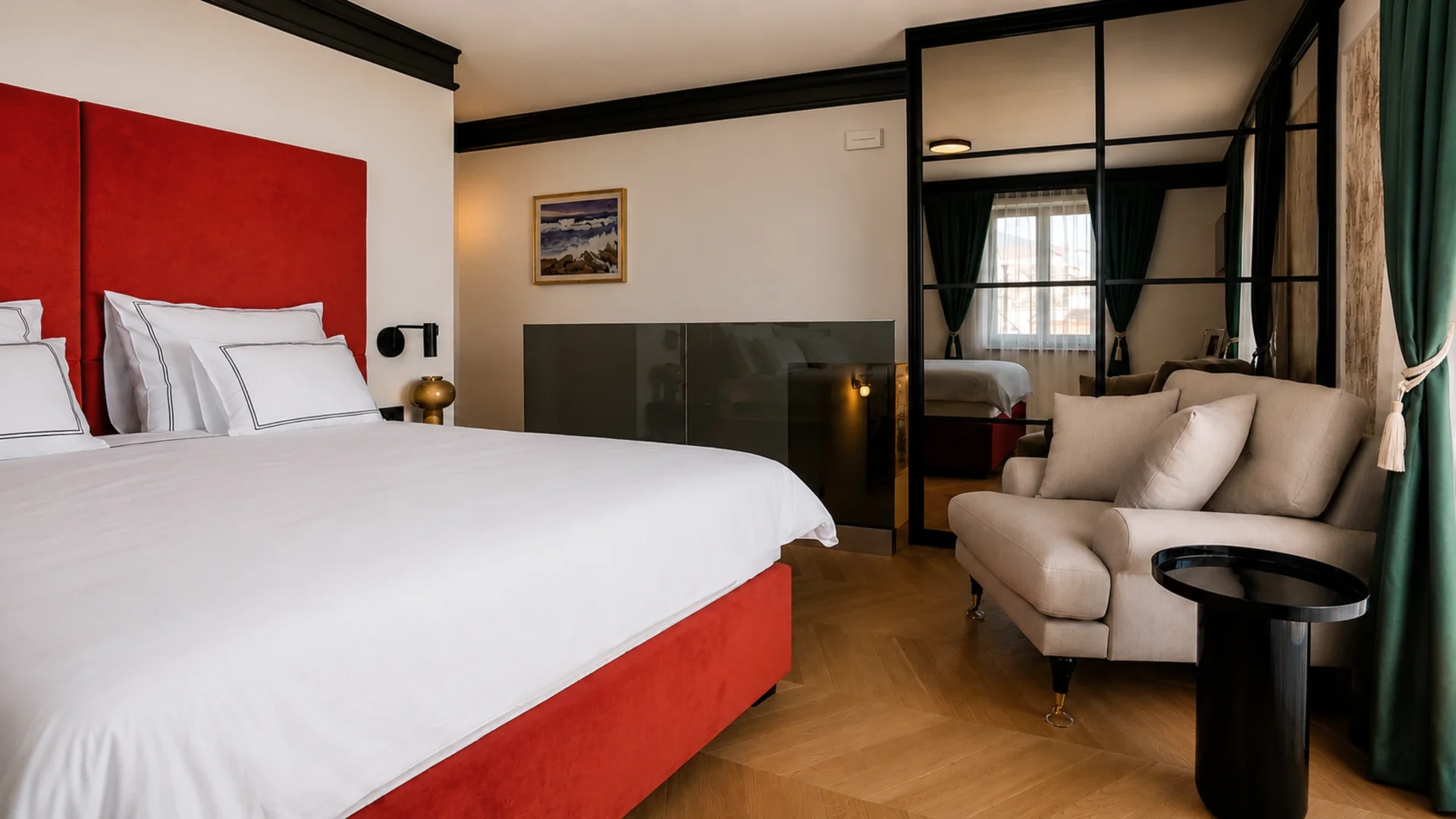
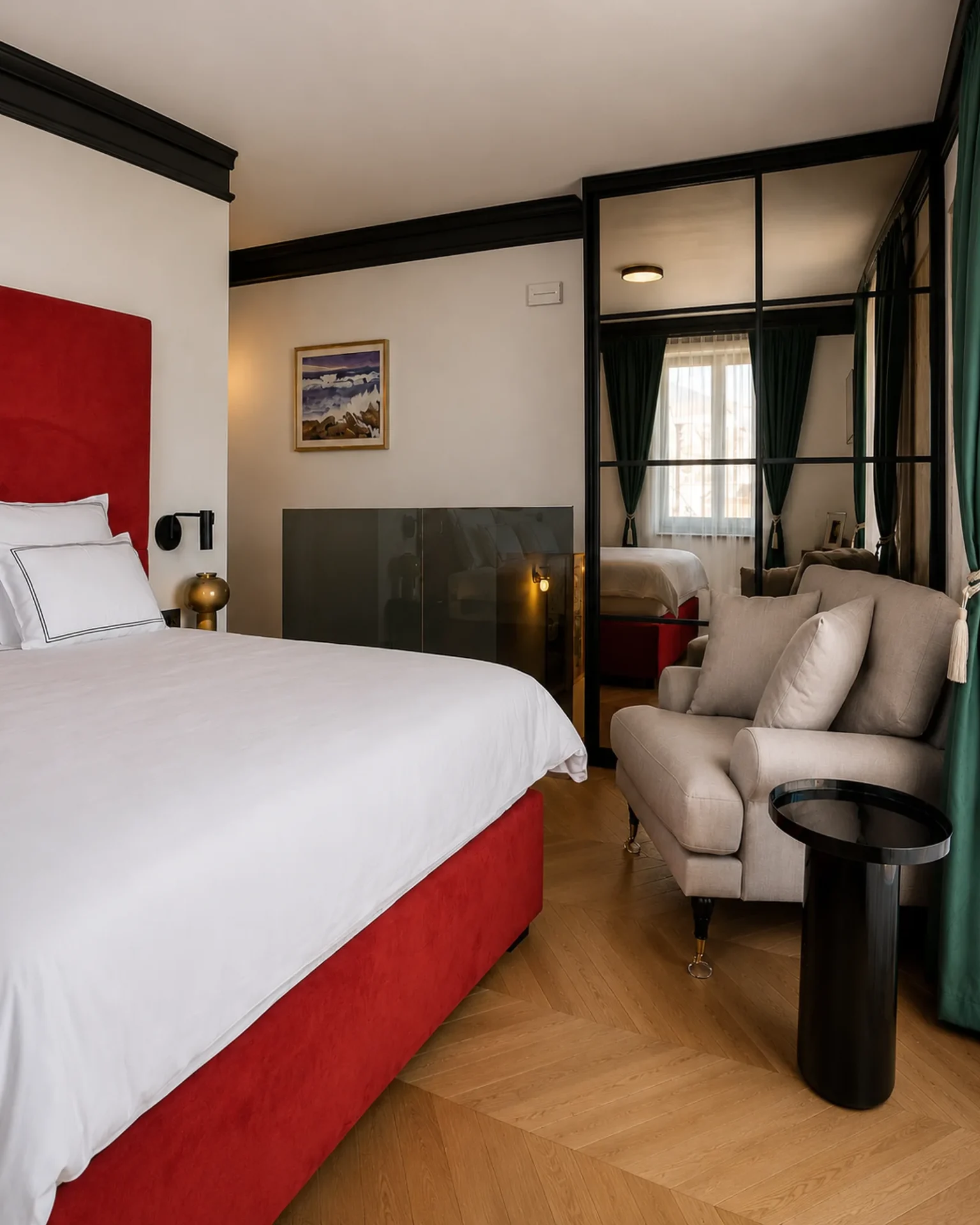
The living room, dining area, and kitchen are connected into a harmonious shared space, while the sleeping area continues the same design language through strong textile accents, dark details, and a sense of privacy.
Rooms with Individual Character
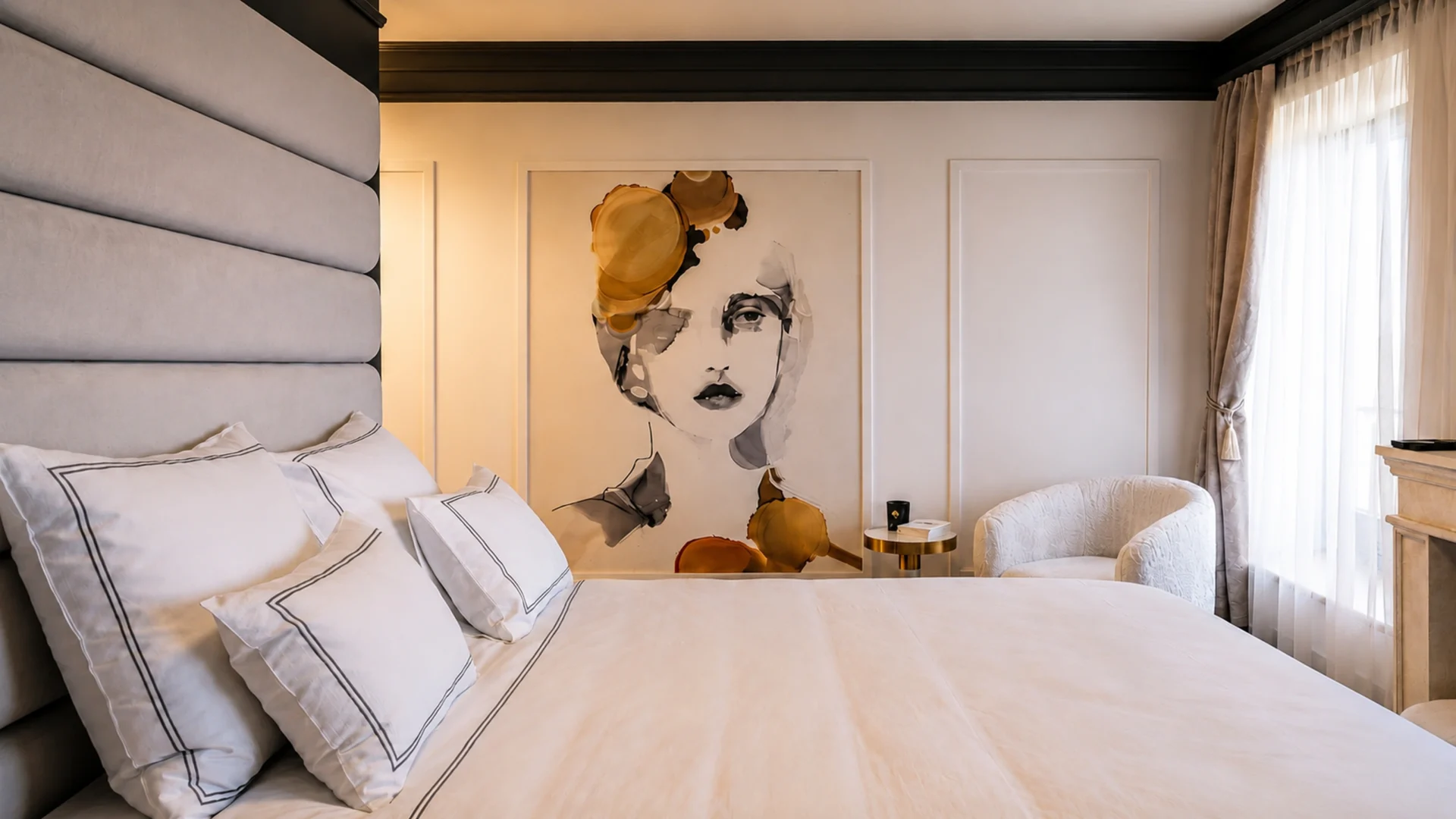
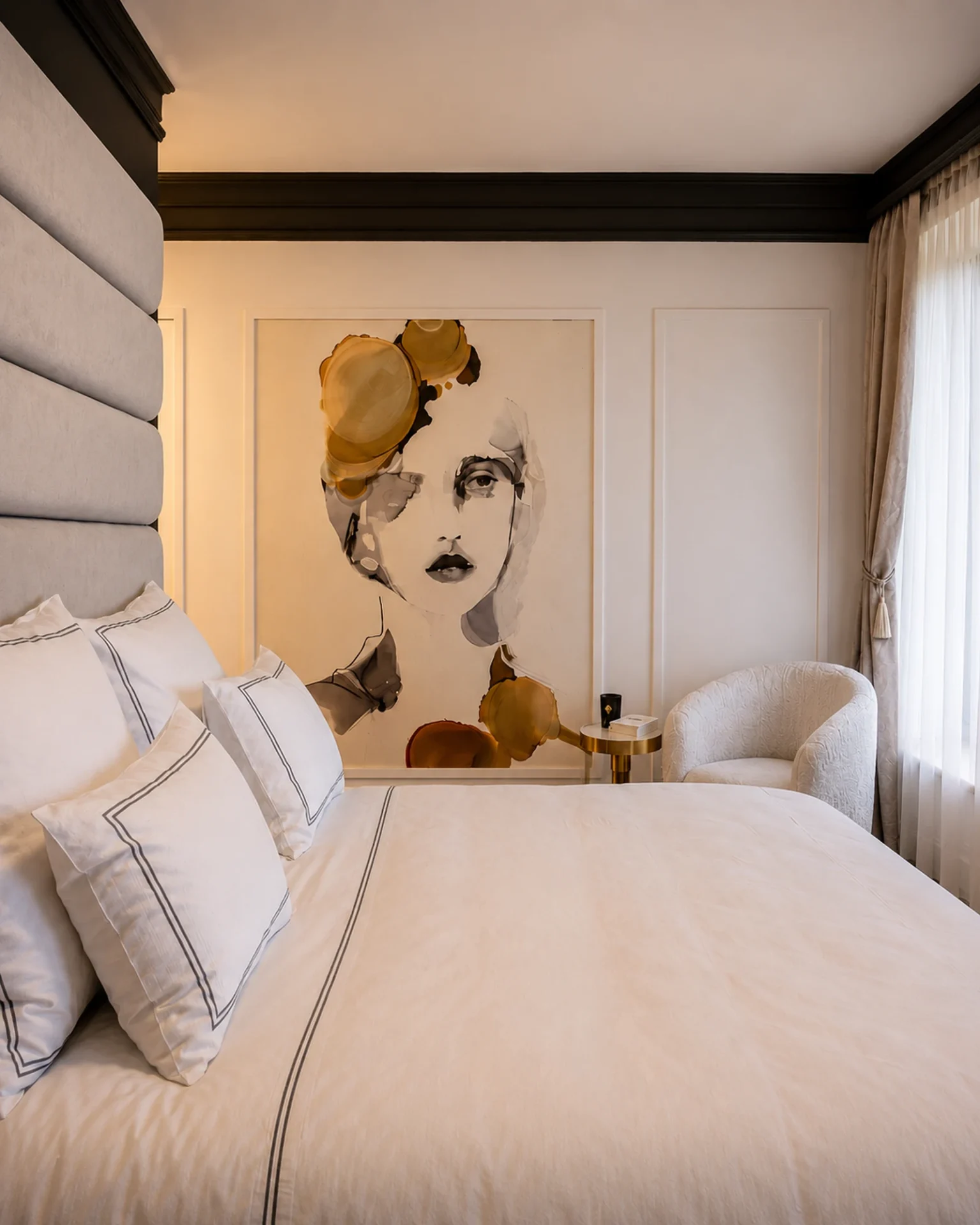
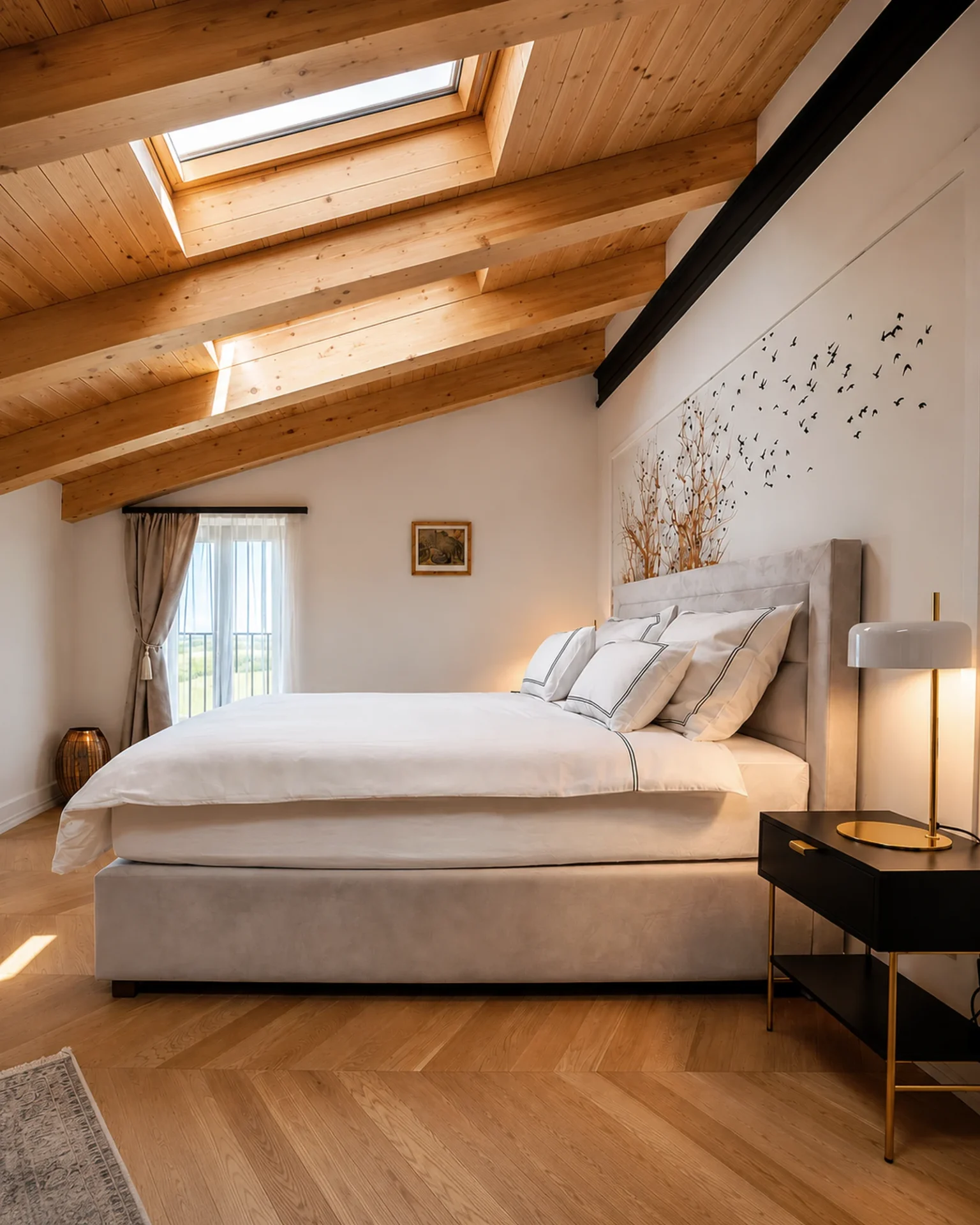
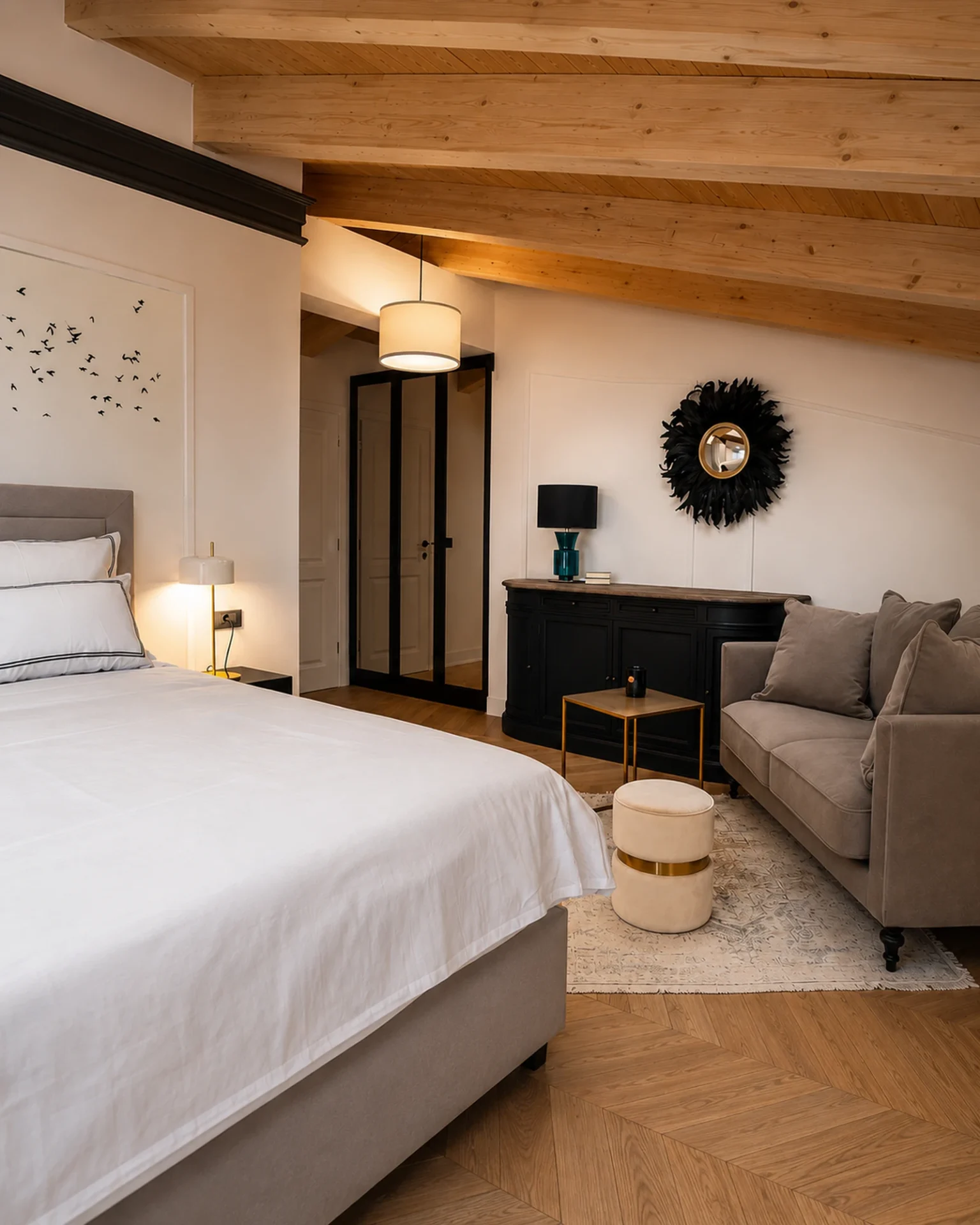
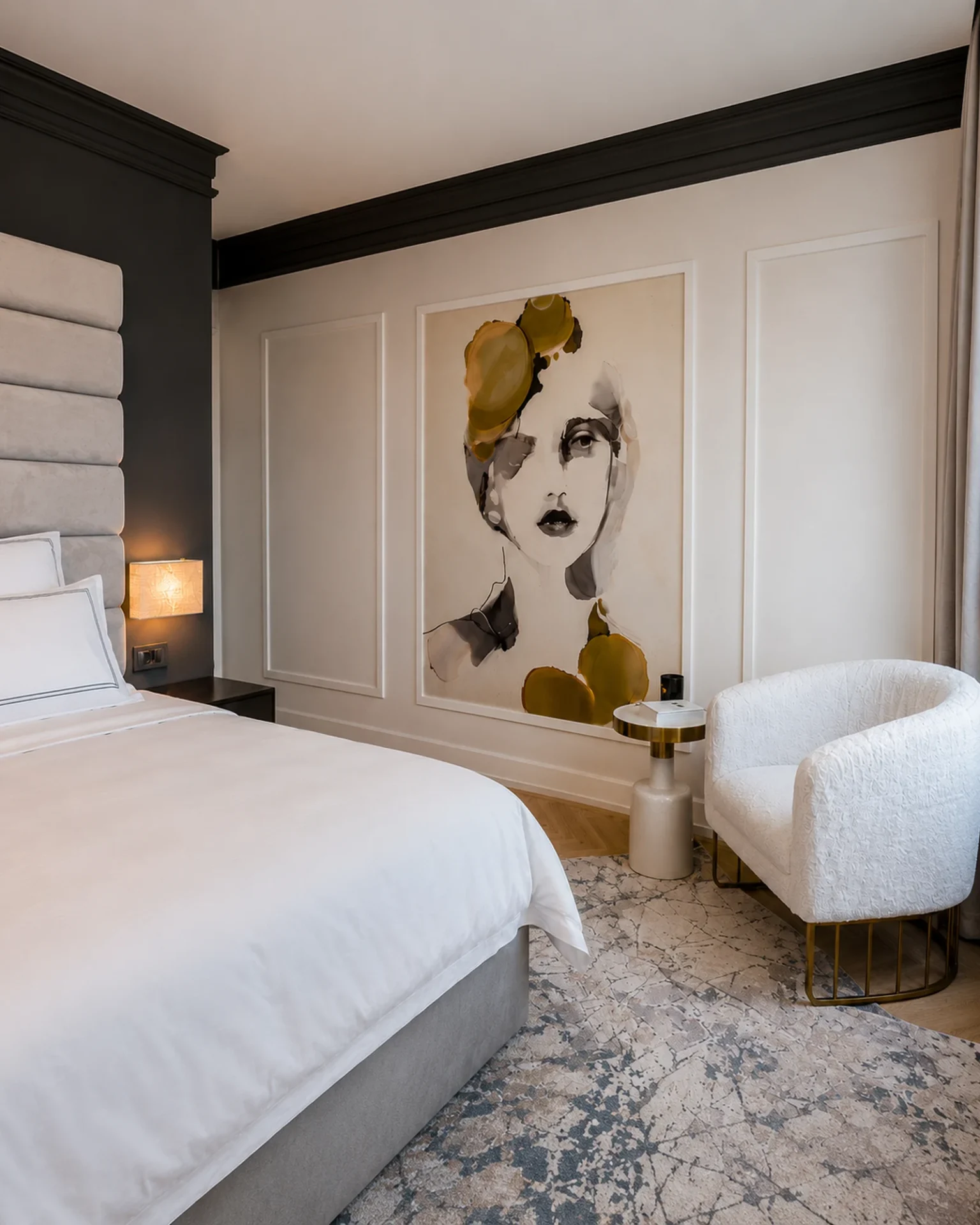
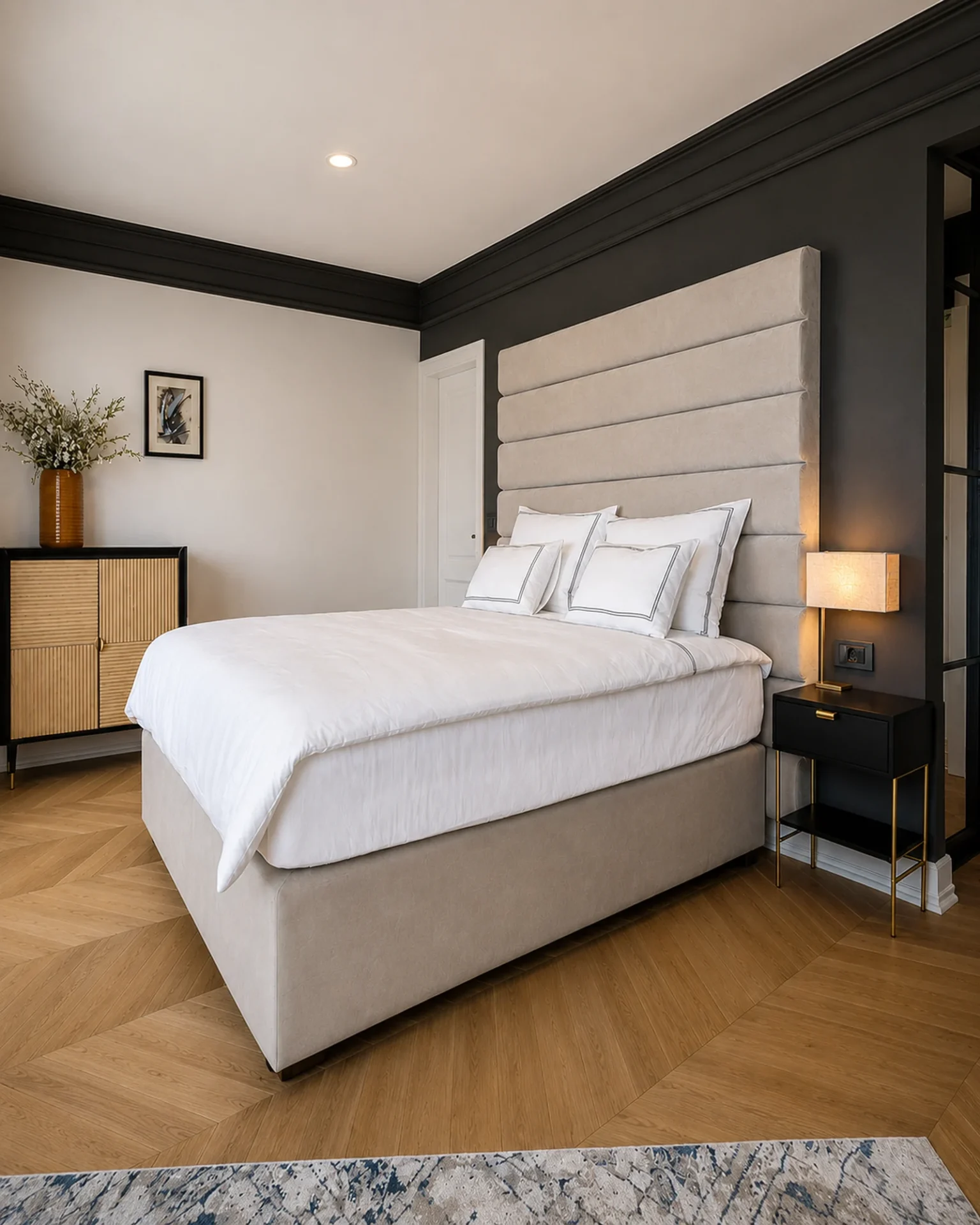
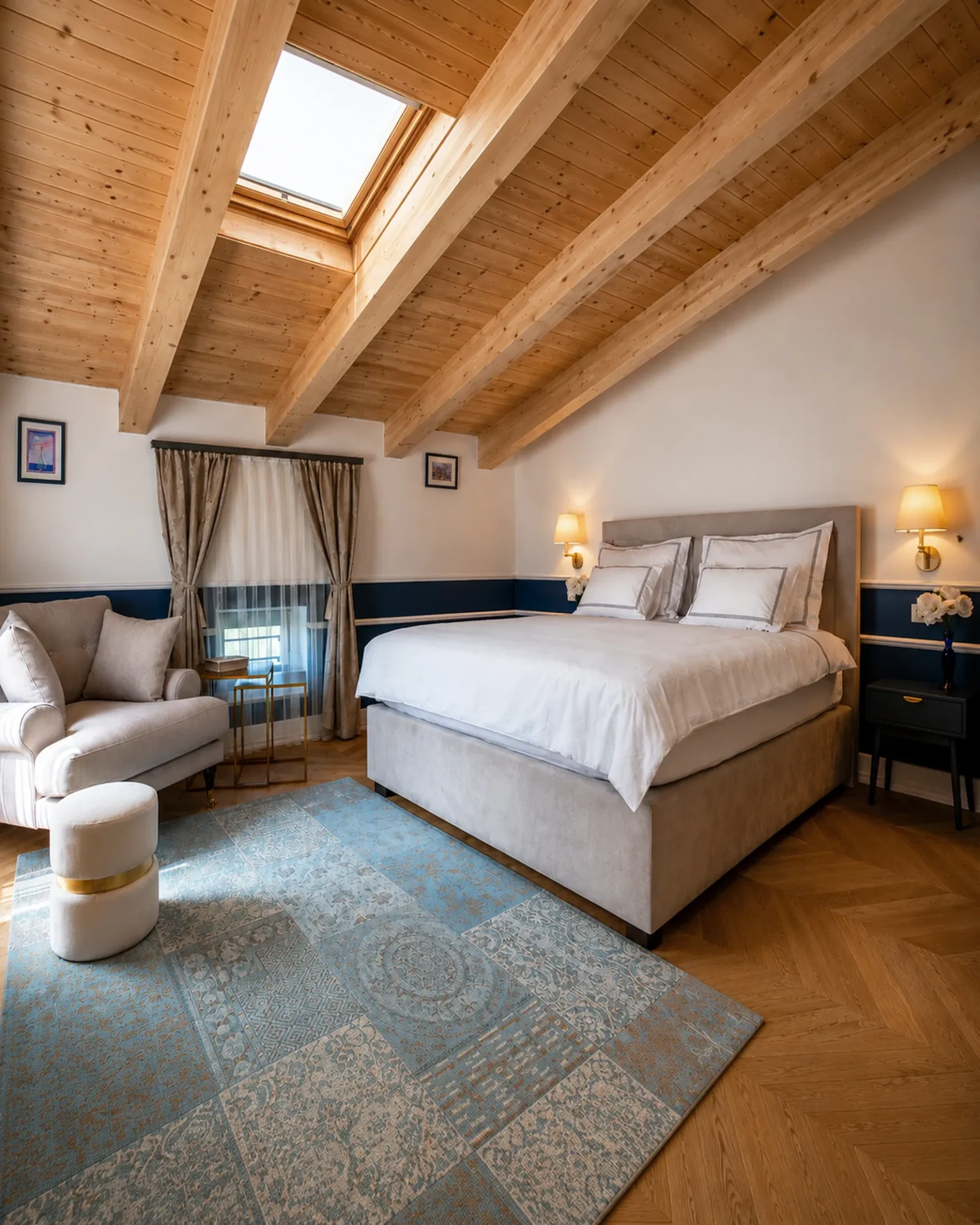
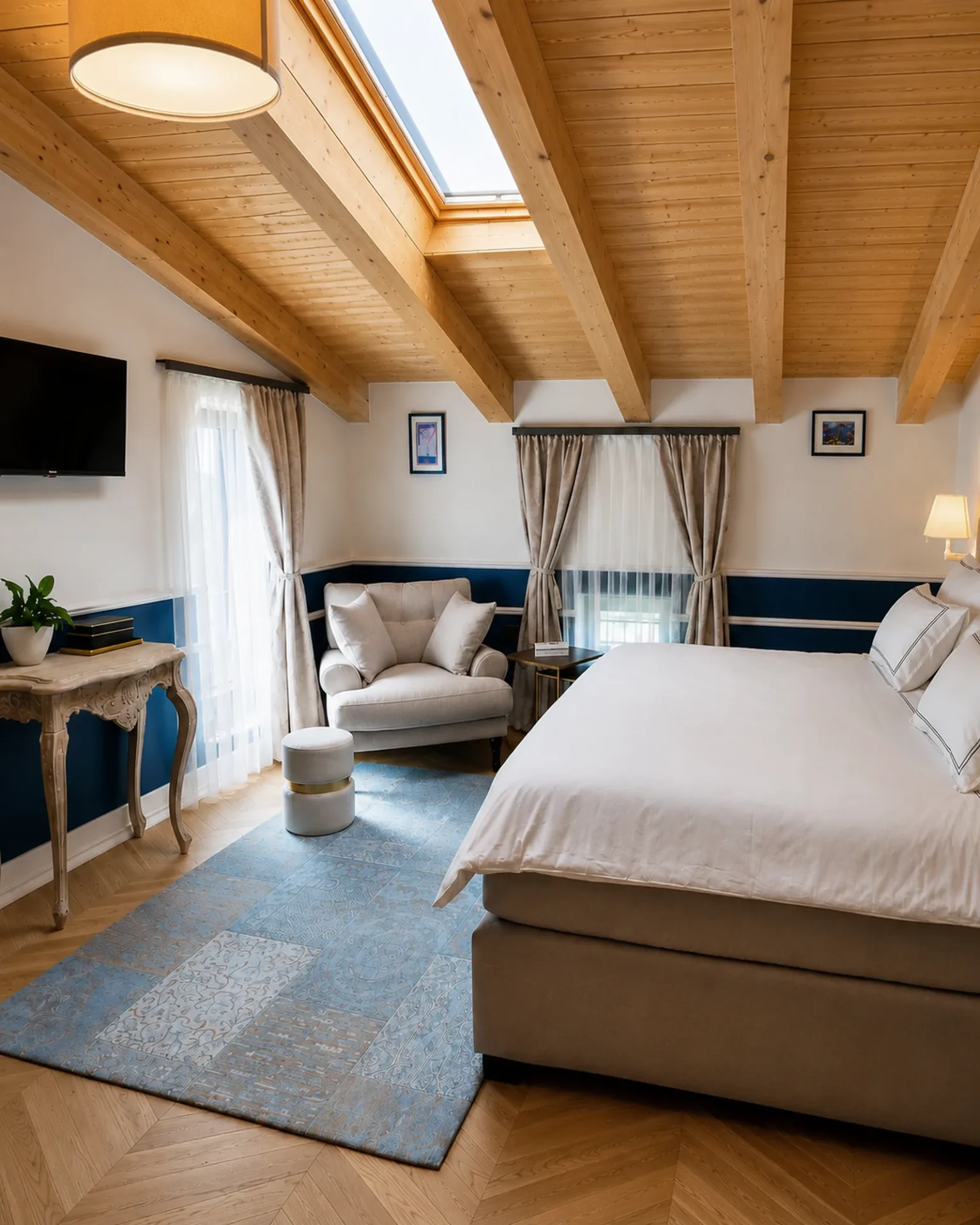
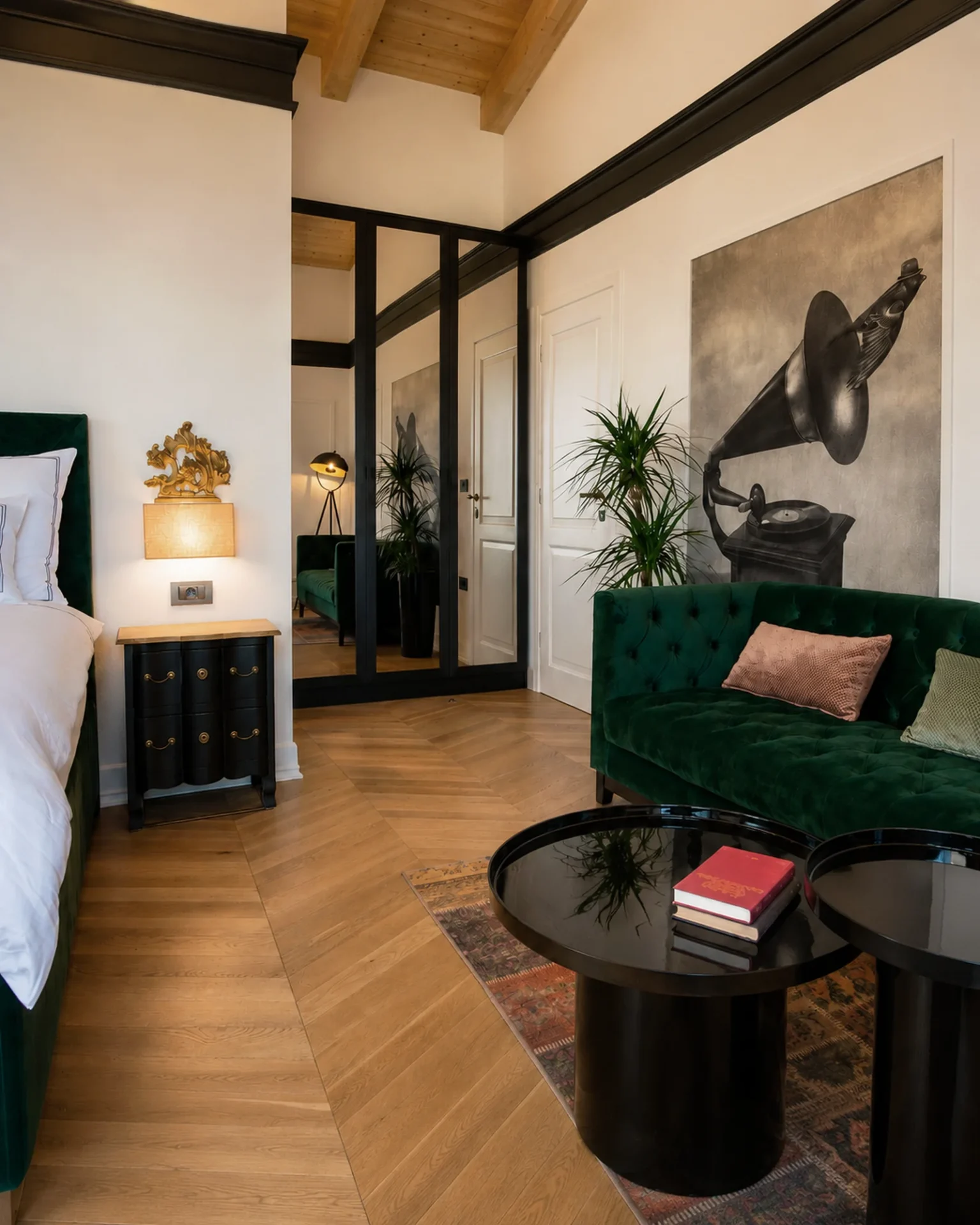
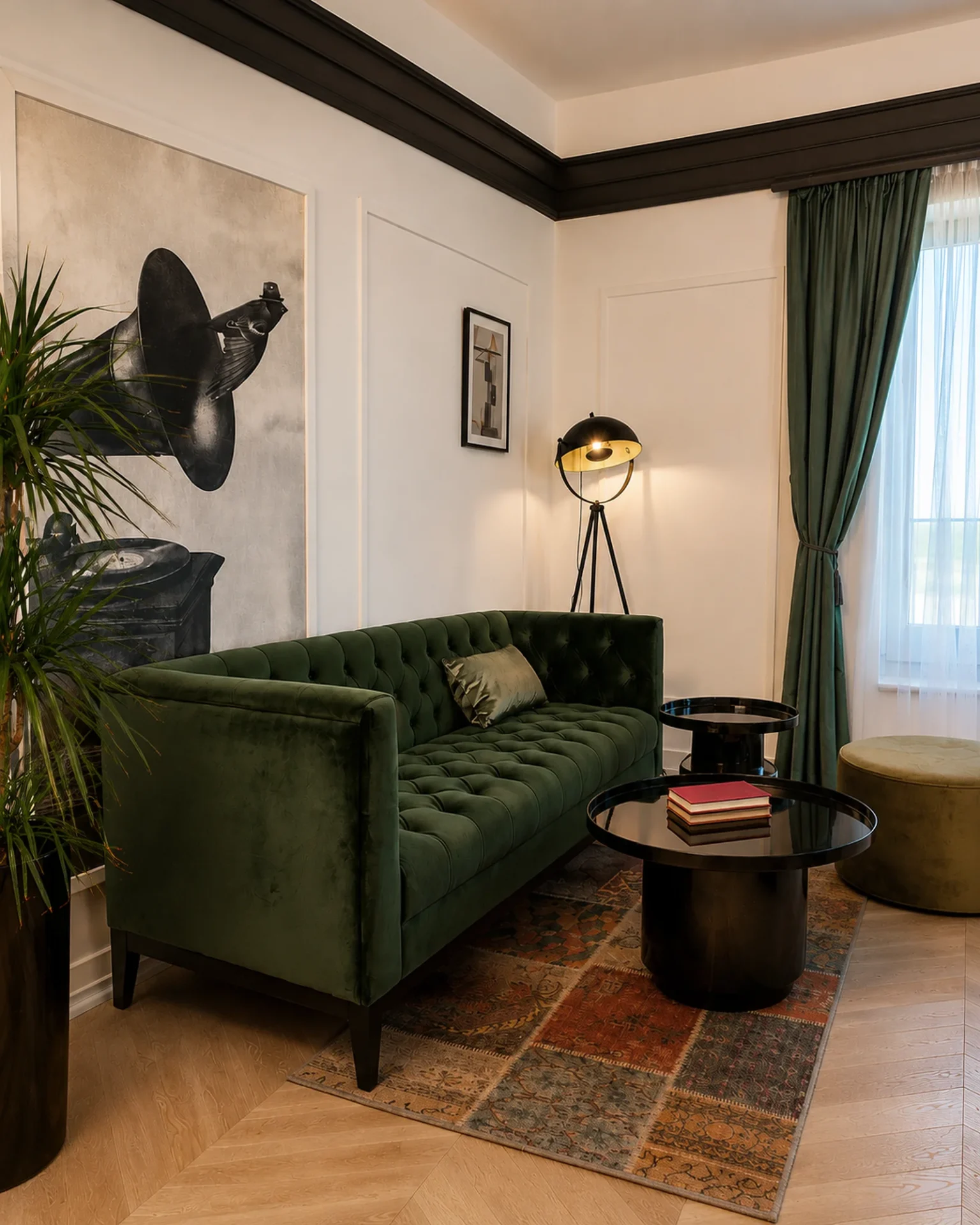
The guest rooms are not designed as repeated hotel standard units, but as a series of connected yet distinct ambiences. Each room has its own atmosphere—expressed through color, textiles, artwork, headboards, wallpapers, lighting, and carefully selected furniture pieces.
At the same time, a consistent design language remains clearly present throughout: wooden flooring, dark accents, architectural profiles, soft textiles, and carefully balanced decorative elements unify the rooms into a cohesive hotel identity.
Bathrooms and Materials
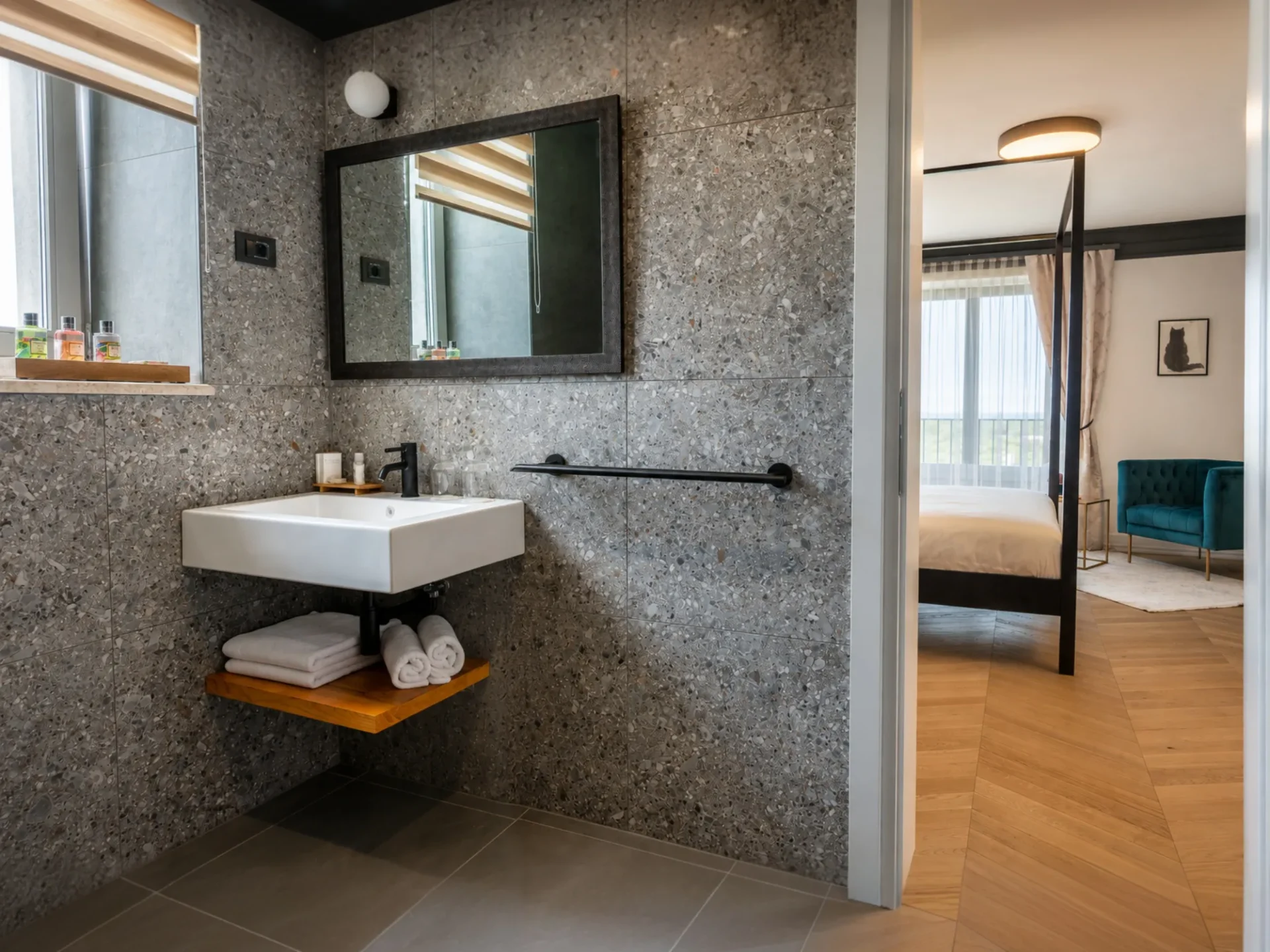
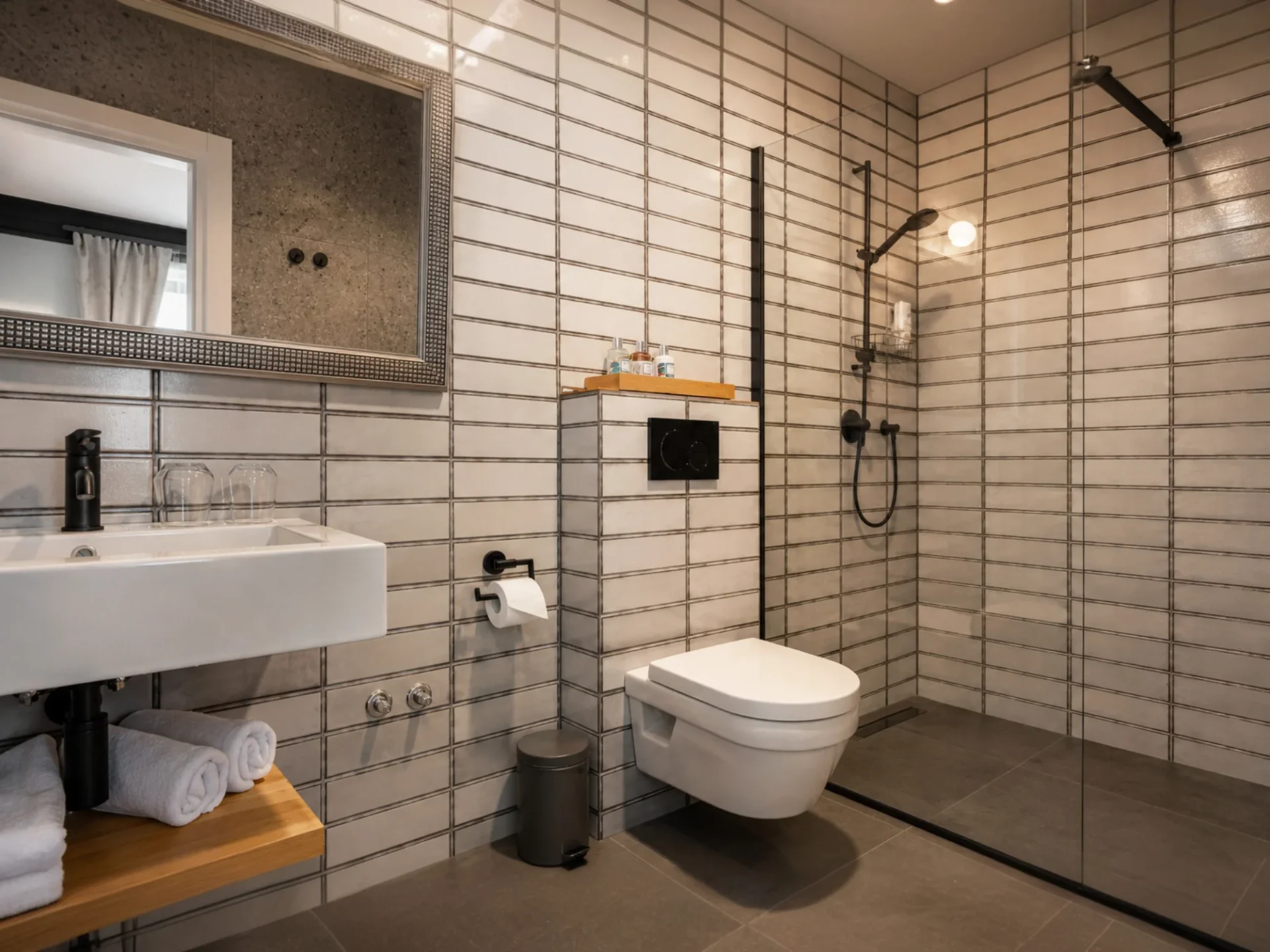
Following the more expressive guest rooms and salon-like shared spaces, the bathrooms are designed in a calmer, more restrained manner. Stone textures, a microcement-like finish, glass surfaces, and black fixtures create a more neutral counterpoint to the rest of the interior.
Their role is not to visually compete with the rooms, but to complete the guest experience through functionality, clarity, and a consistent material language.
The Exterior as a Continuation of the Hotel Experience
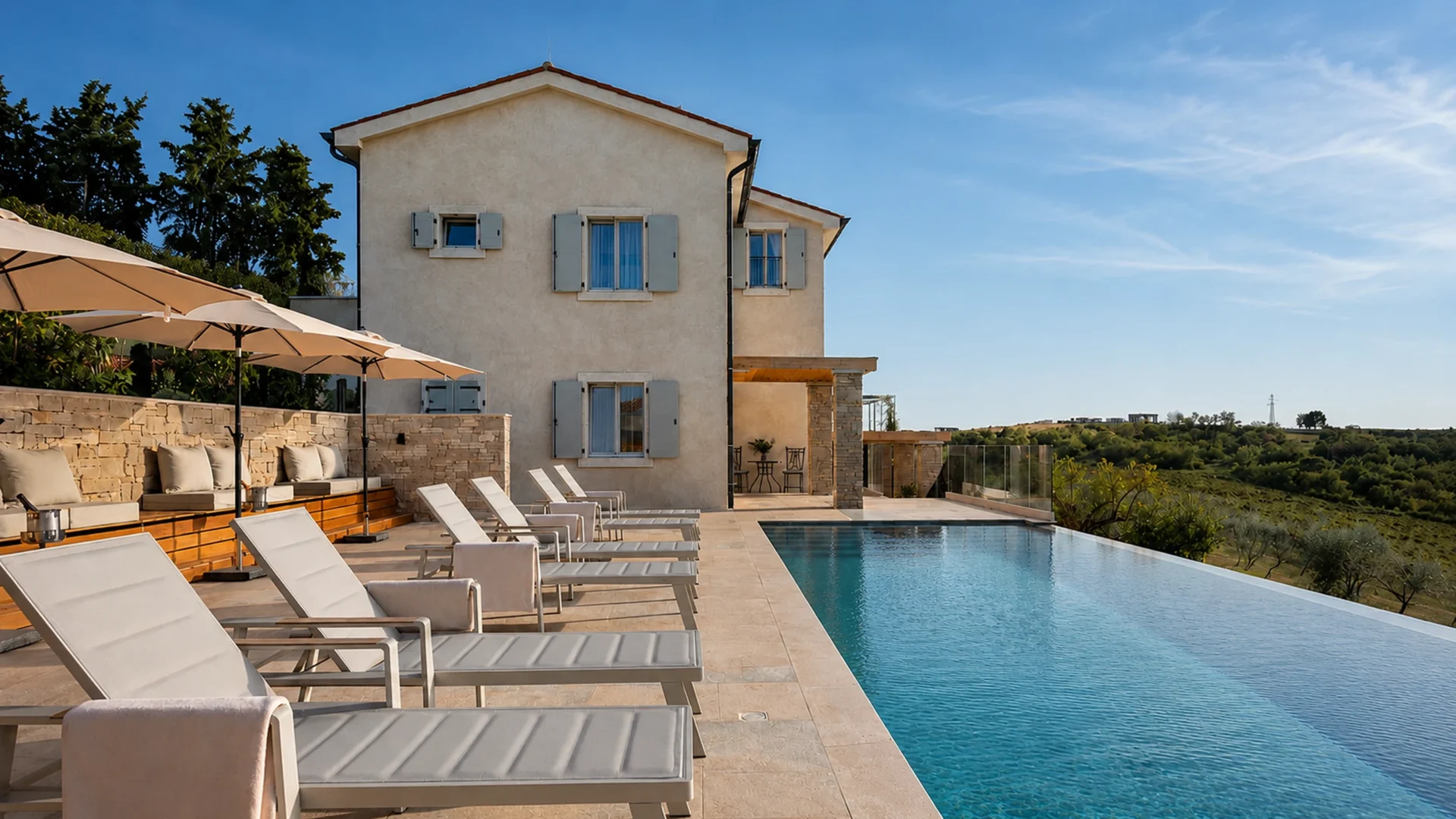
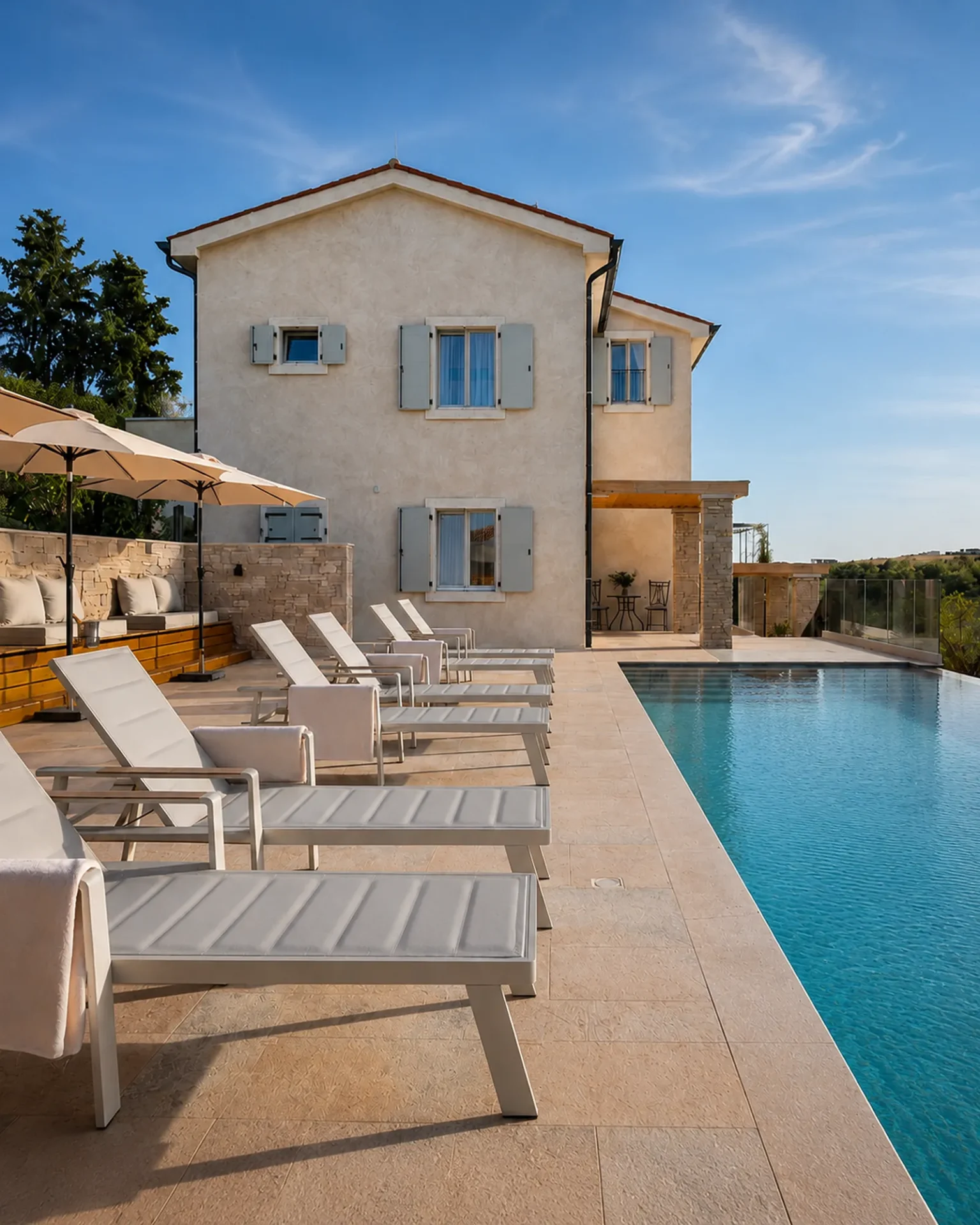
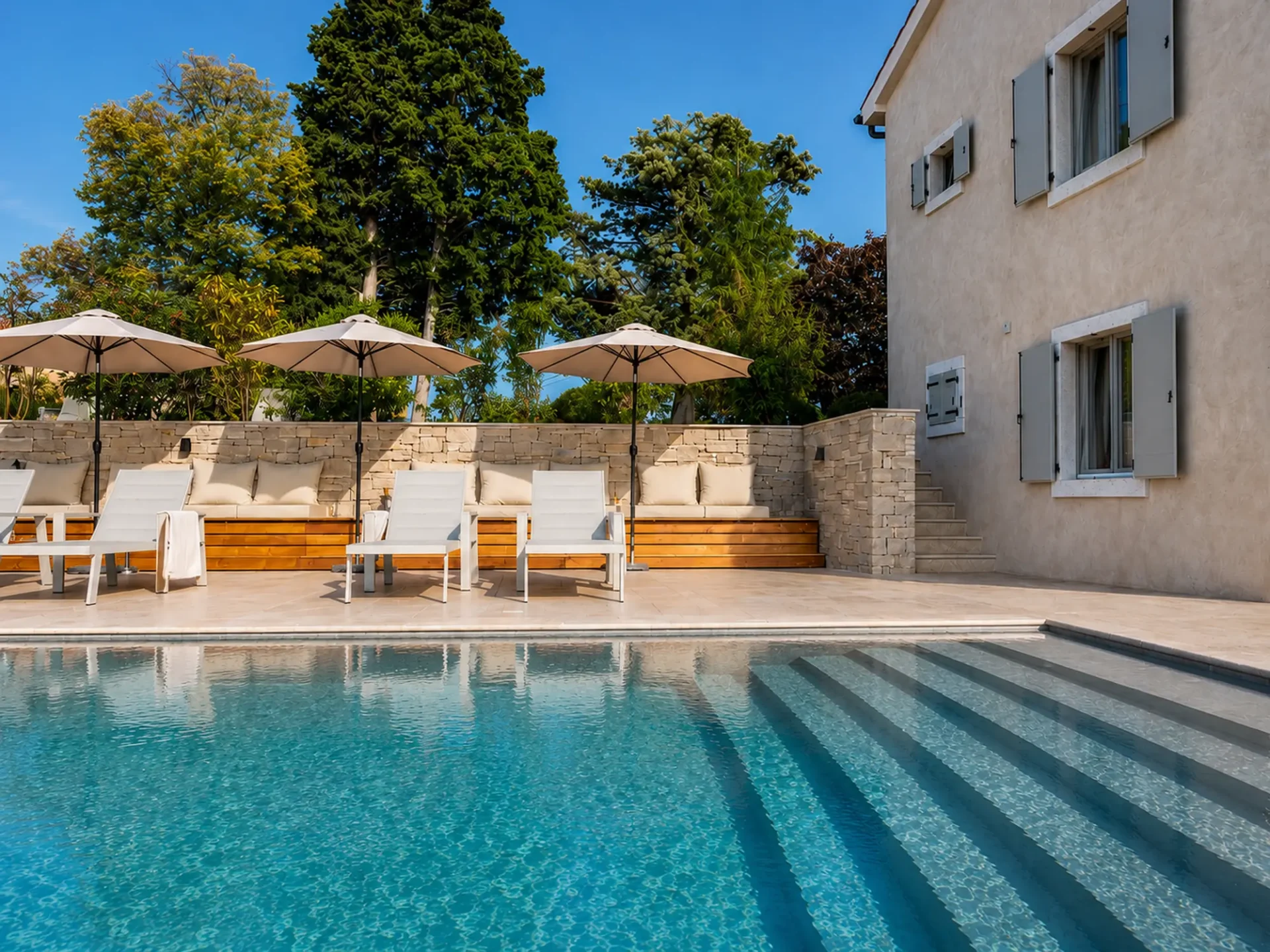
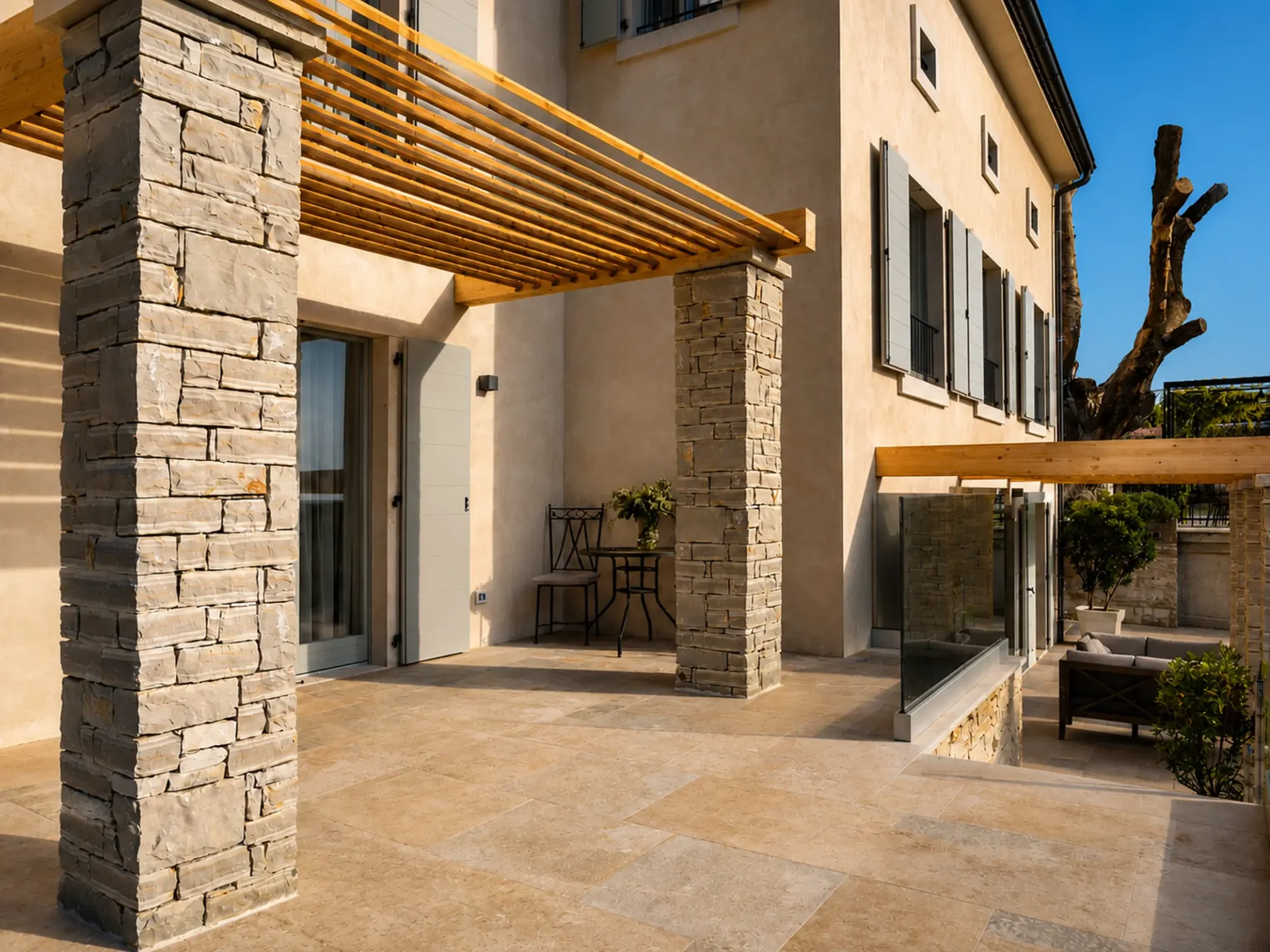
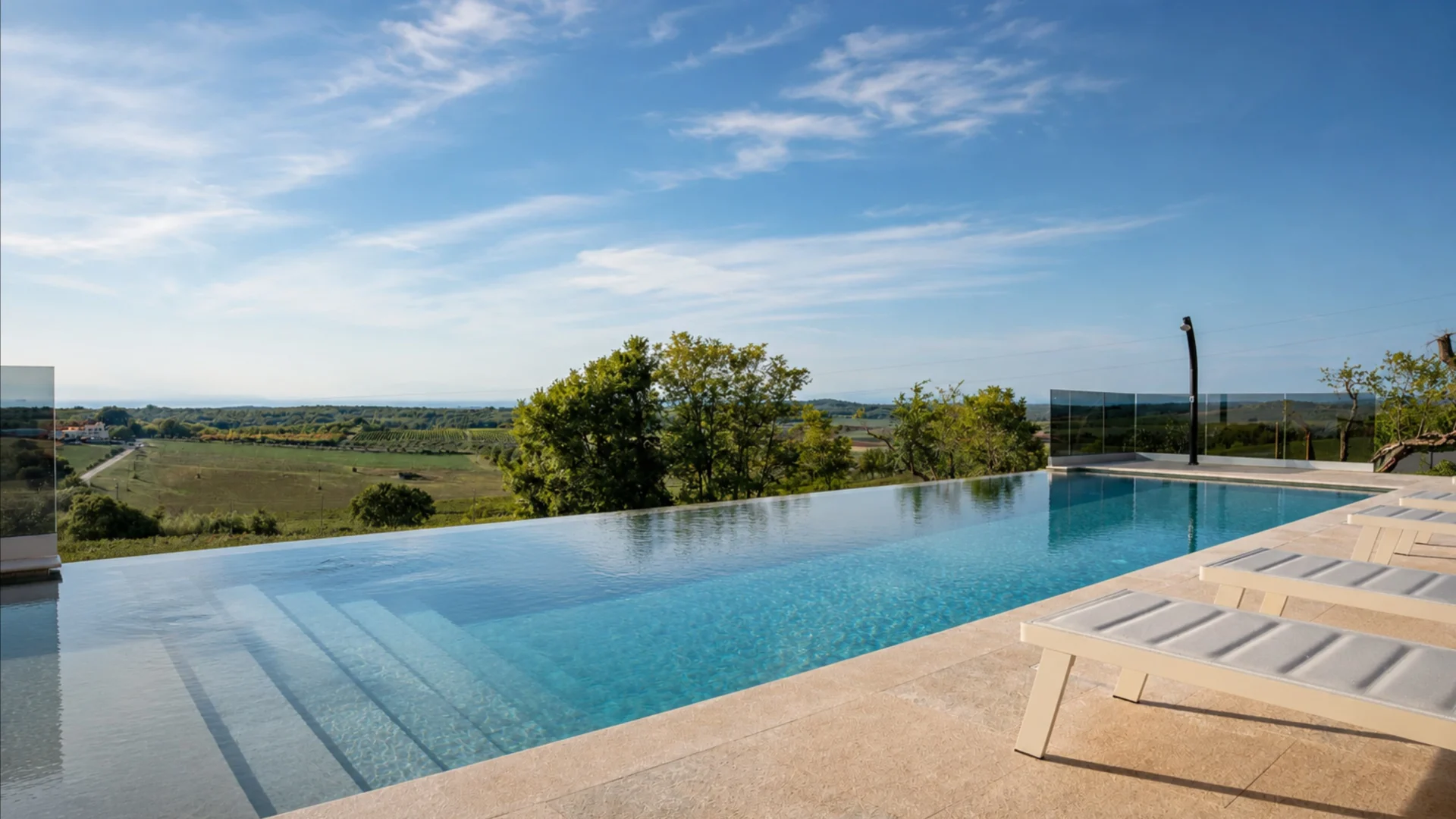
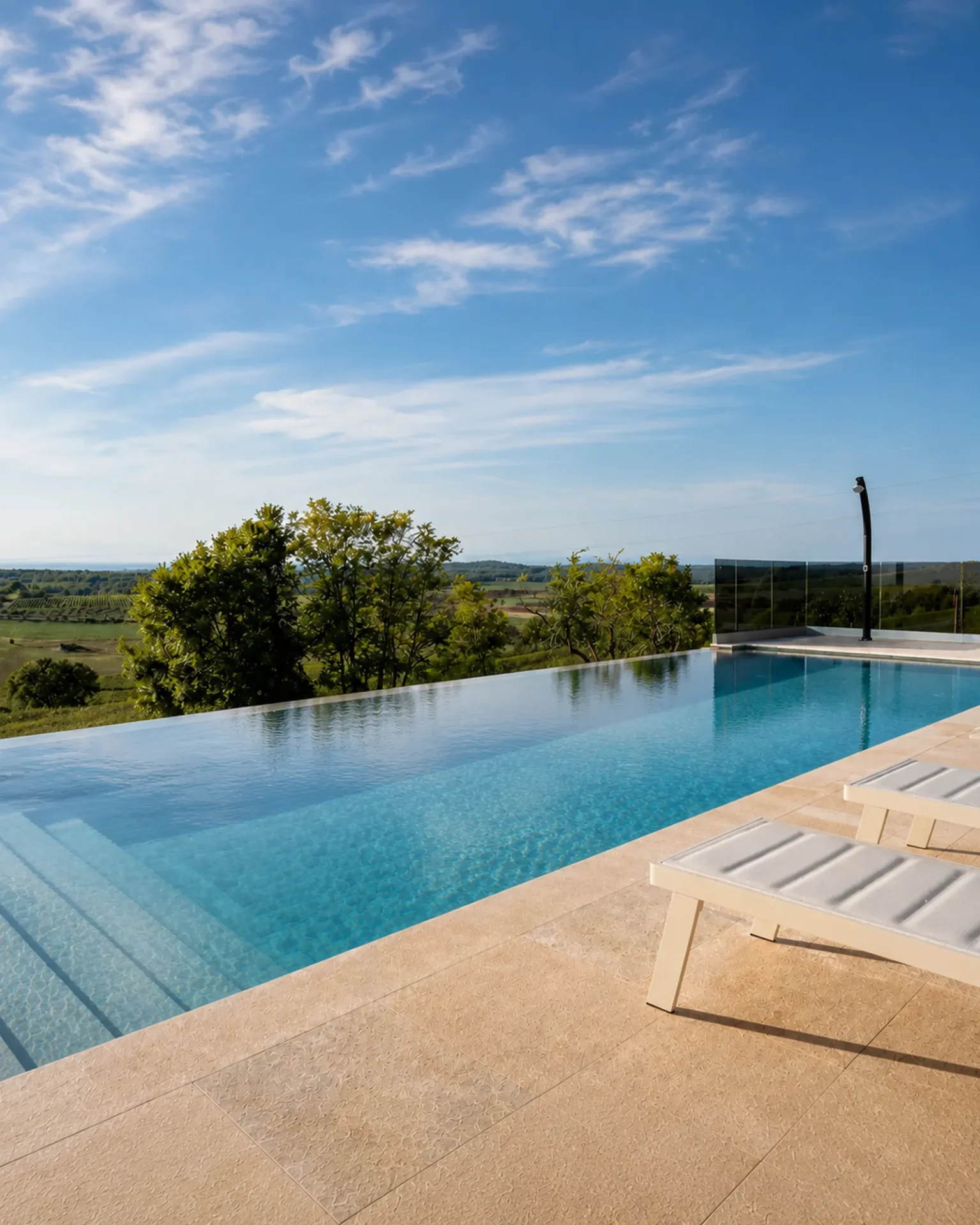
The outdoor spaces are designed as an extension of the interior. Terraces, stone cladding, pergolas, lounge areas, the swimming pool, and views of the Istrian landscape create a hotel experience that does not end upon leaving the room.
The pool and sun deck function as the central outdoor ambience, while the lounge areas and Mediterranean greenery provide a sense of privacy, comfort, and escape. In this way, the exterior does not act as an addition to the building, but as an equal part of the overall concept.