Residential Building
in Rovinj
Residential Building
in Rovinj
Contemporary Living Shaped by Views, Light, and Spatial Clarity
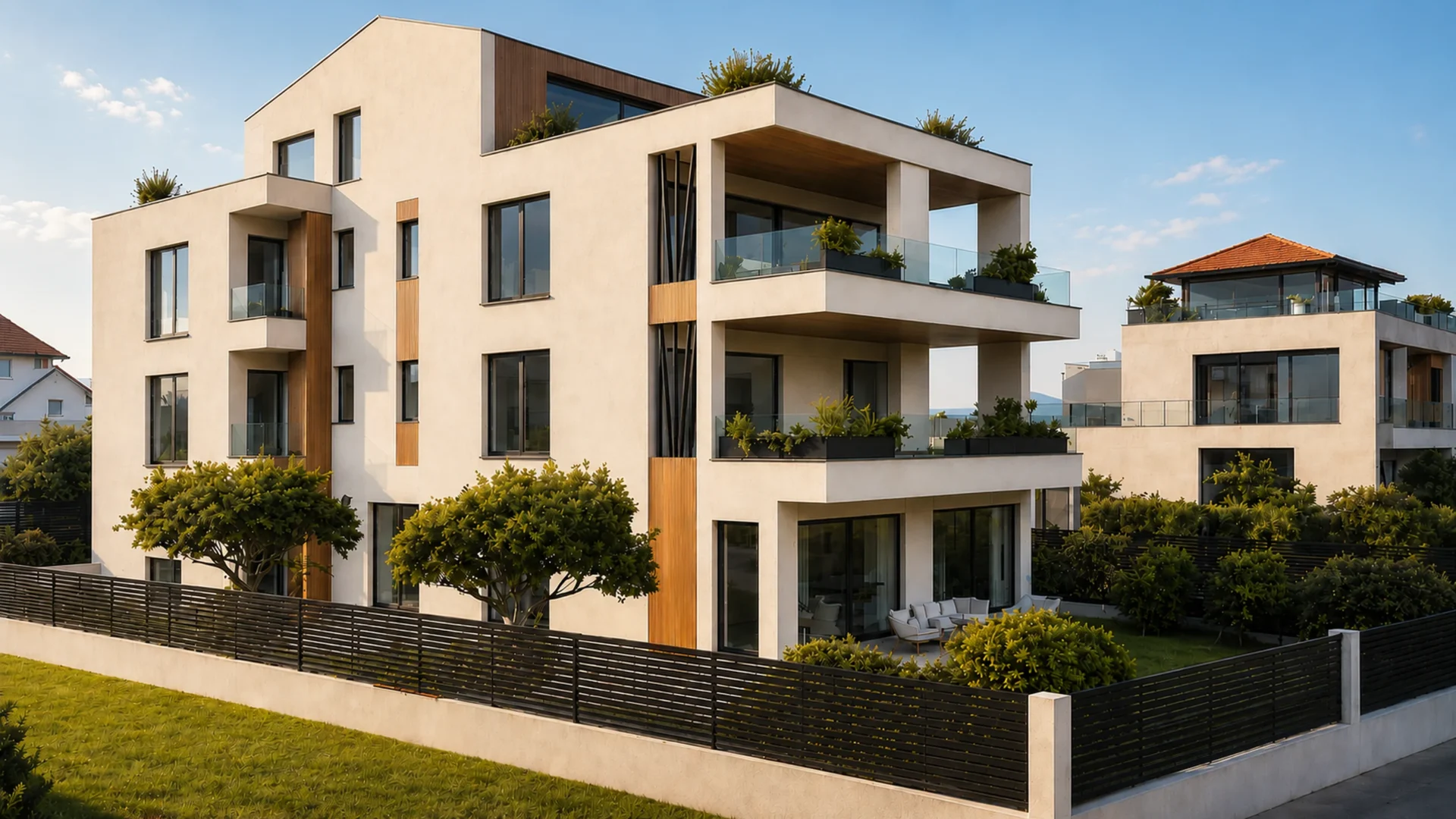
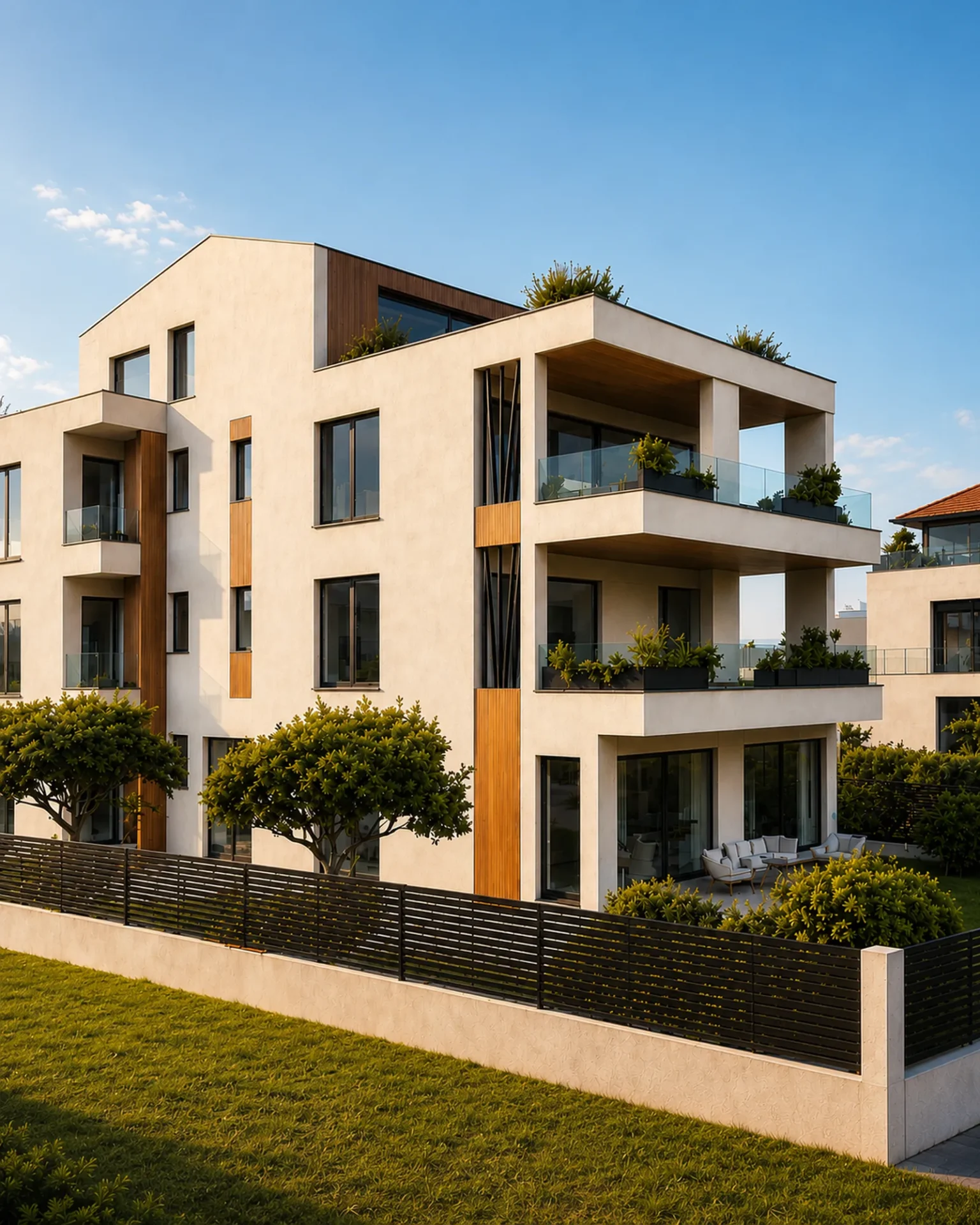
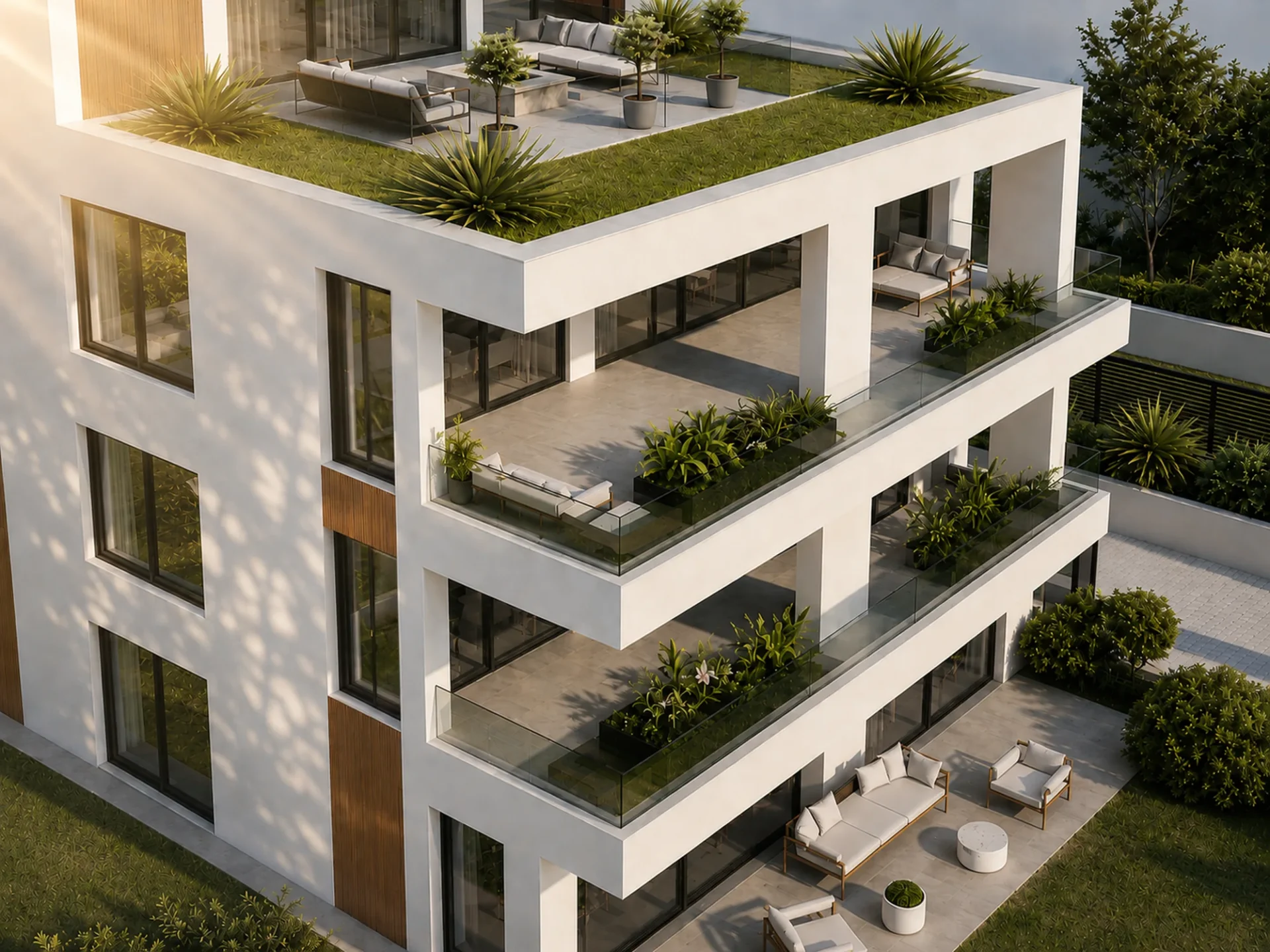
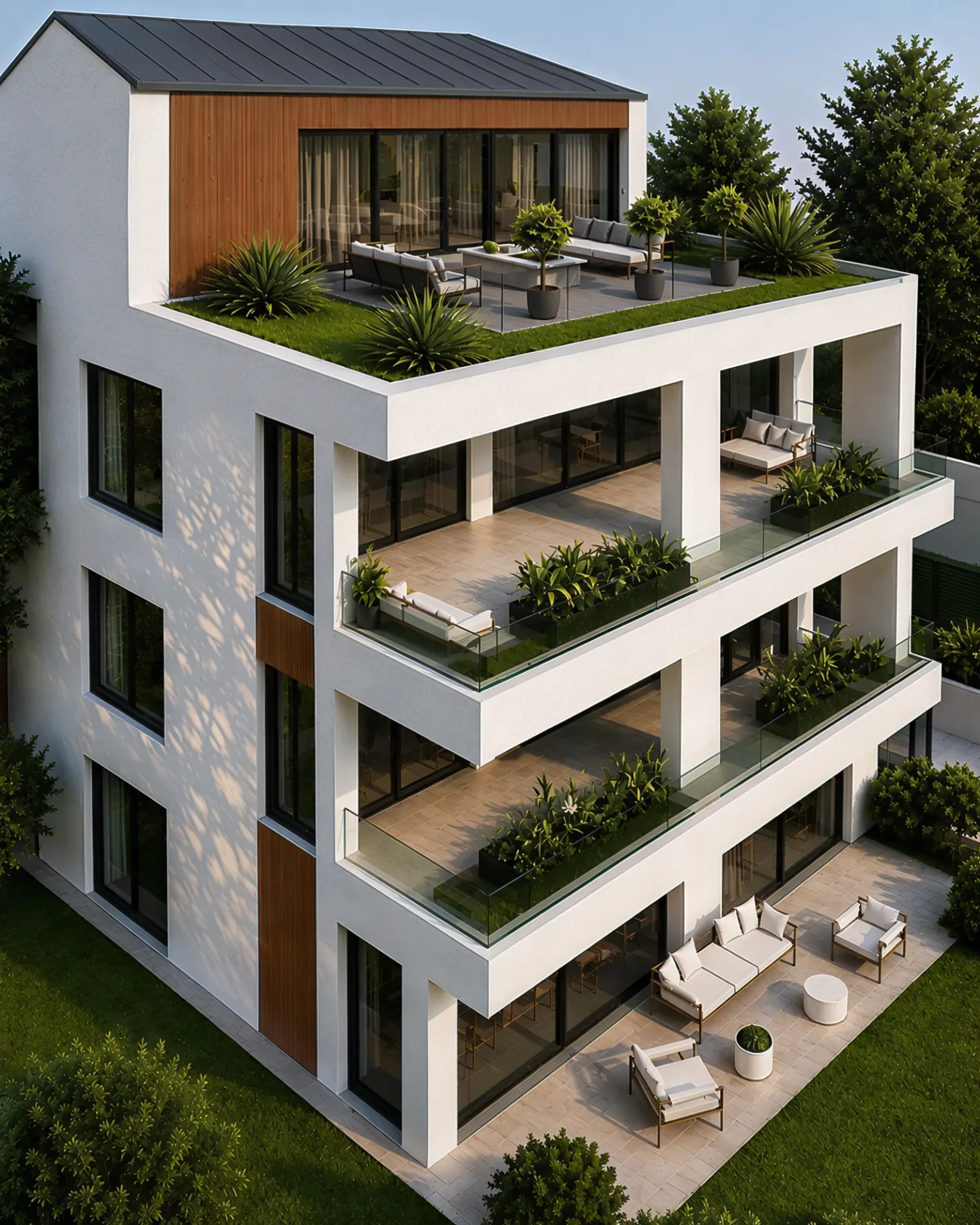
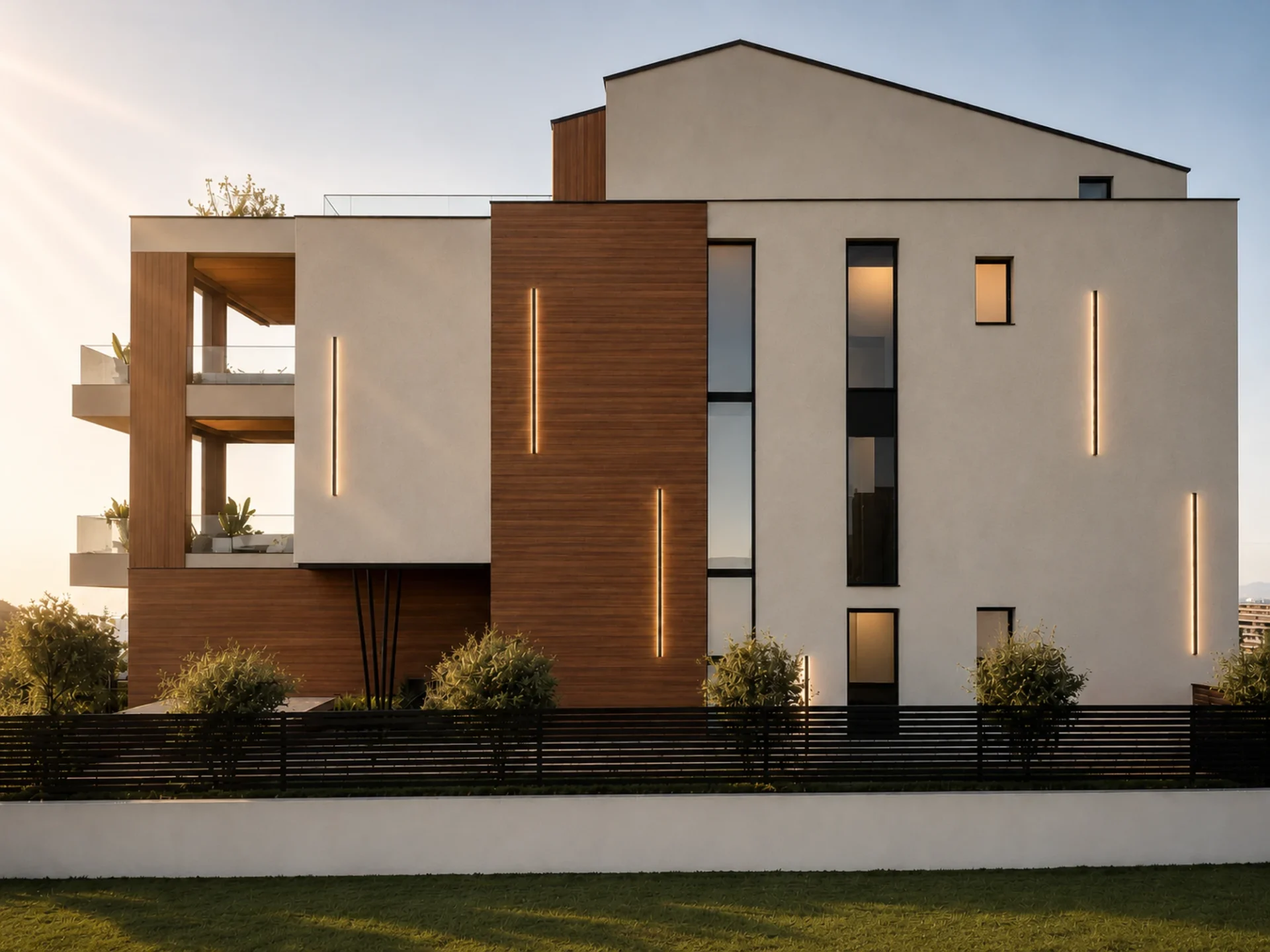
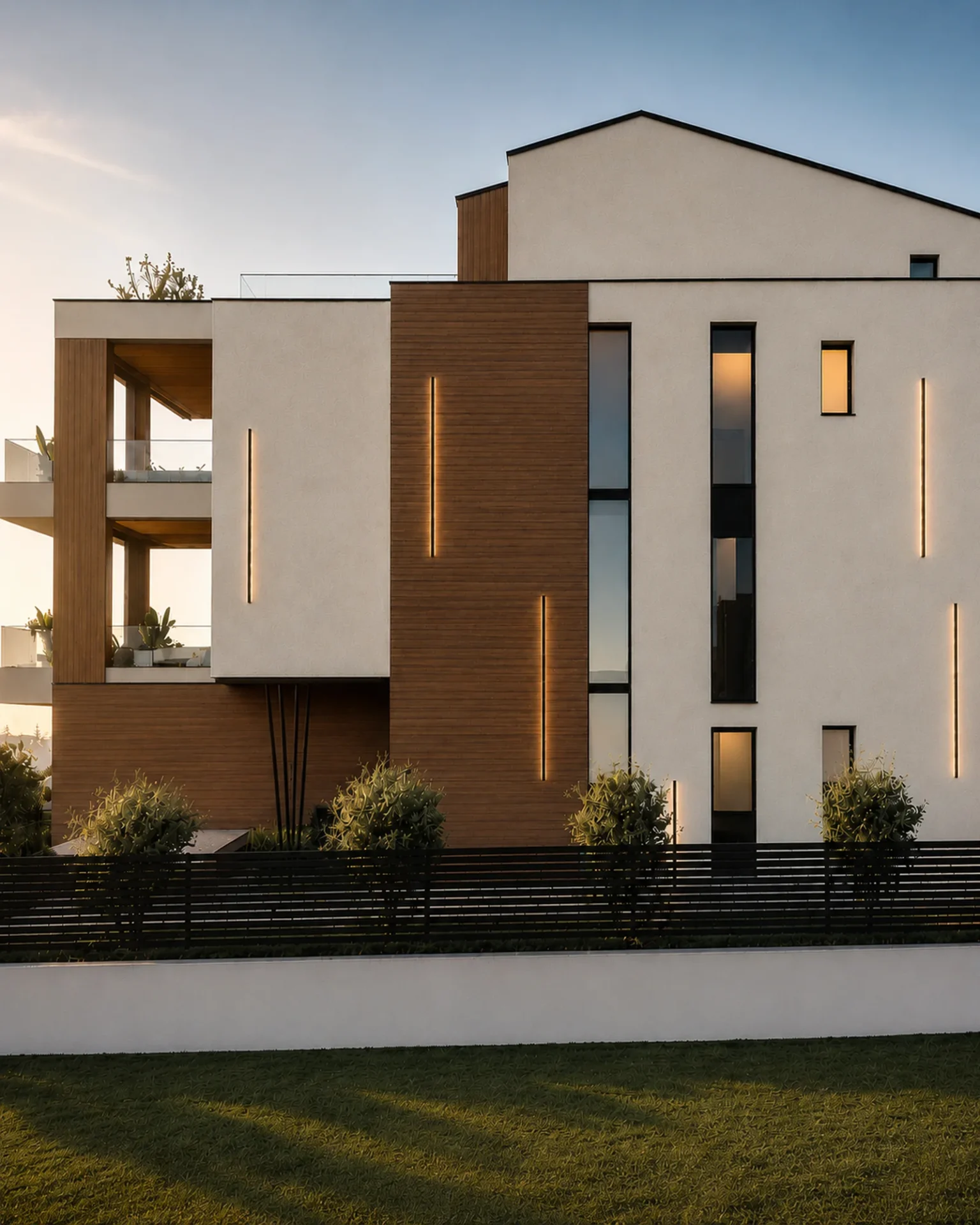
The residential building project in Rovinj encompasses the complete design of both interior and exterior spaces through a contemporary, refined, and functionally precise approach. The architectural volume of the building is enhanced by warm wood cladding, linear lighting, transparent balconies, and carefully landscaped outdoor areas that give the property a distinctive yet understated premium character.
The building comprises apartments of varying spatial characteristics: ground-floor units with a strong connection to the garden, a first-floor apartment featuring spacious living areas, and a penthouse extending across the second floor, internal circulation spaces, the attic level, and a rooftop terrace. Each unit has been designed through a balanced relationship between living spaces, private zones, materials, and ambient lighting.
The project’s design language is based on a neutral palette, natural textures, wood, stone, light tones, and thoughtfully integrated functional elements. The result is a residential development that successfully meets both the market-oriented demands of a developer-led project and the elevated standards of private living embodied in the penthouse residence.
Developer-Led Residential Project
Rovinj,
Istria
Interior & Exterior Design
545 m²
Apartments, Penthouse, Attic Level, Rooftop Terrace, and Outdoor Areas
A Contemporary Volume Enhanced by the Warmth of Natural Materials
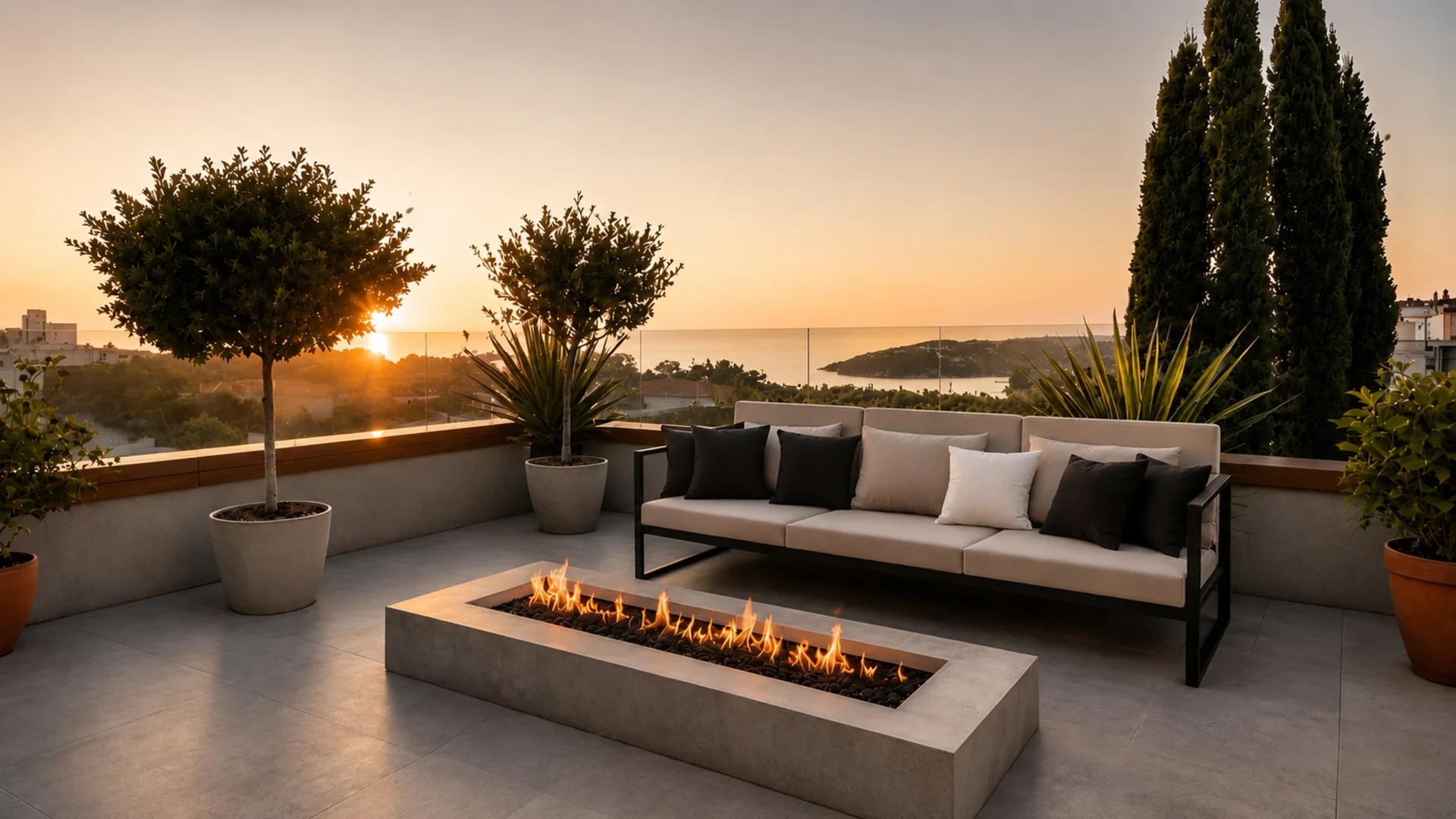
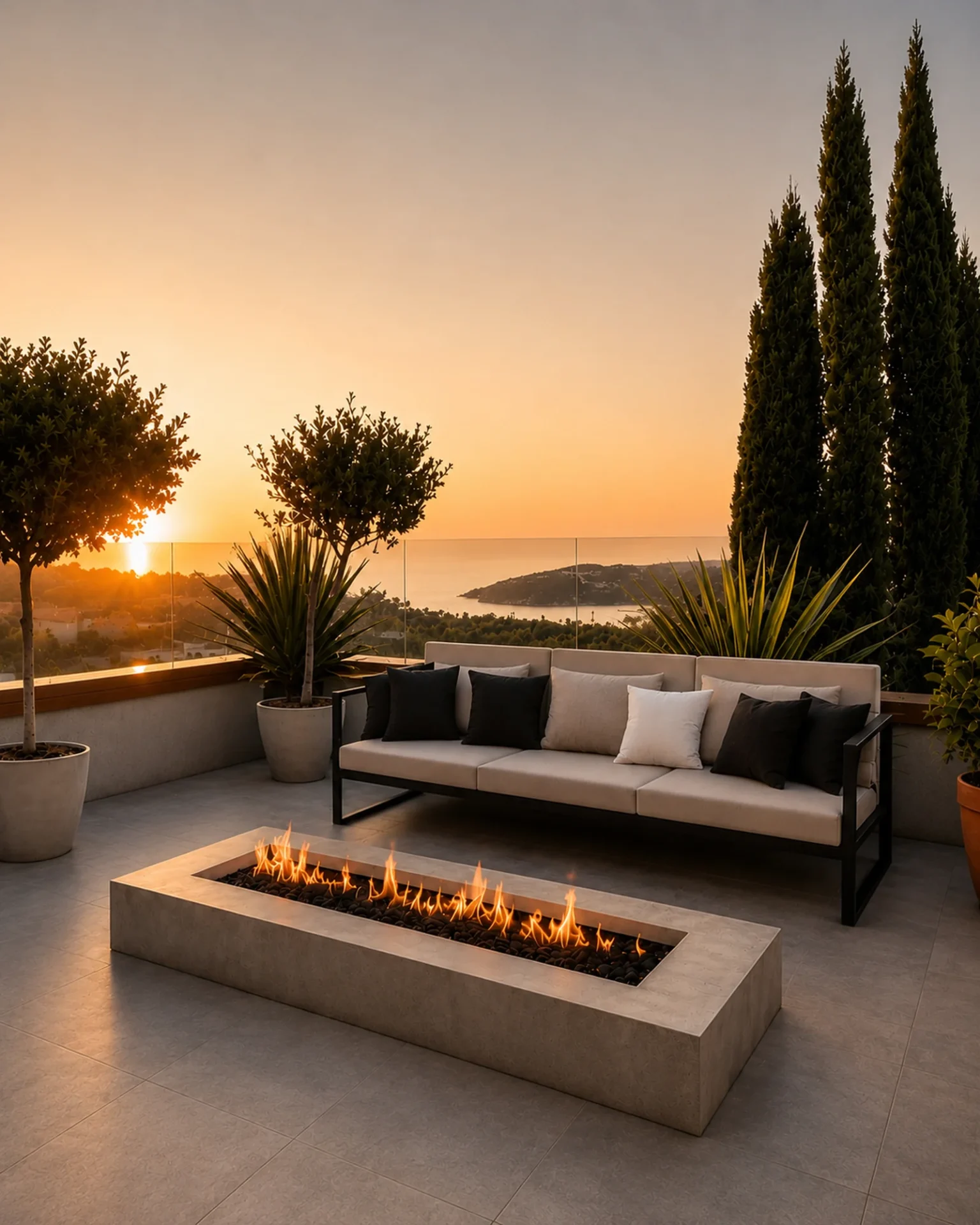
The building’s exterior character is defined by clean architectural geometry, pronounced horizontal terrace lines, and the warmth of natural wood cladding. Transparent railings, carefully landscaped greenery, and subtle lighting create a sense of openness, while the evening scenes further emphasize the building’s refined and inviting atmosphere.
Living Spaces as the Focal Point of the Sale Apartments
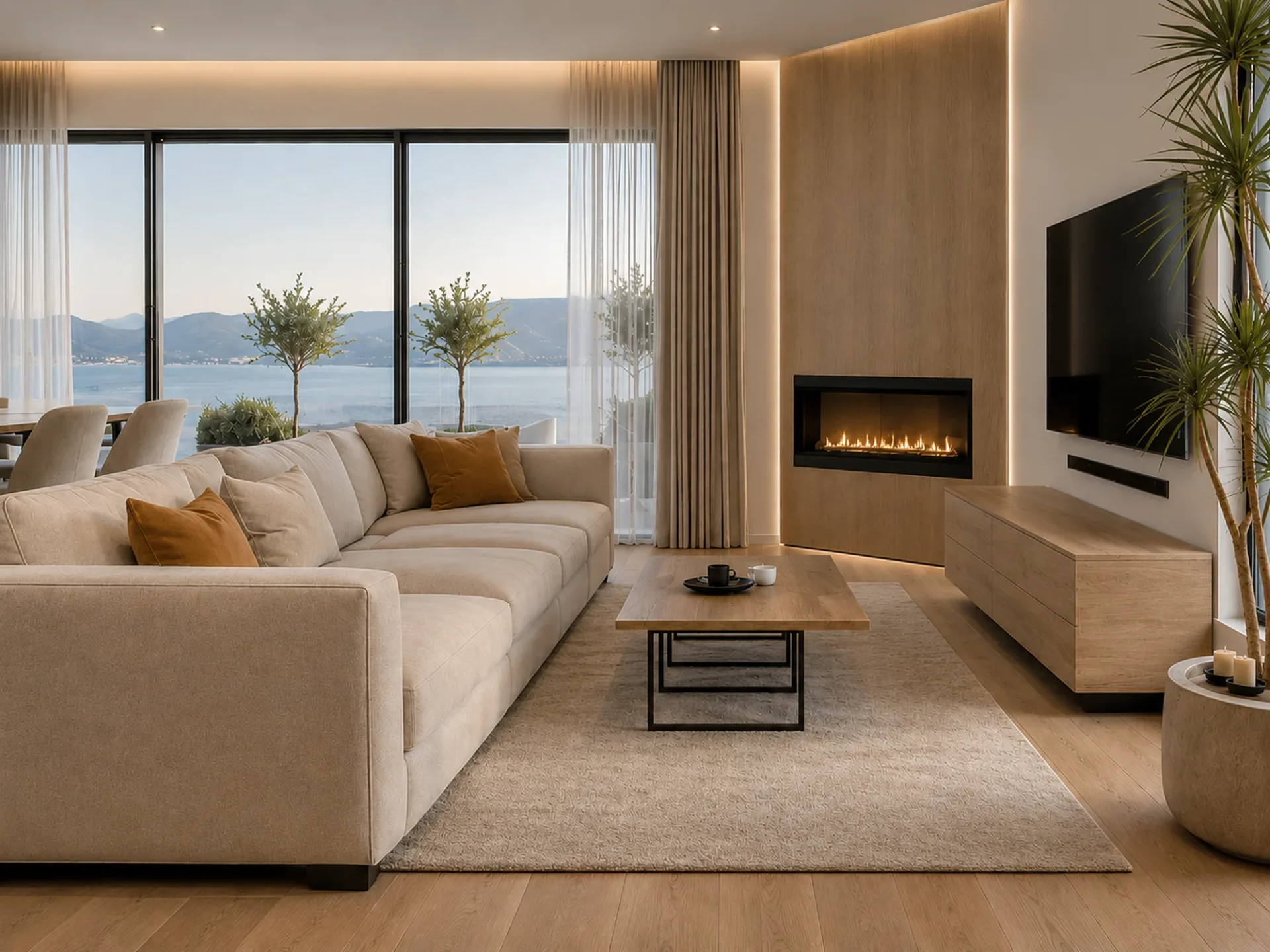
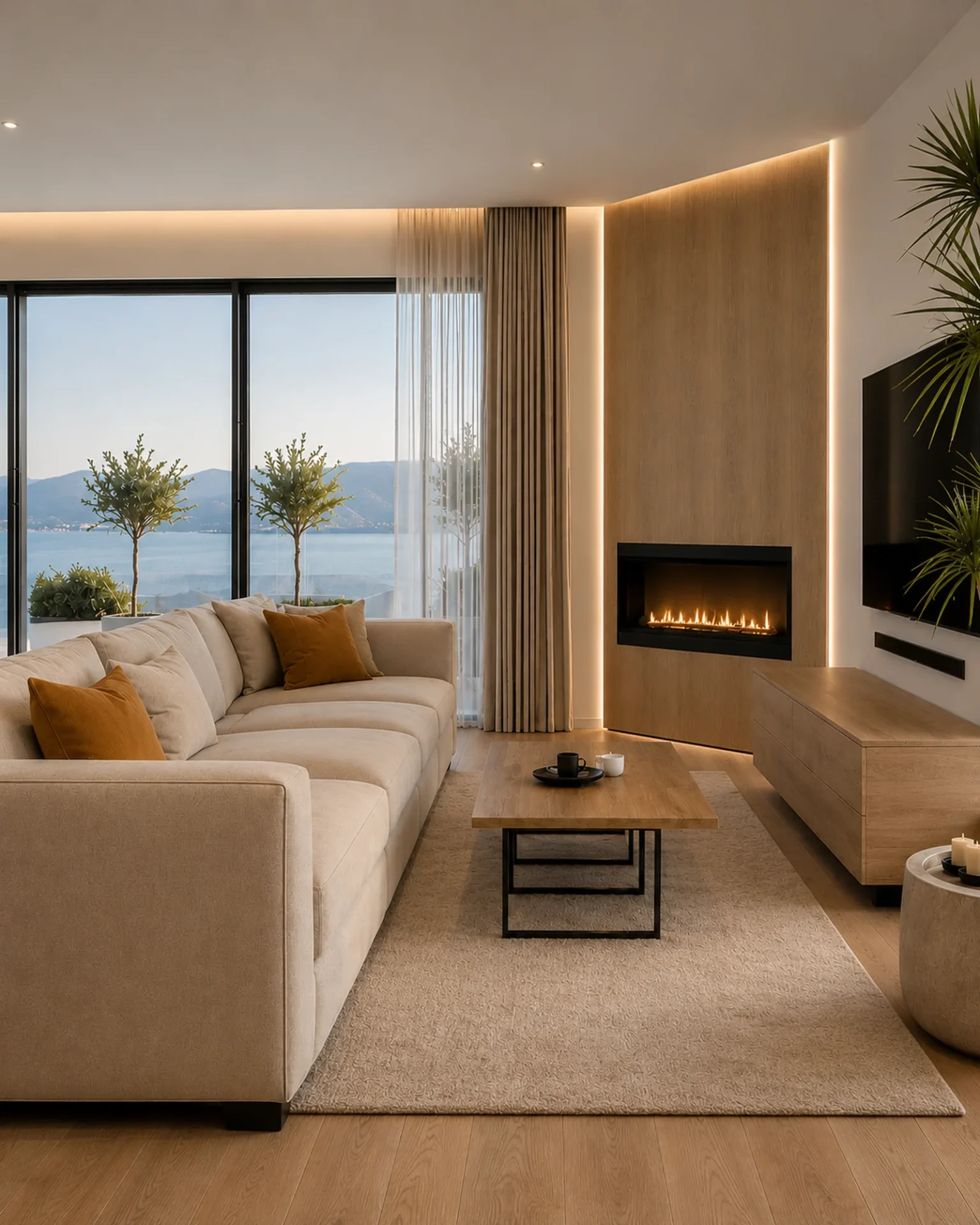
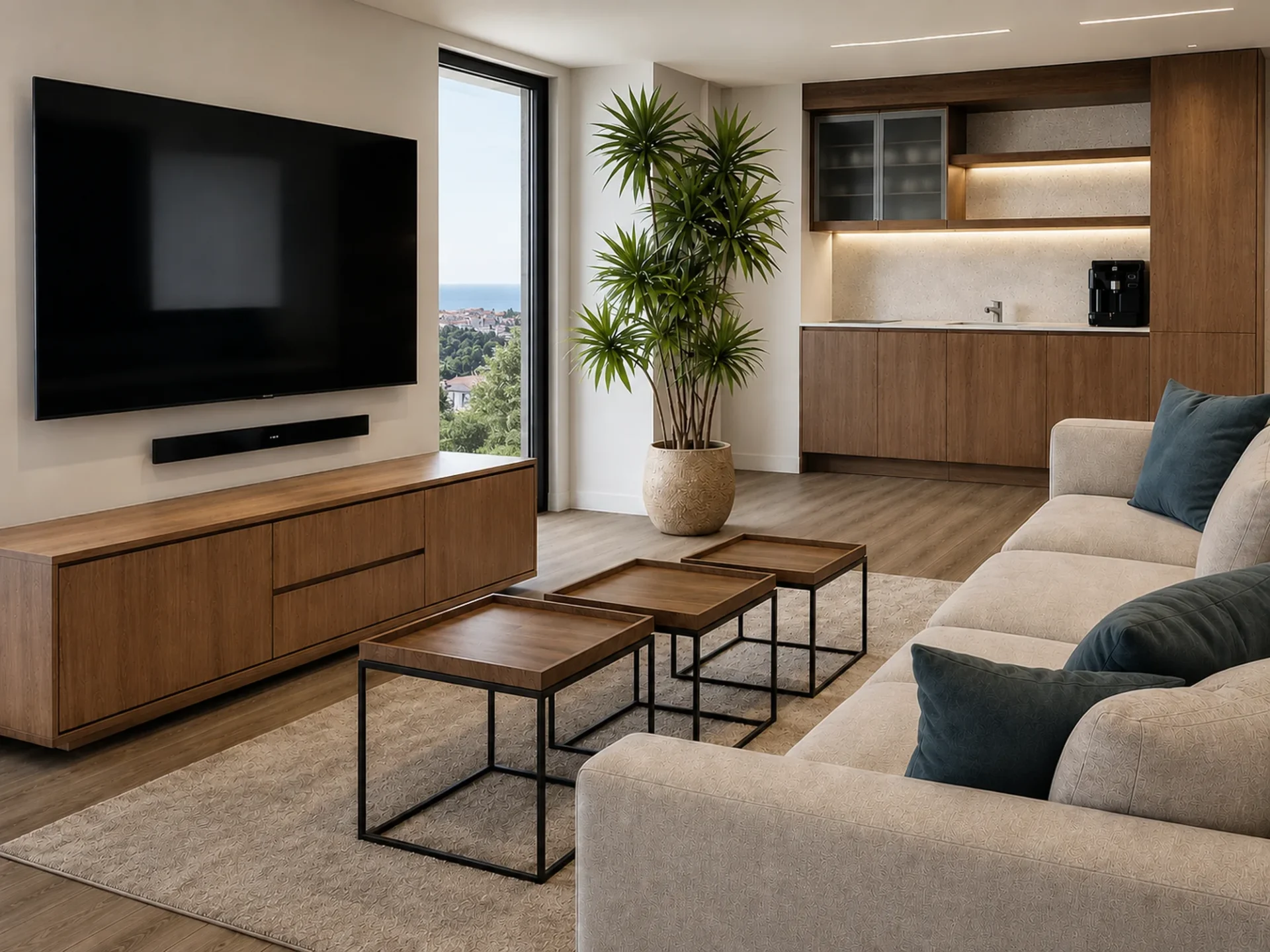
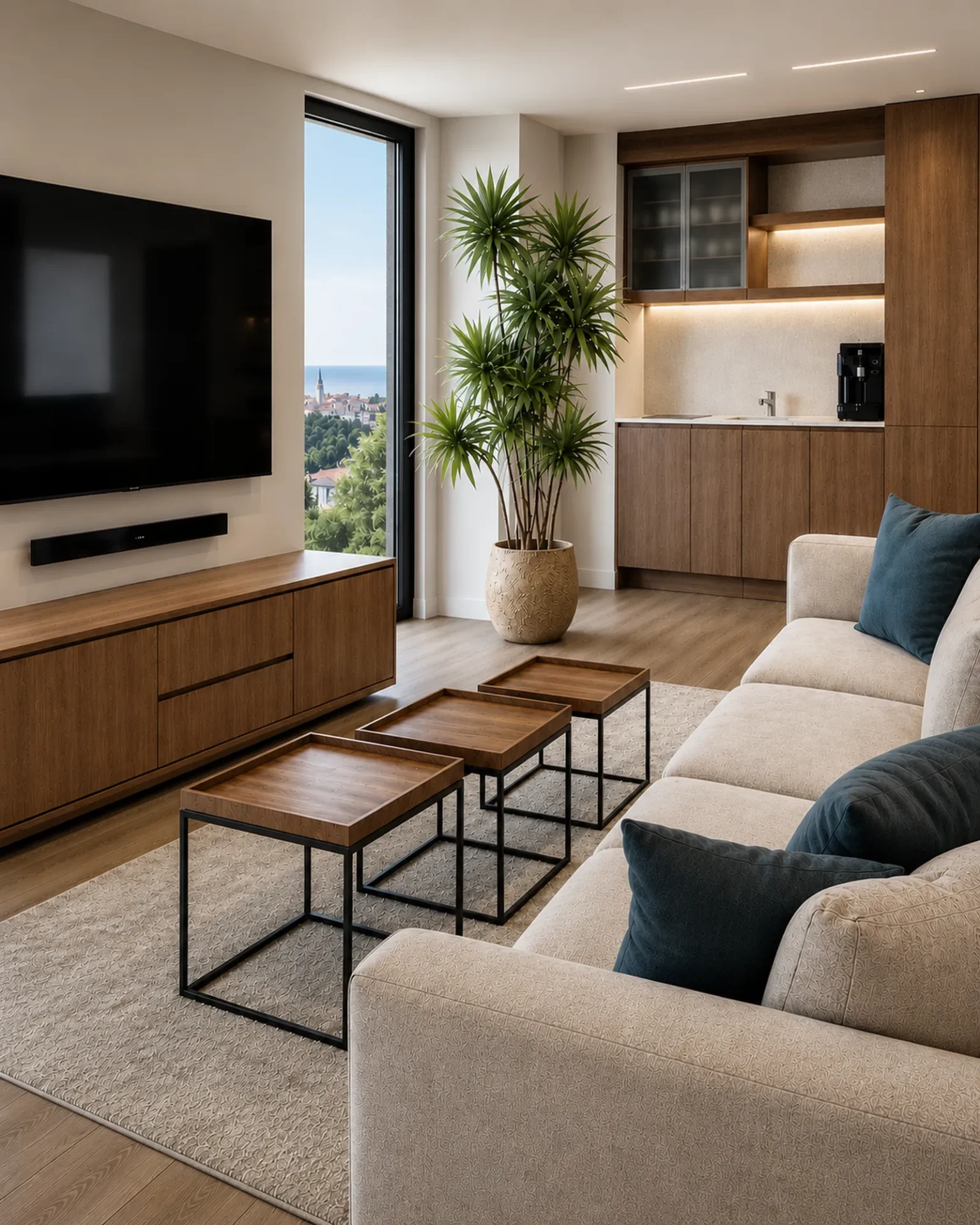
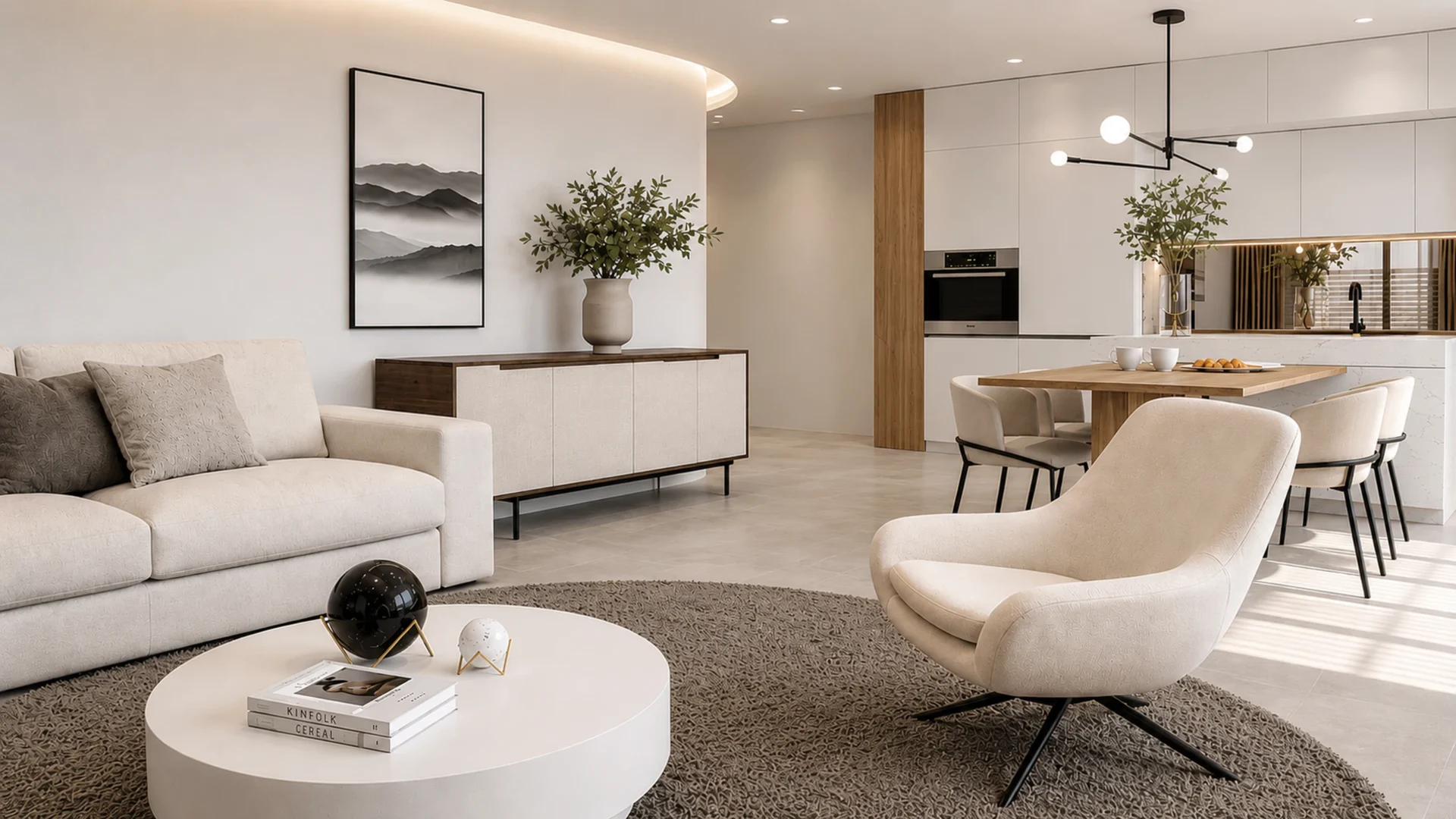
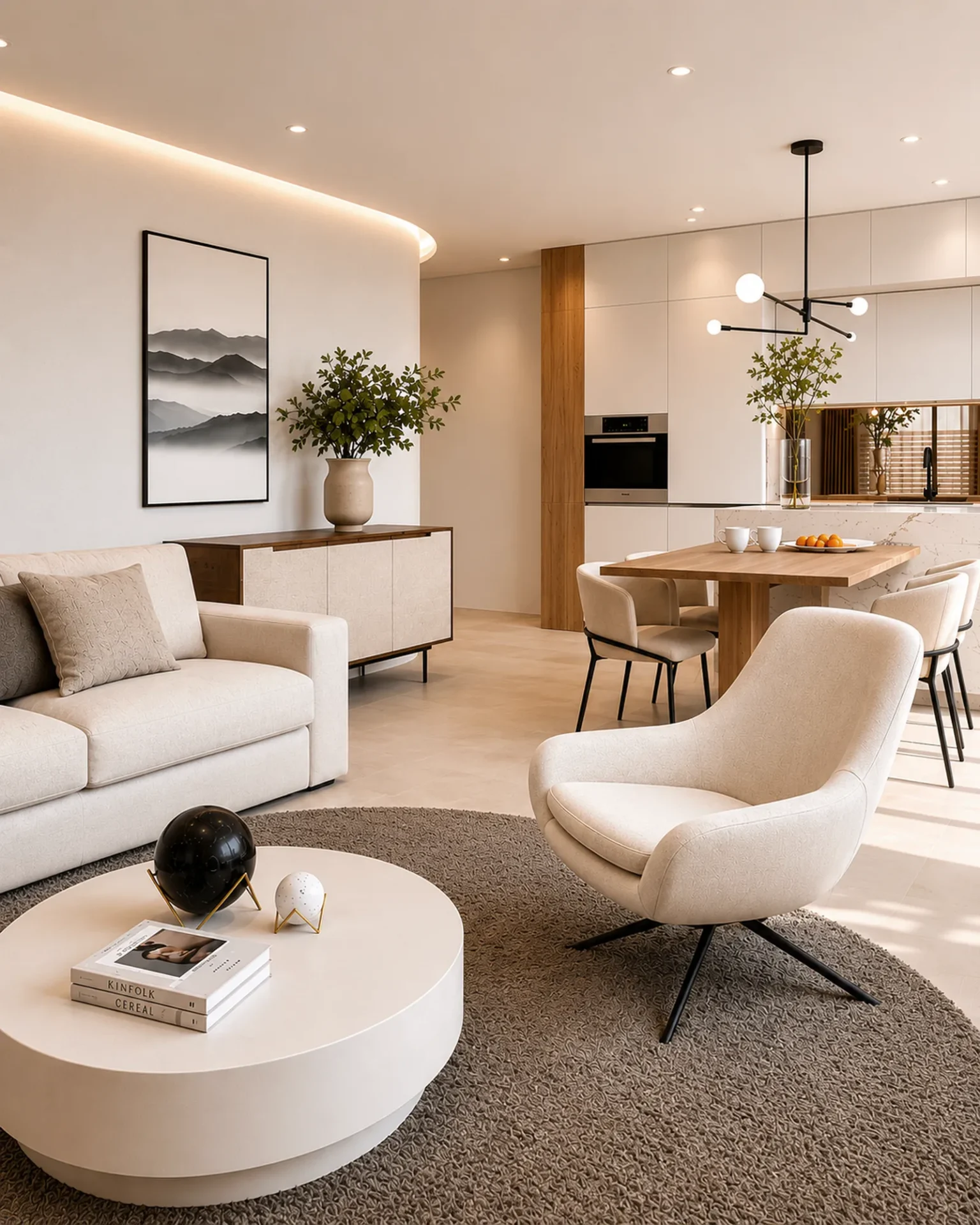
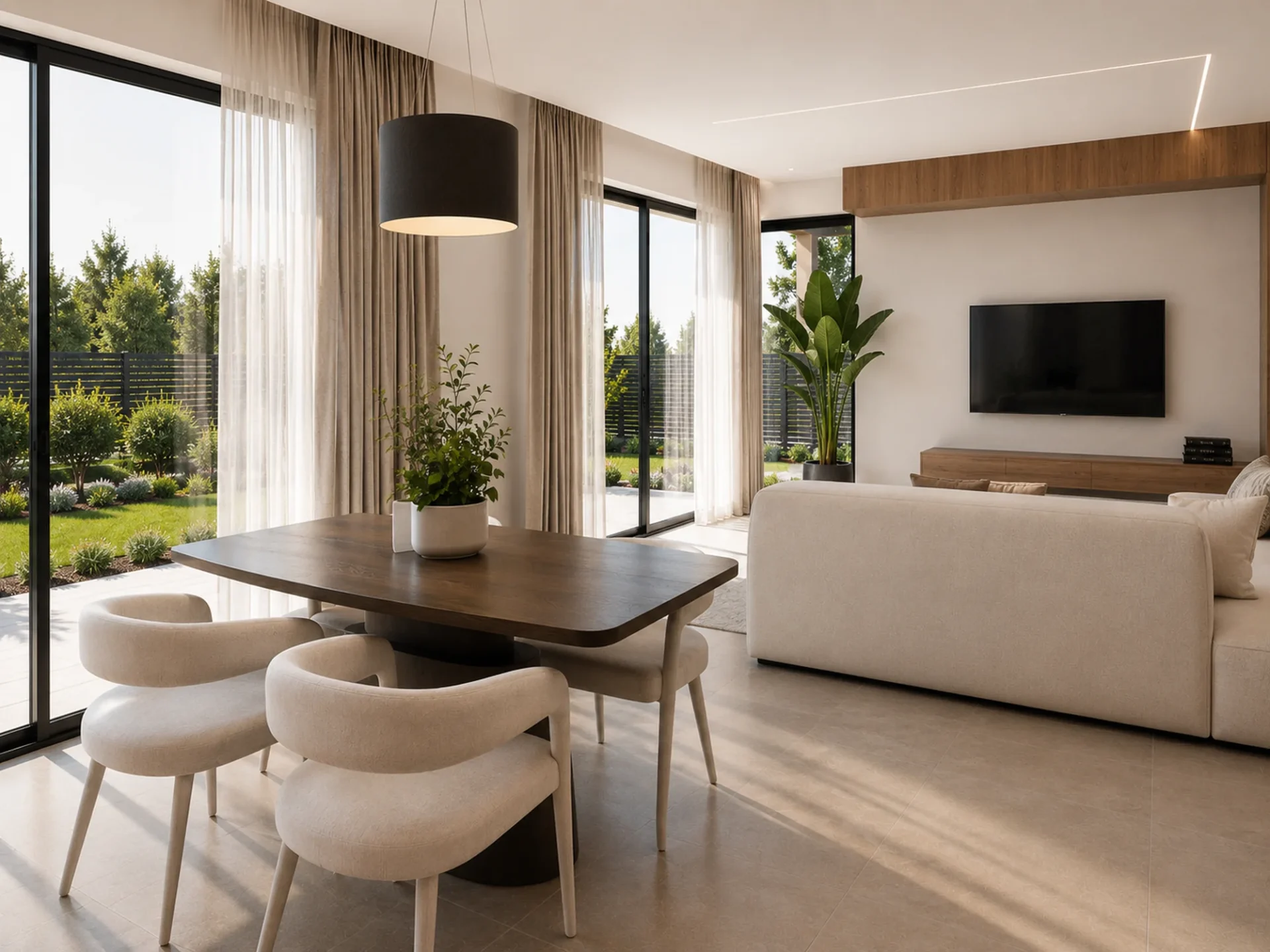
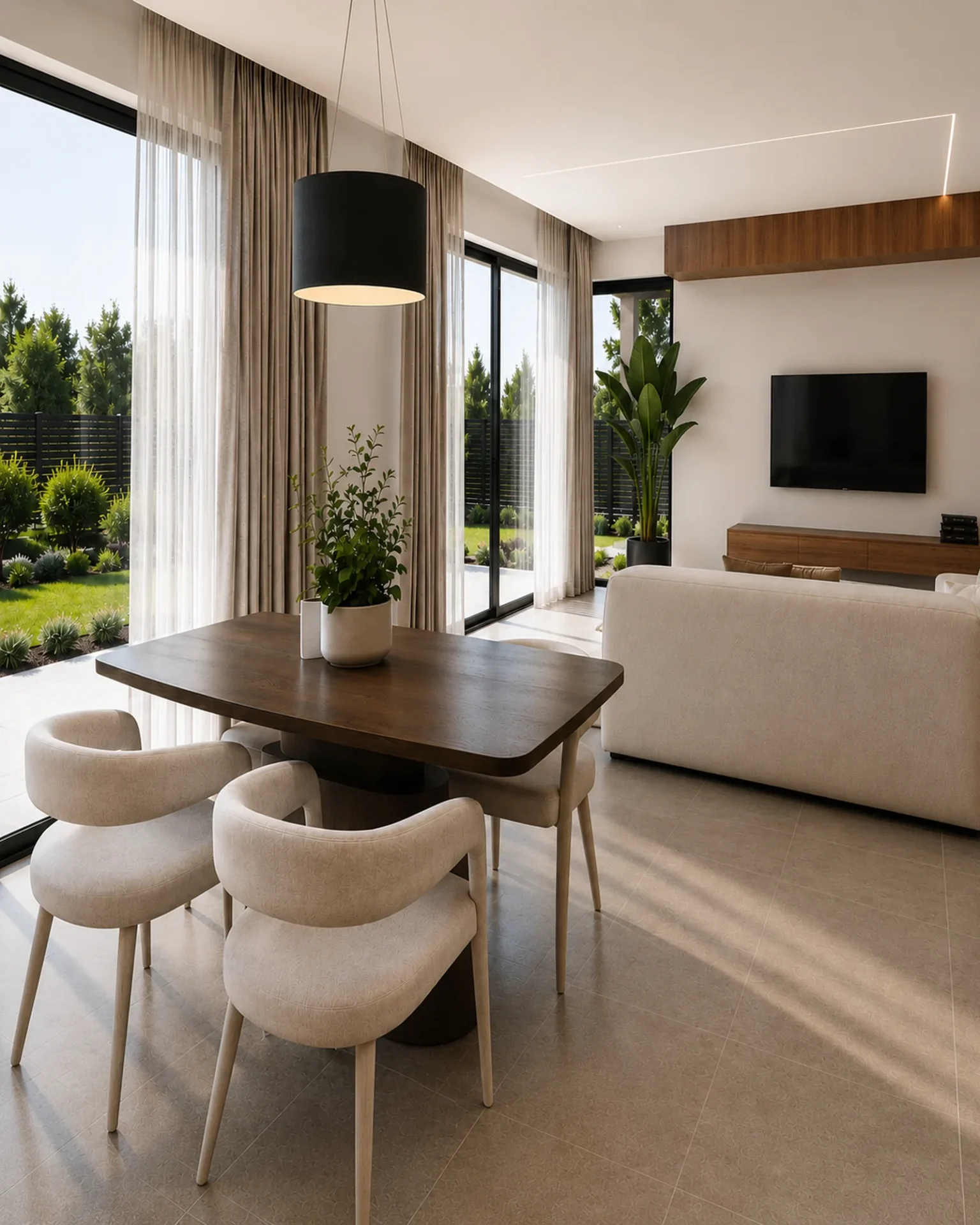
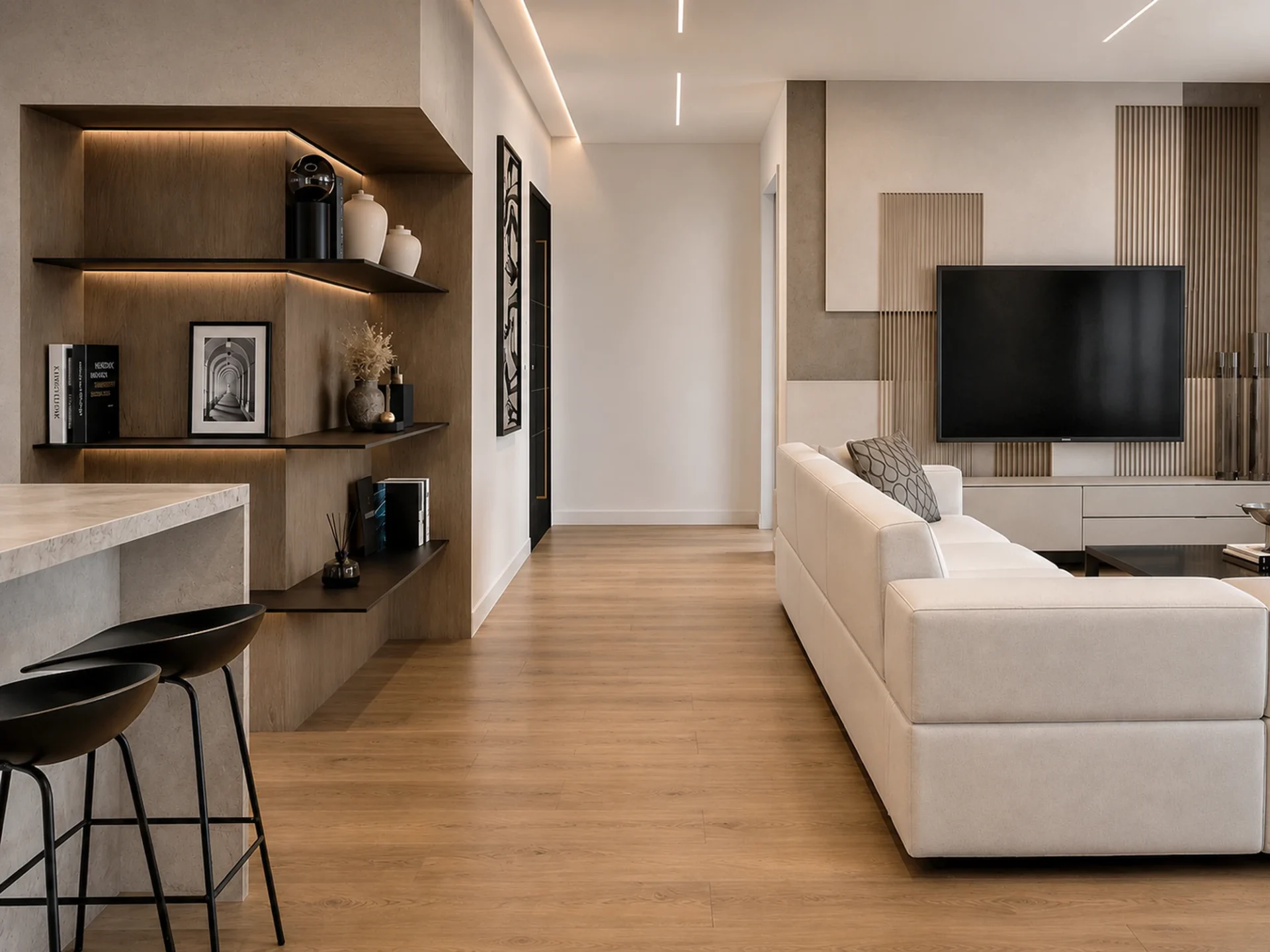
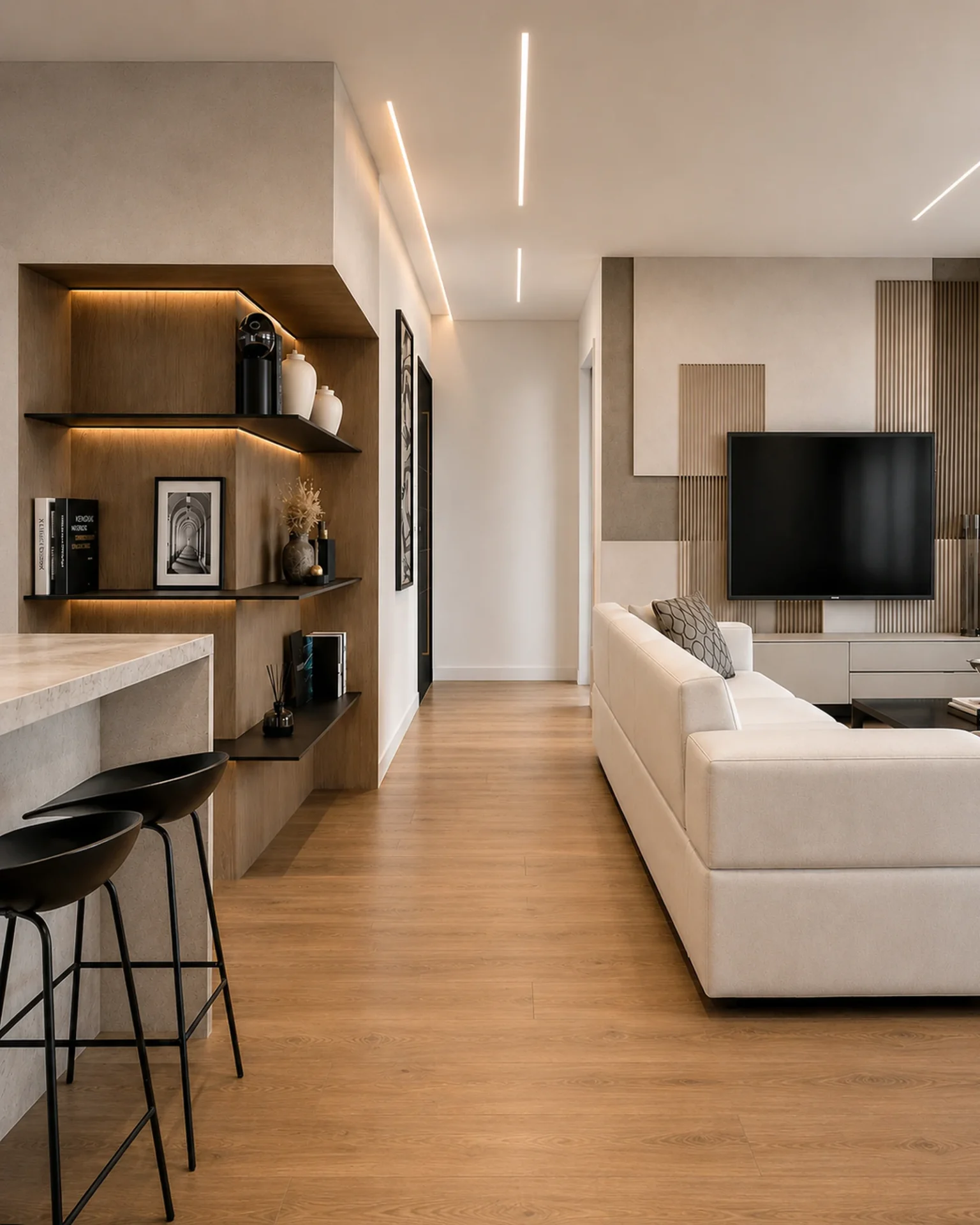
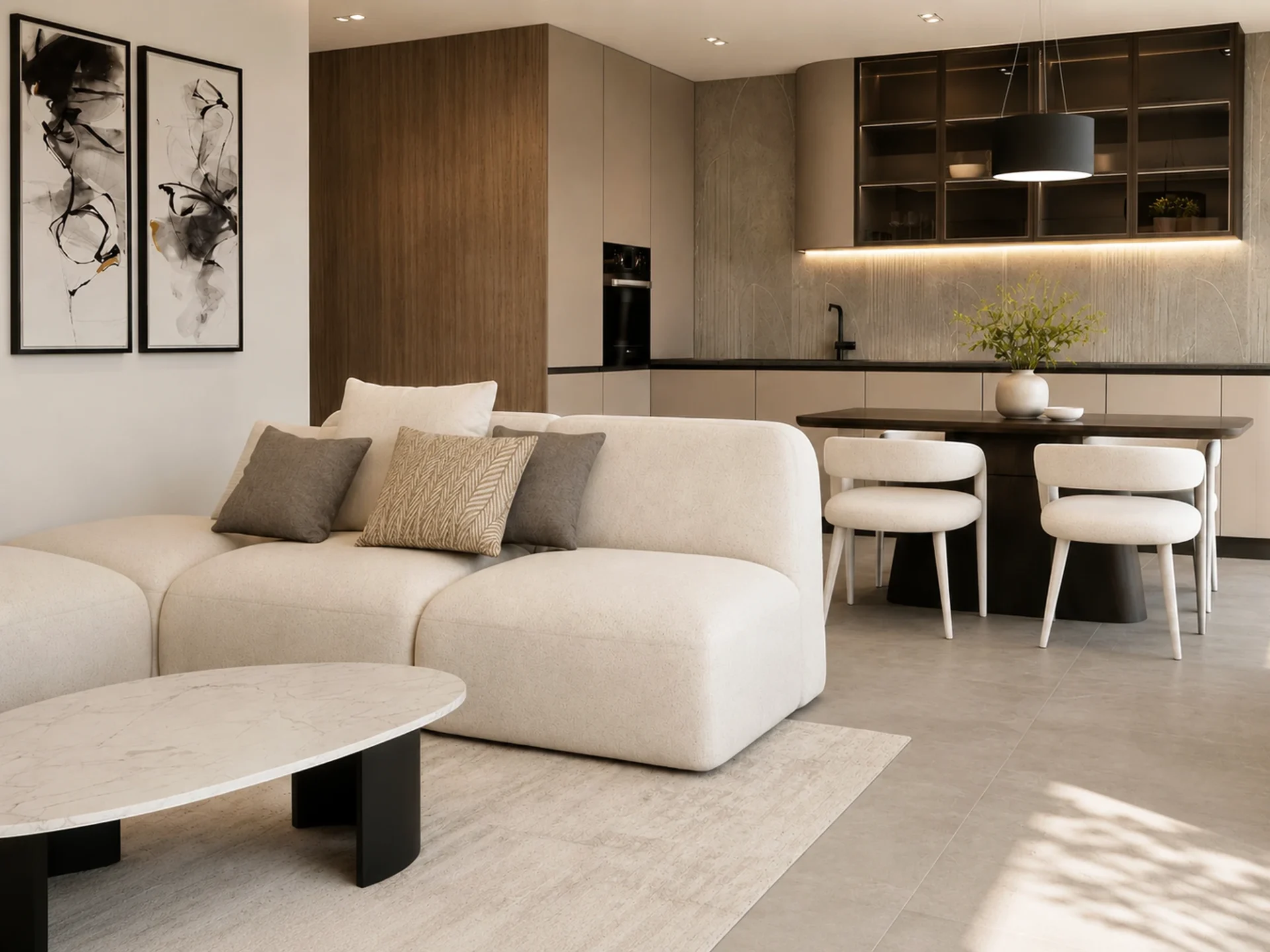
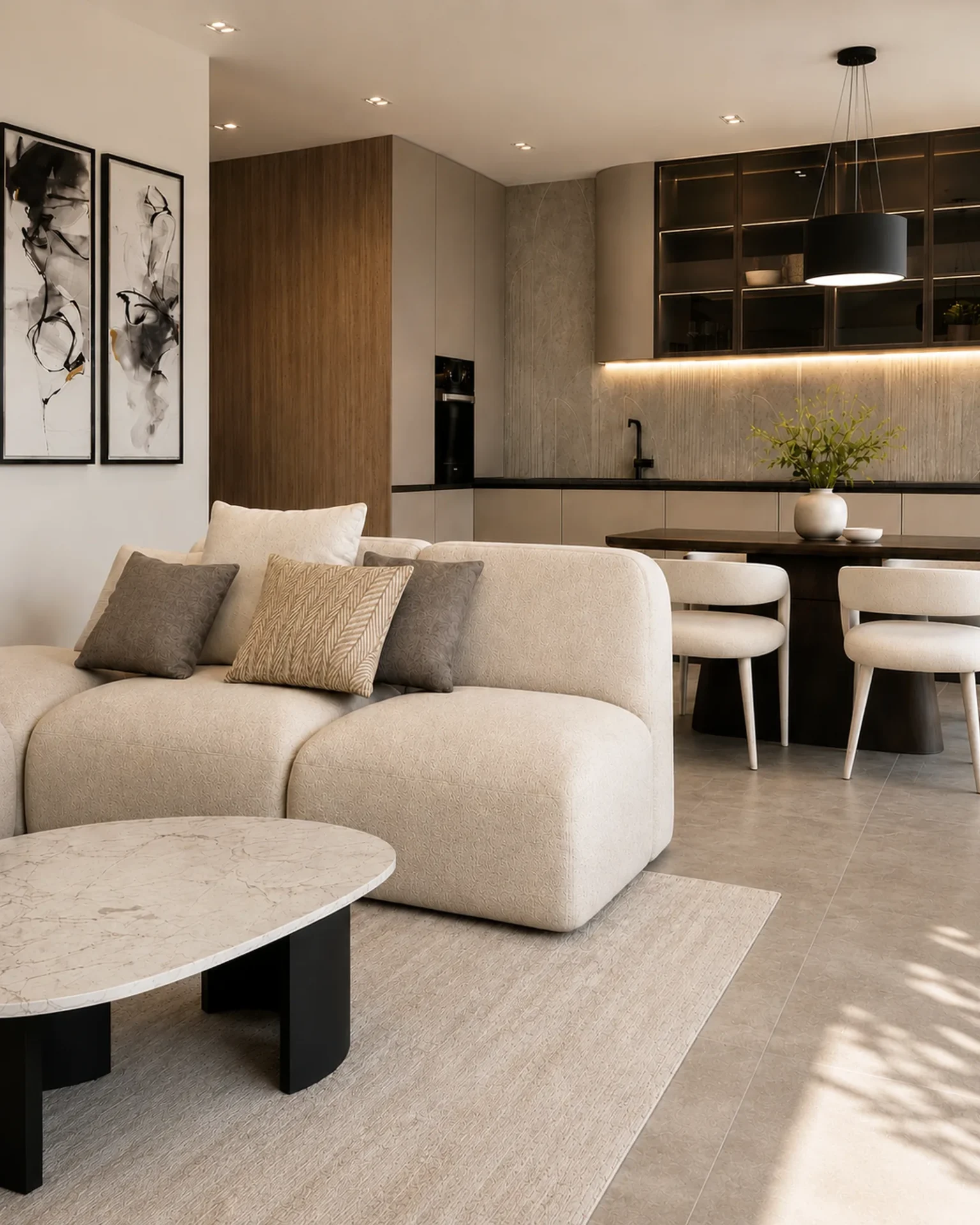
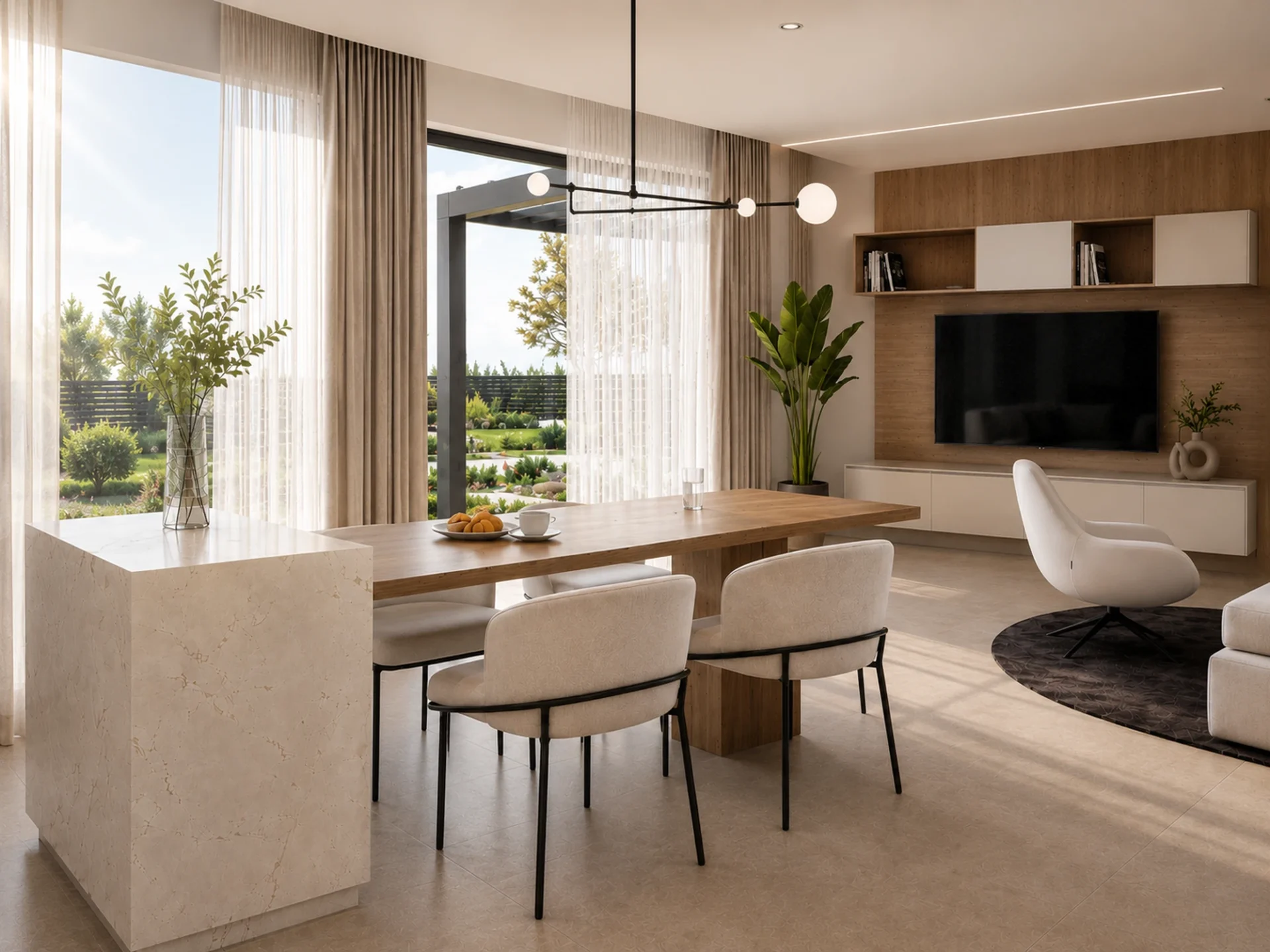
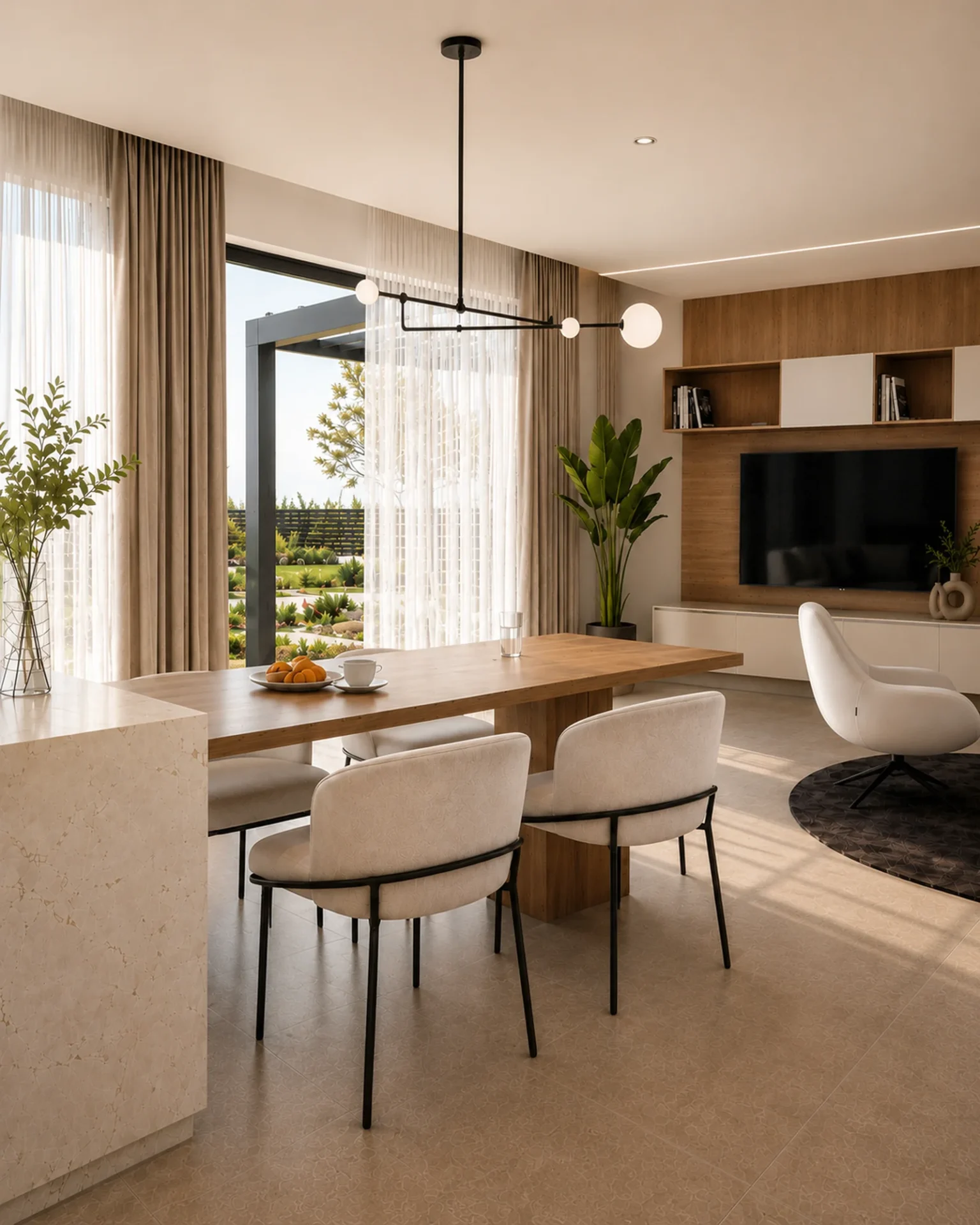
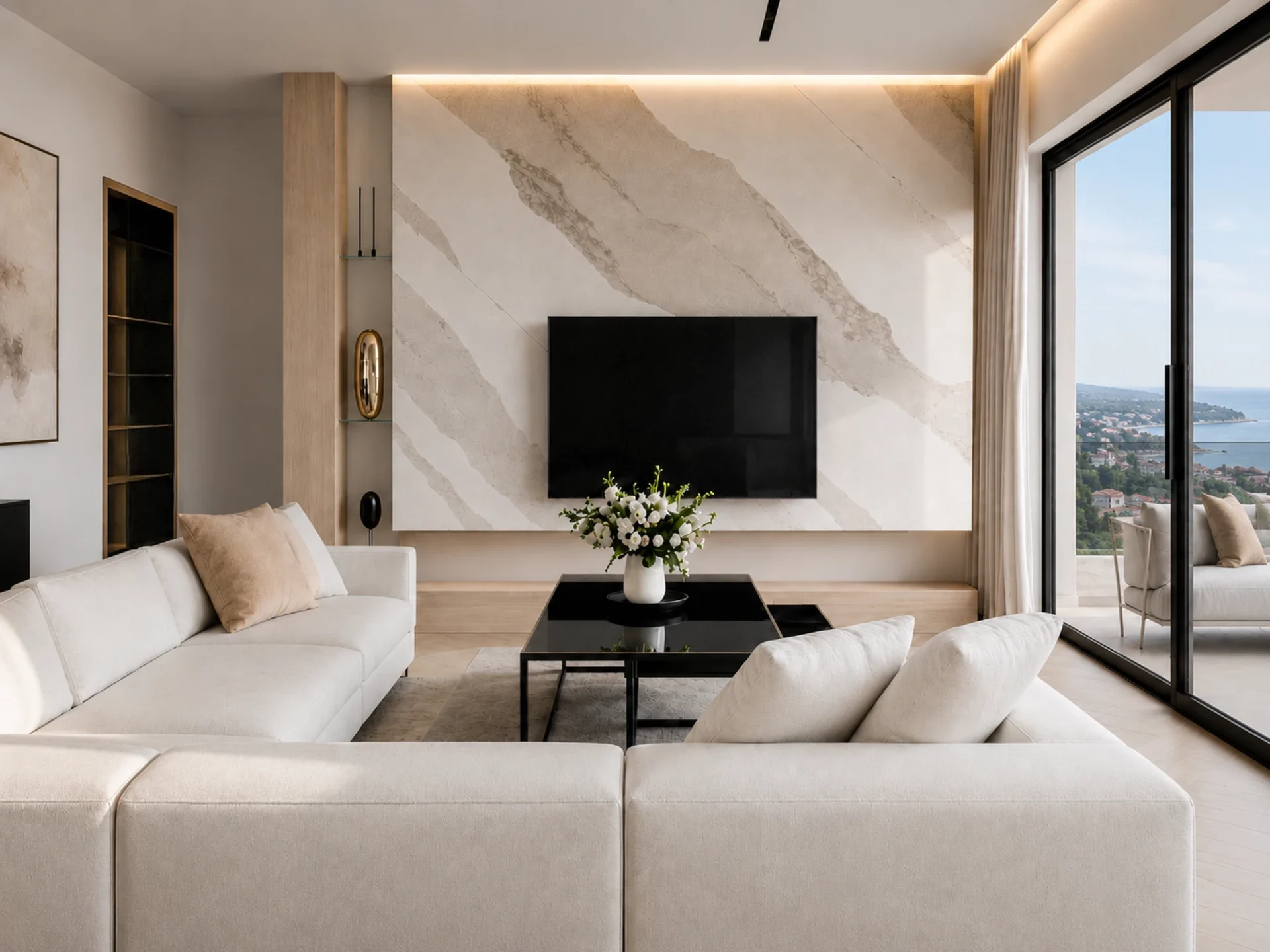
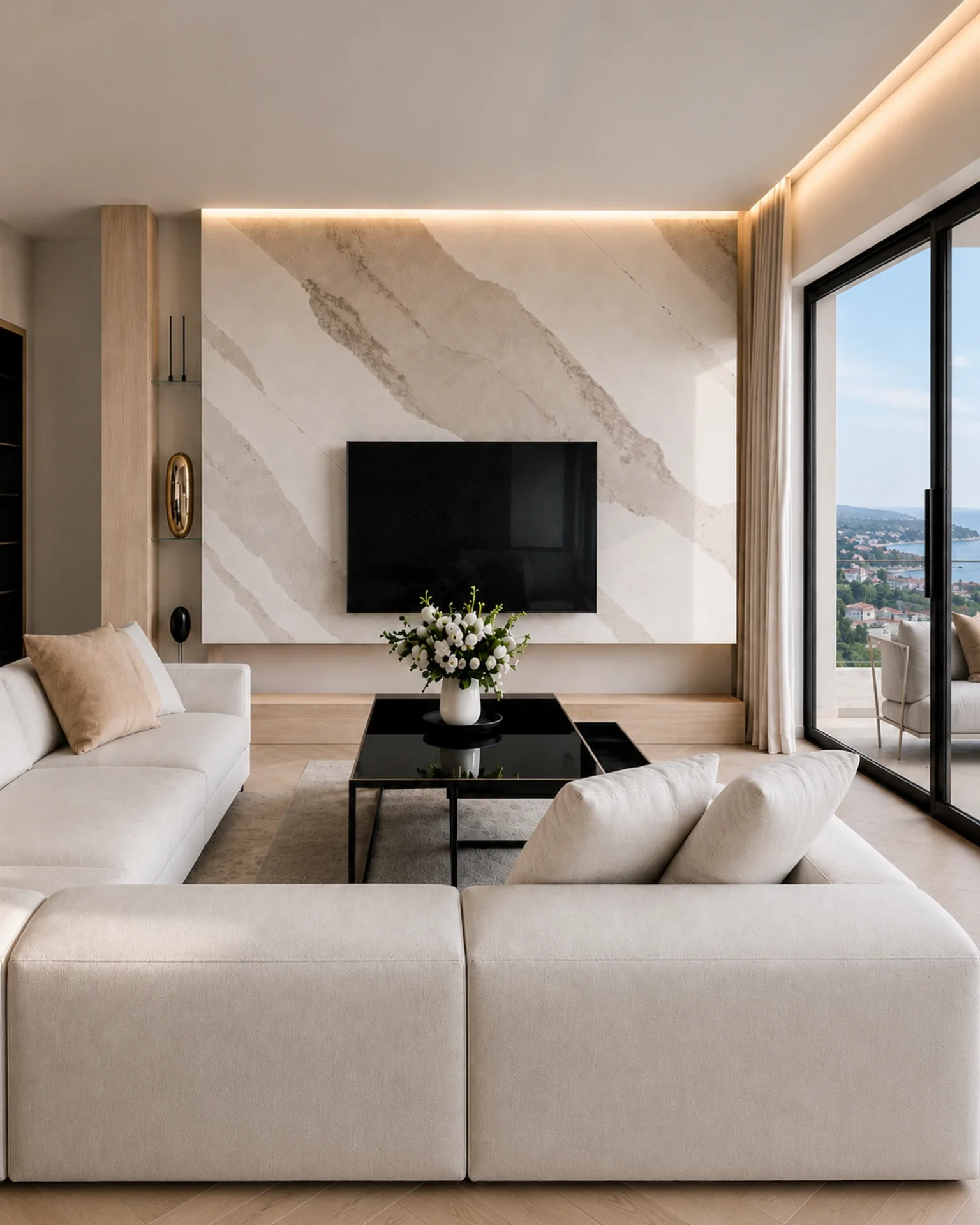
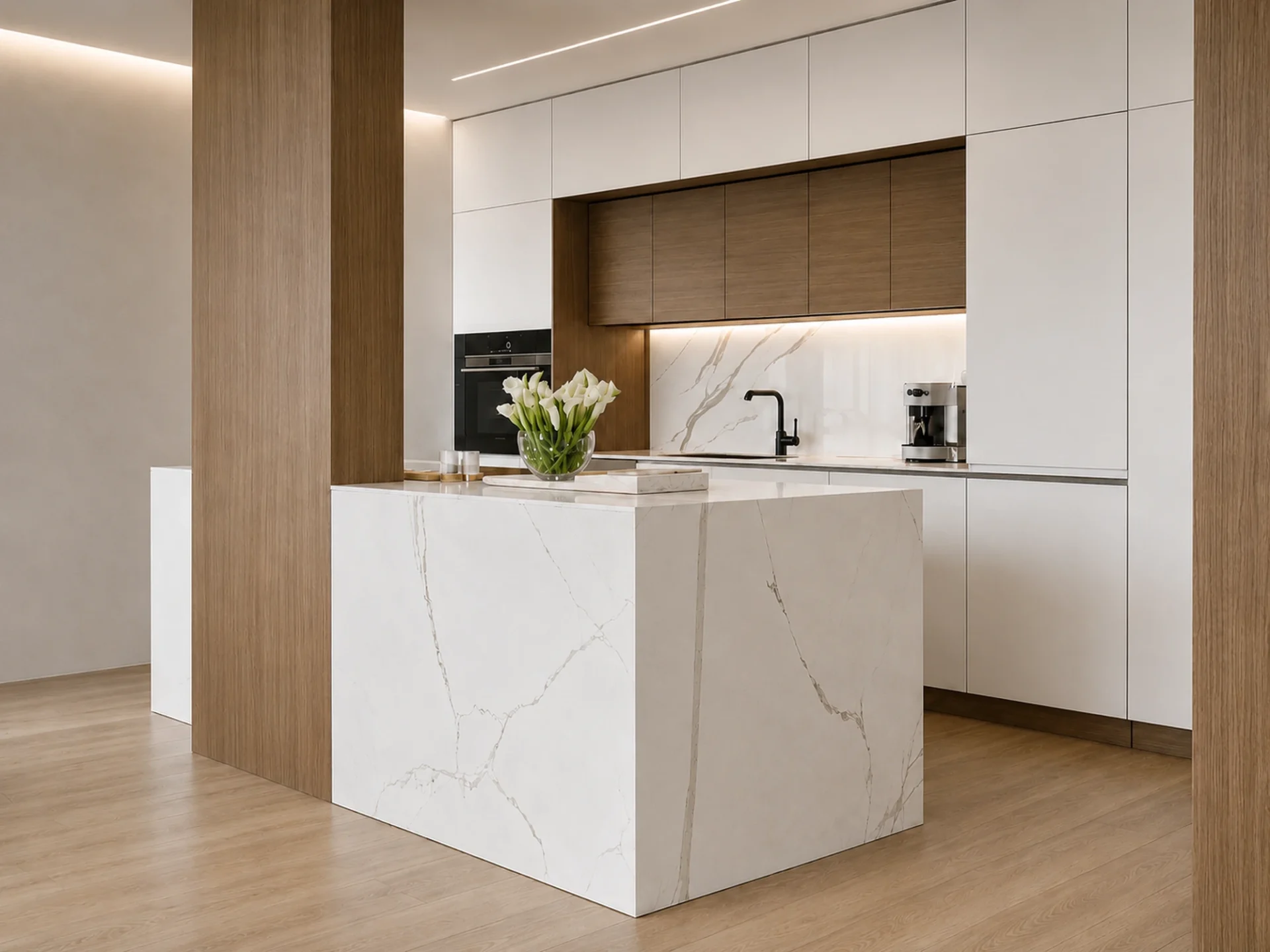
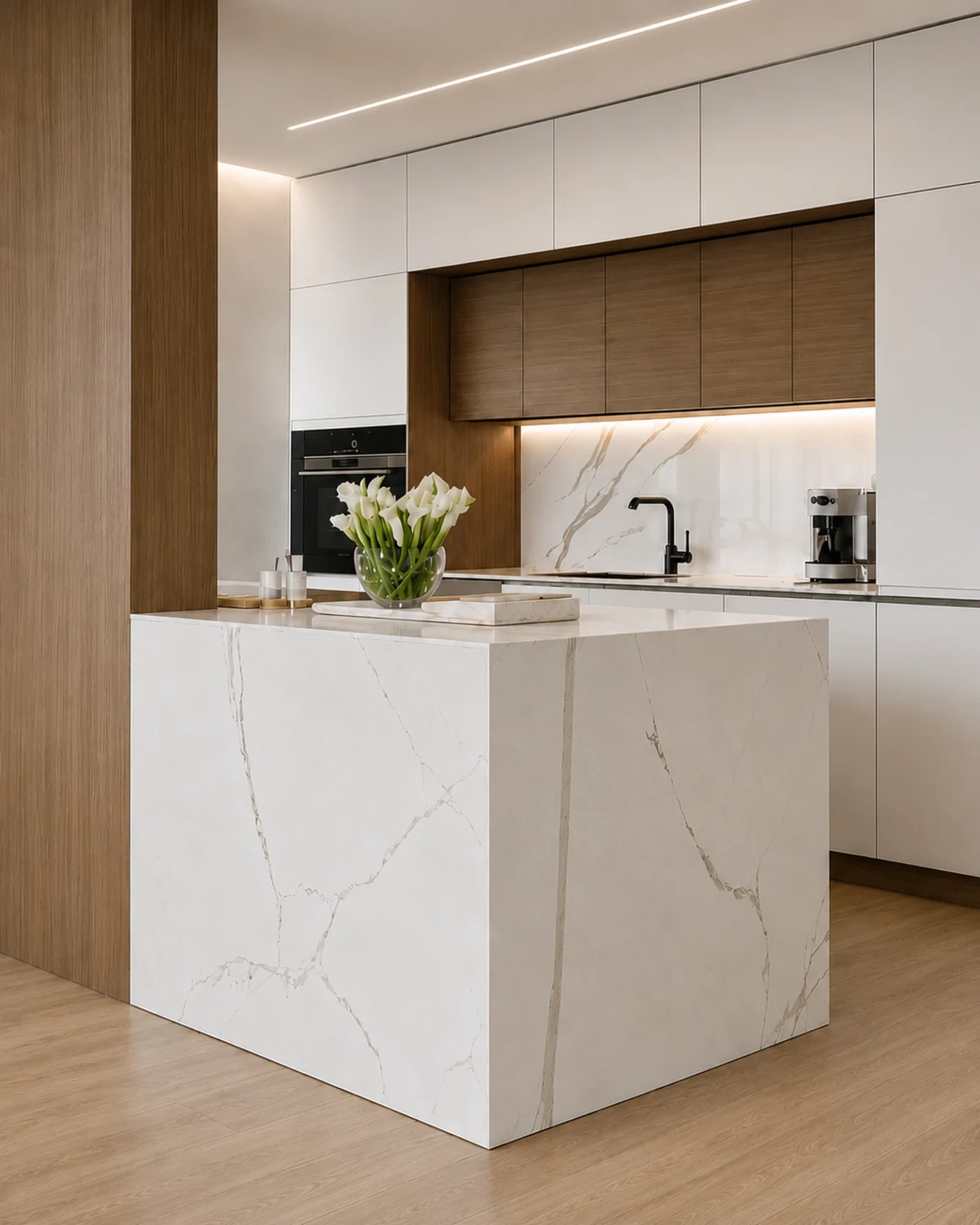
The apartments intended for sale are designed through open-plan living areas where the kitchen, dining, and living room are connected into a single, clearly defined spatial unit. A light color palette, neutral flooring finishes, wooden accents, and integrated lighting create a calm residential setting that is both comfortable for everyday living and sufficiently refined for market presentation.
Special emphasis is placed on the relationship between the interior and the outdoor spaces. The ground-floor apartments open onto gardens and terraces, while the first-floor apartment maintains a sense of airiness, openness, and comfort through well-organized living zones.
Quieter Spaces Shaped Through Texture, Light, and Proportion
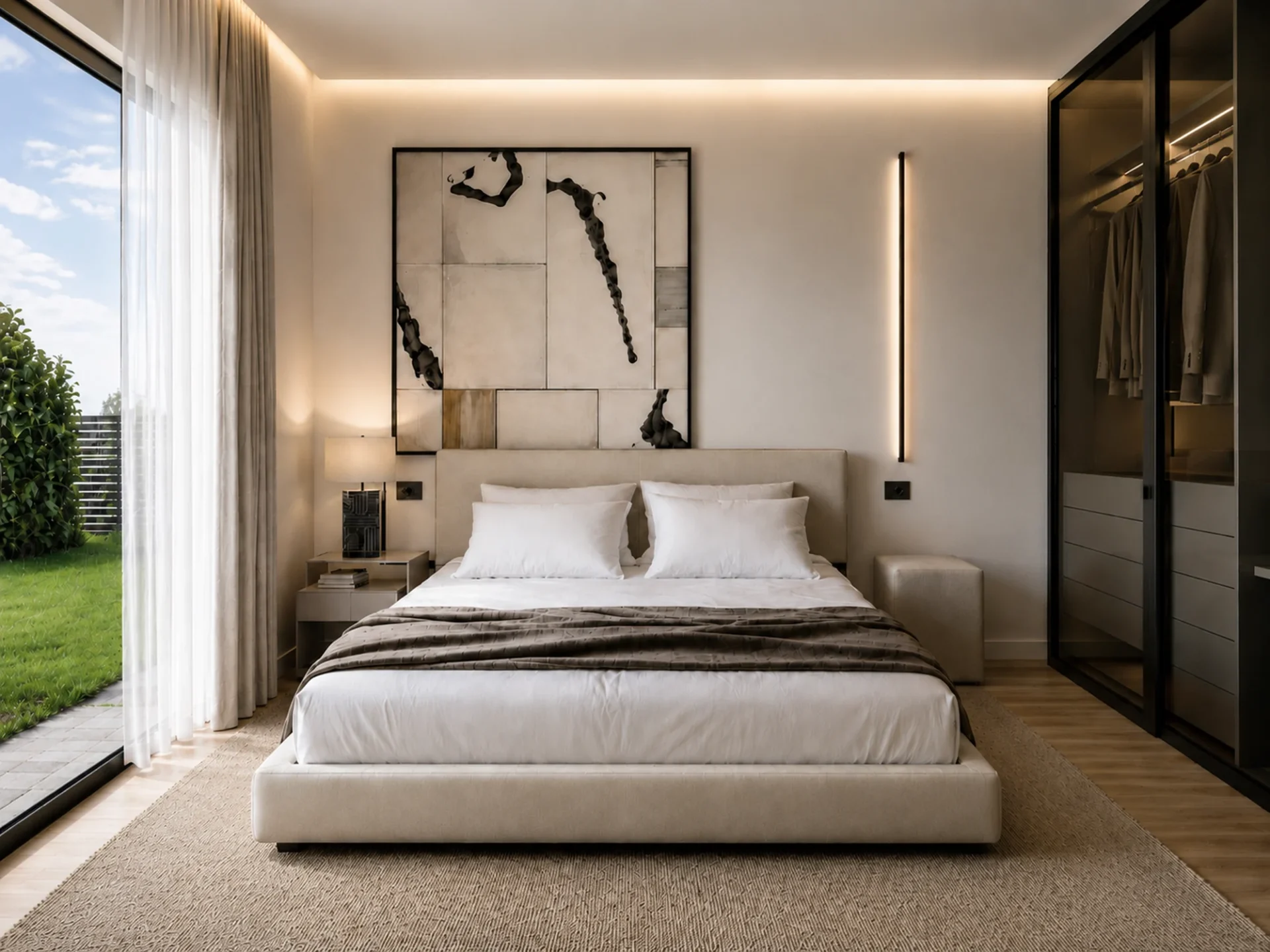
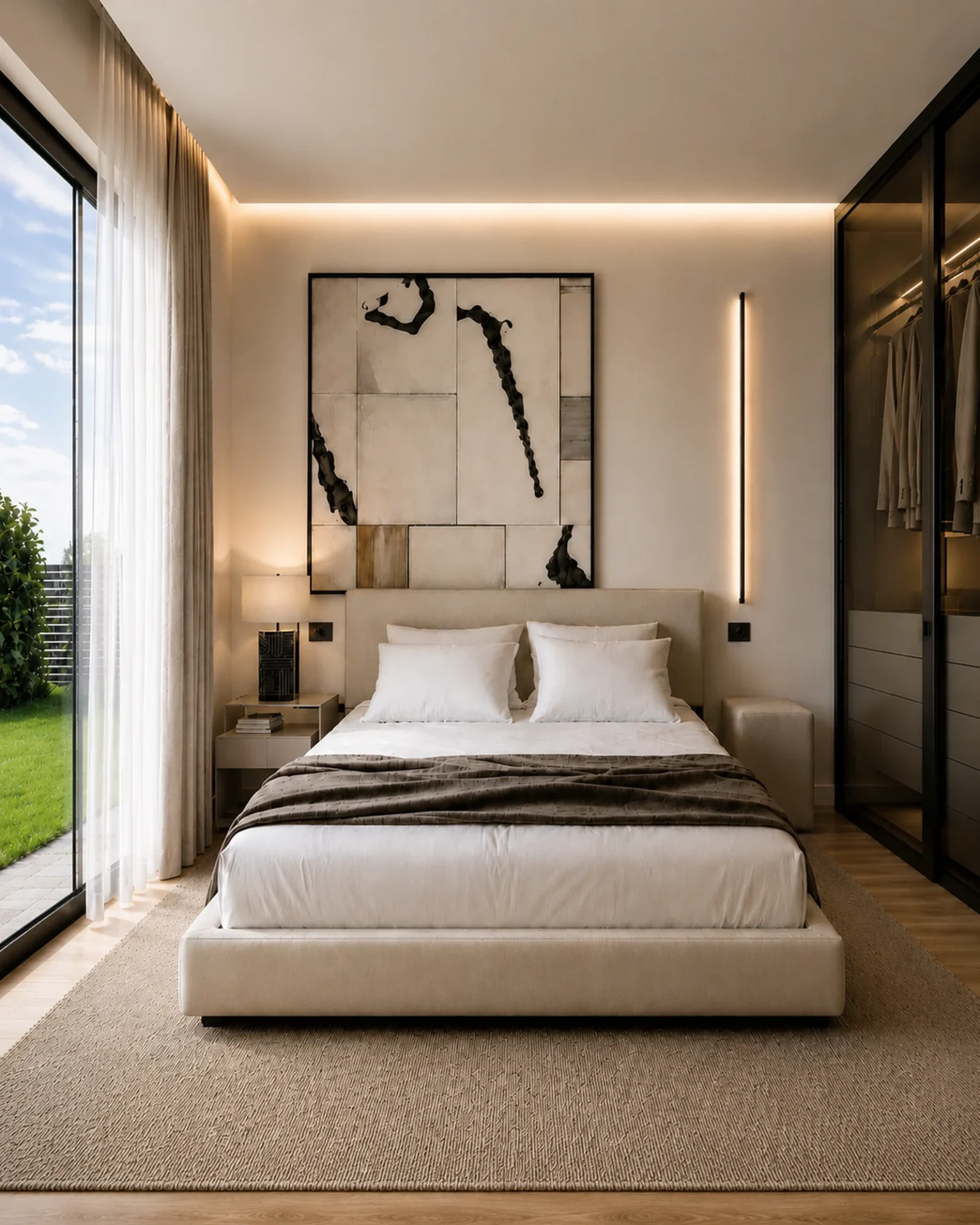
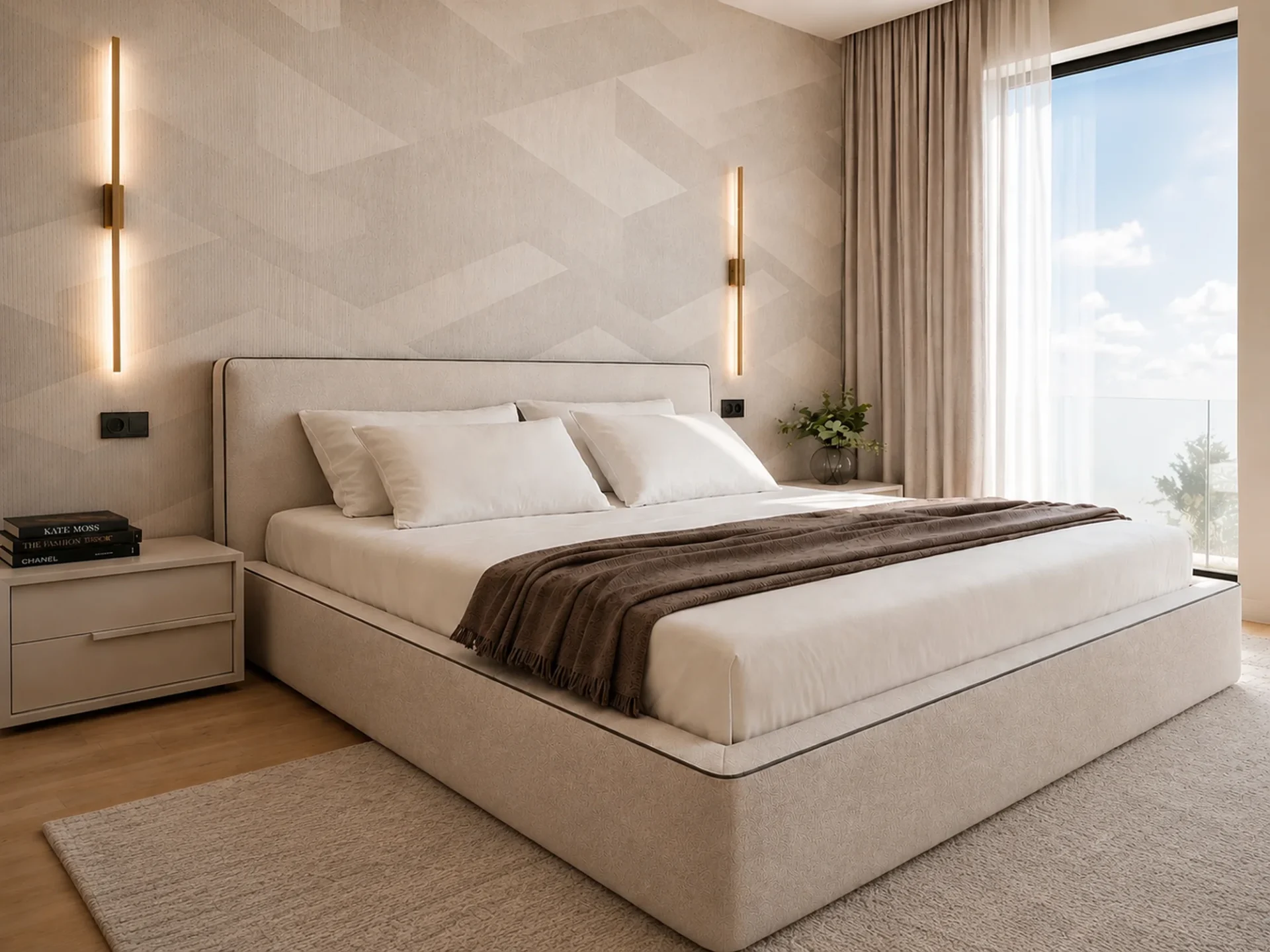
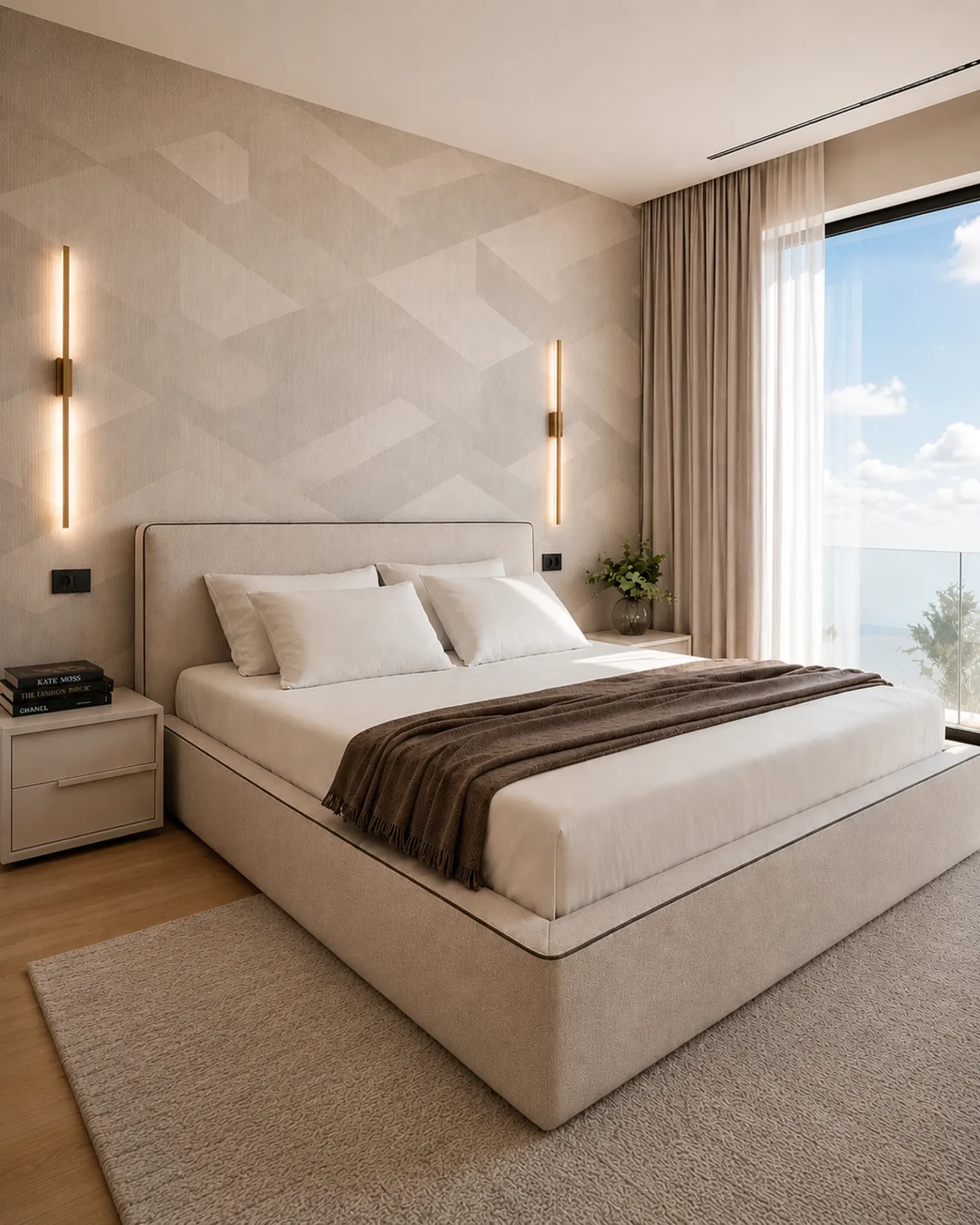
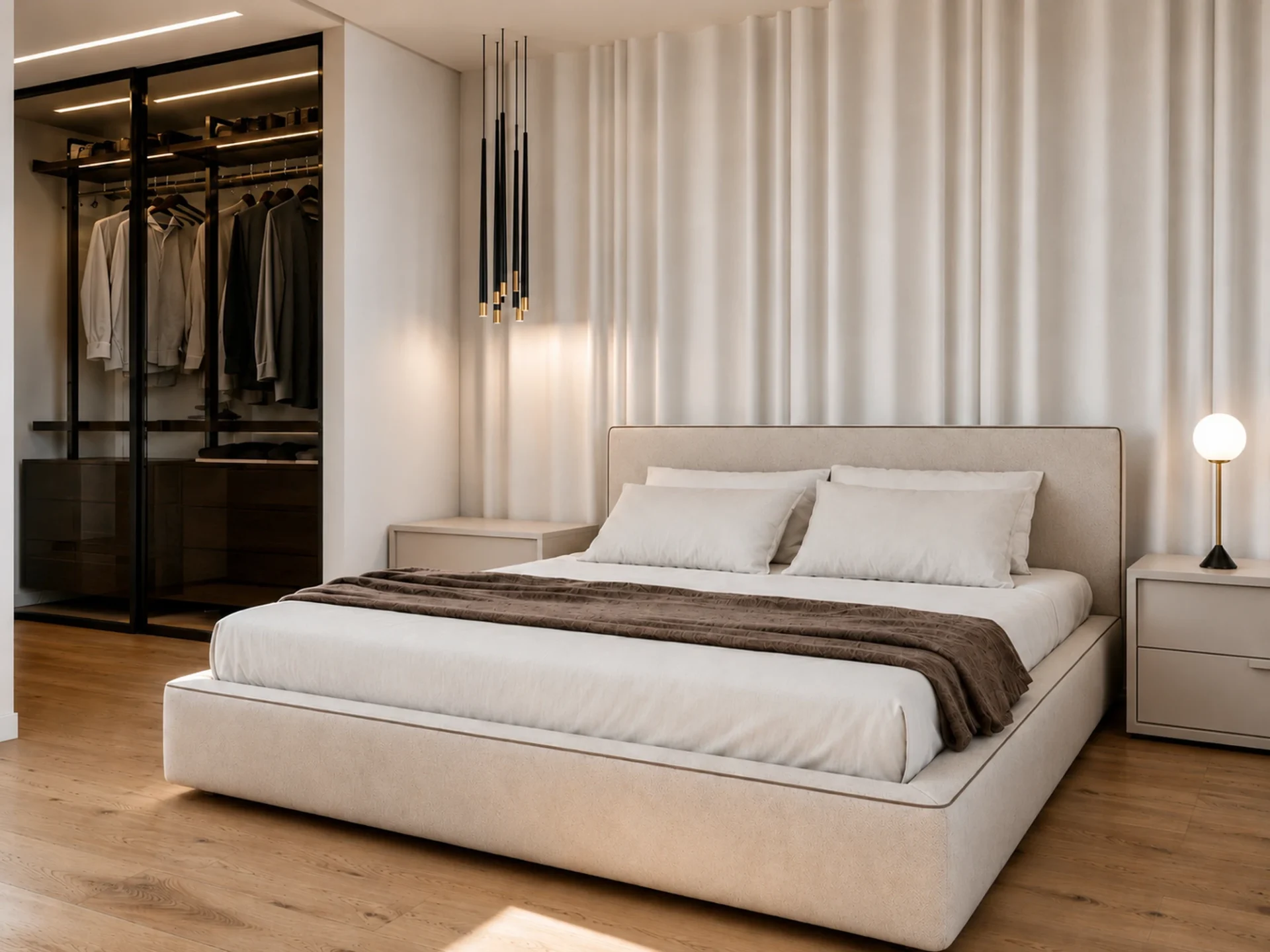
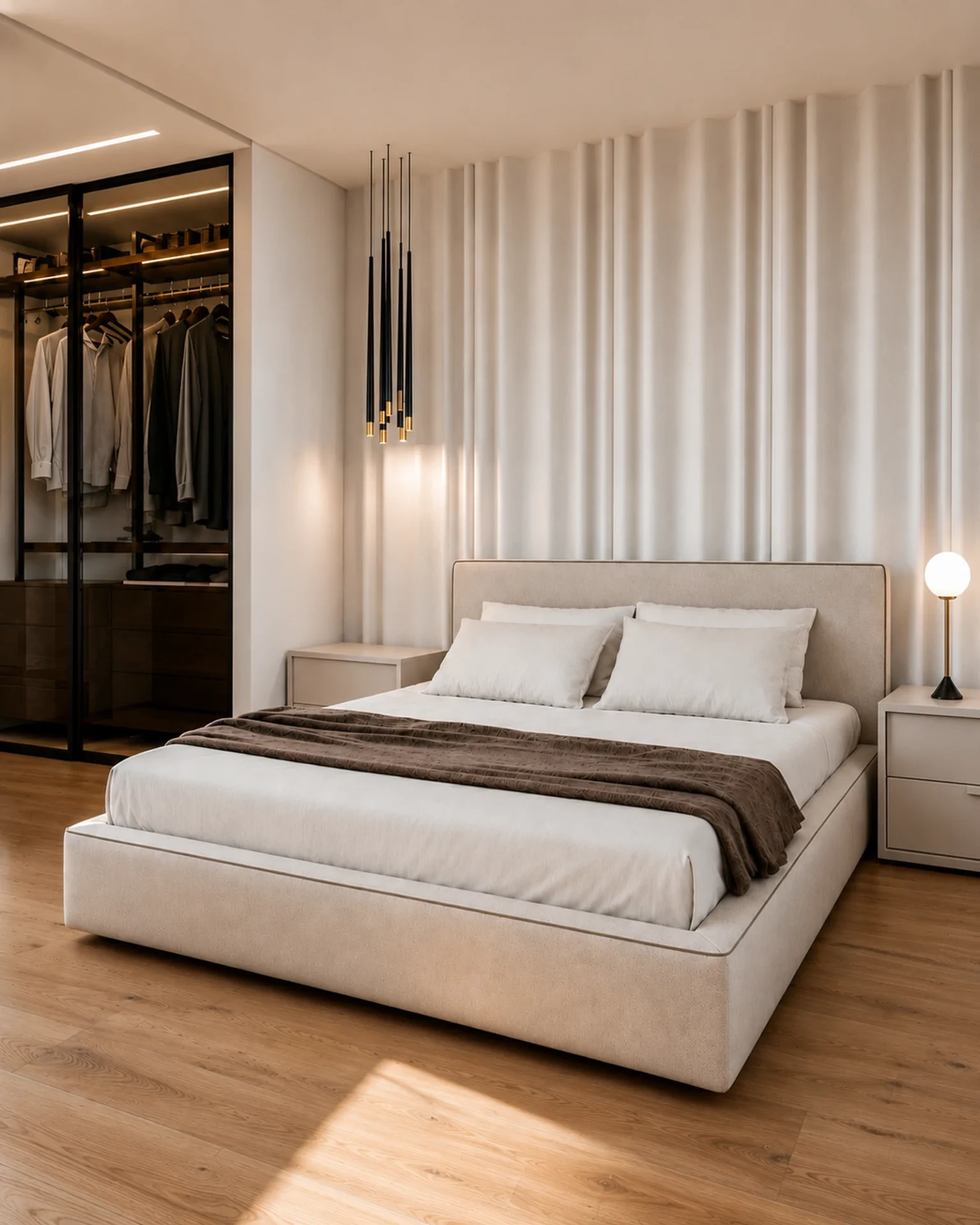
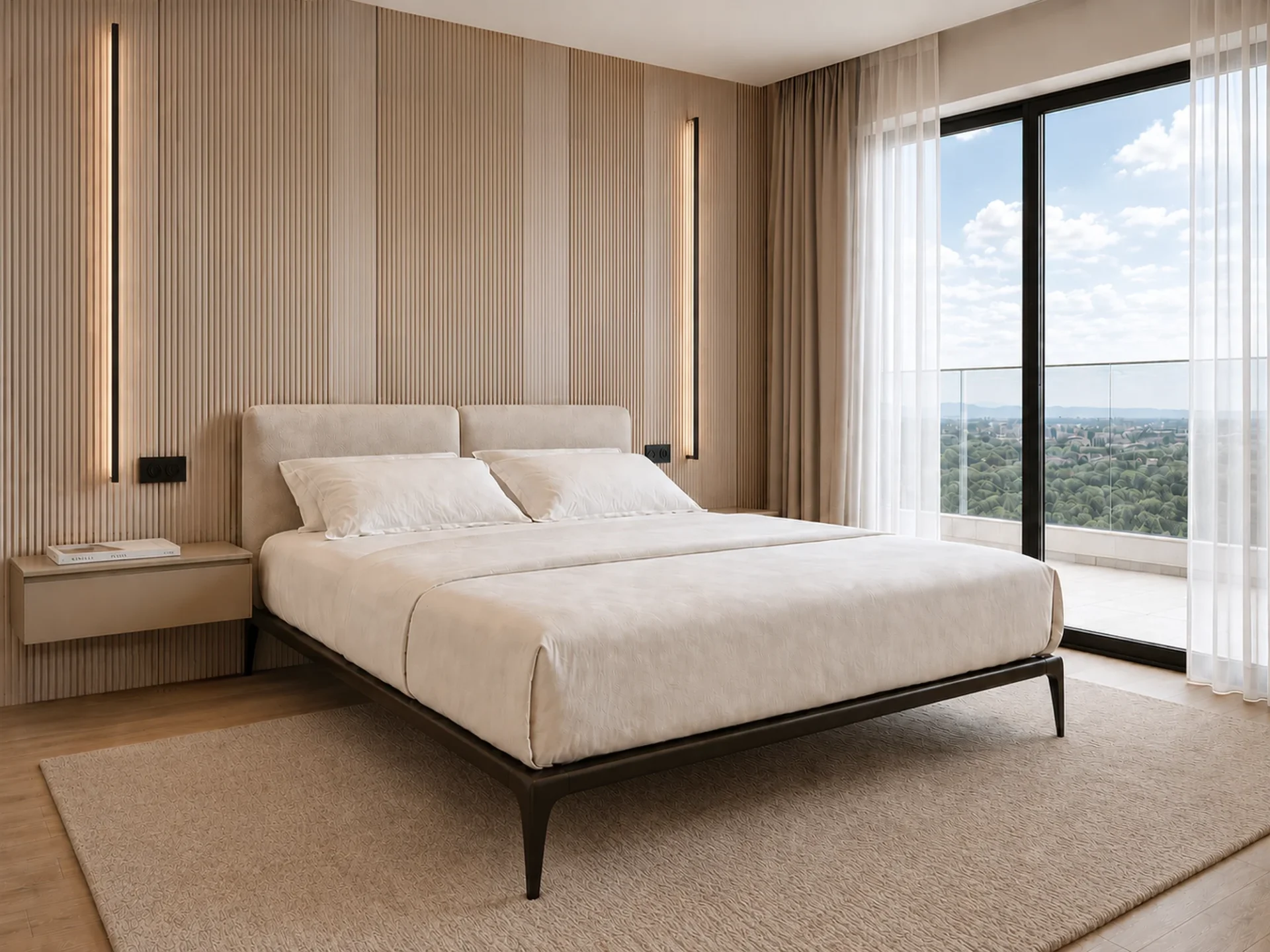
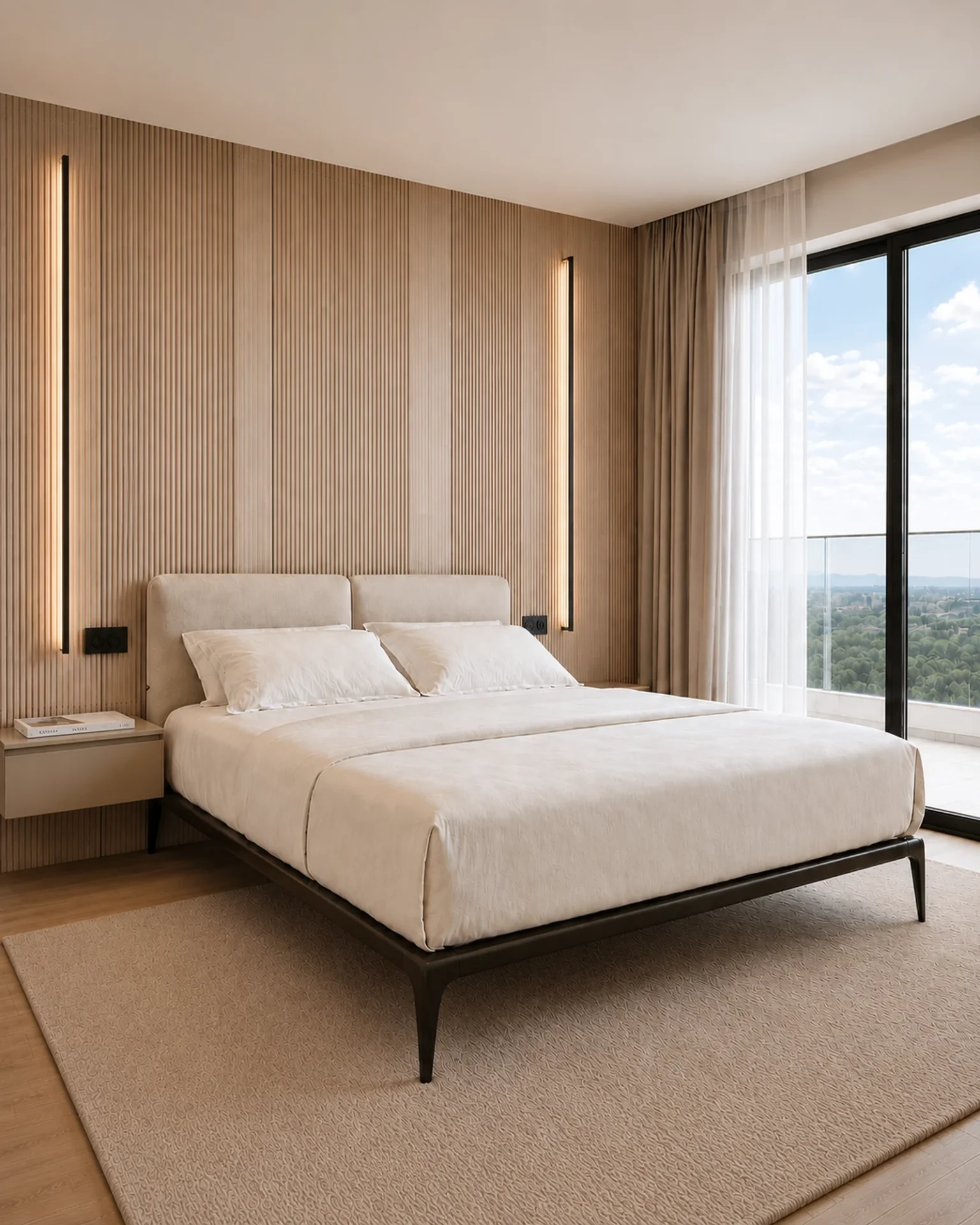
The bedrooms continue the neutral and warm character of the living areas, but in a more intimate tone. The focus is on headboard textures, soft materials, subdued lighting, and a clear spatial organization.
In the sale apartments, the private zones remain simple and functional, while the penthouse maintains a higher level of individual character and refinement.
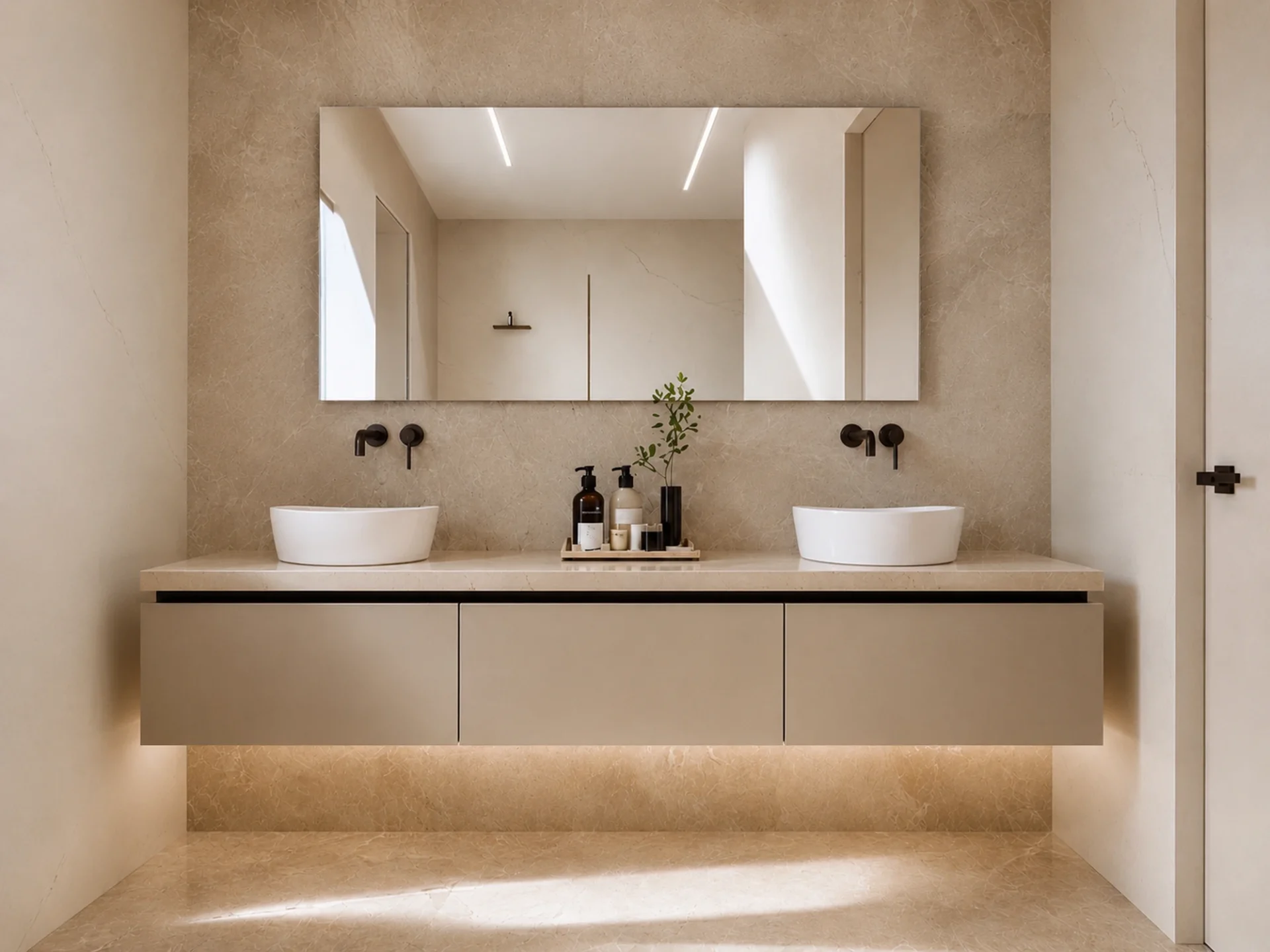
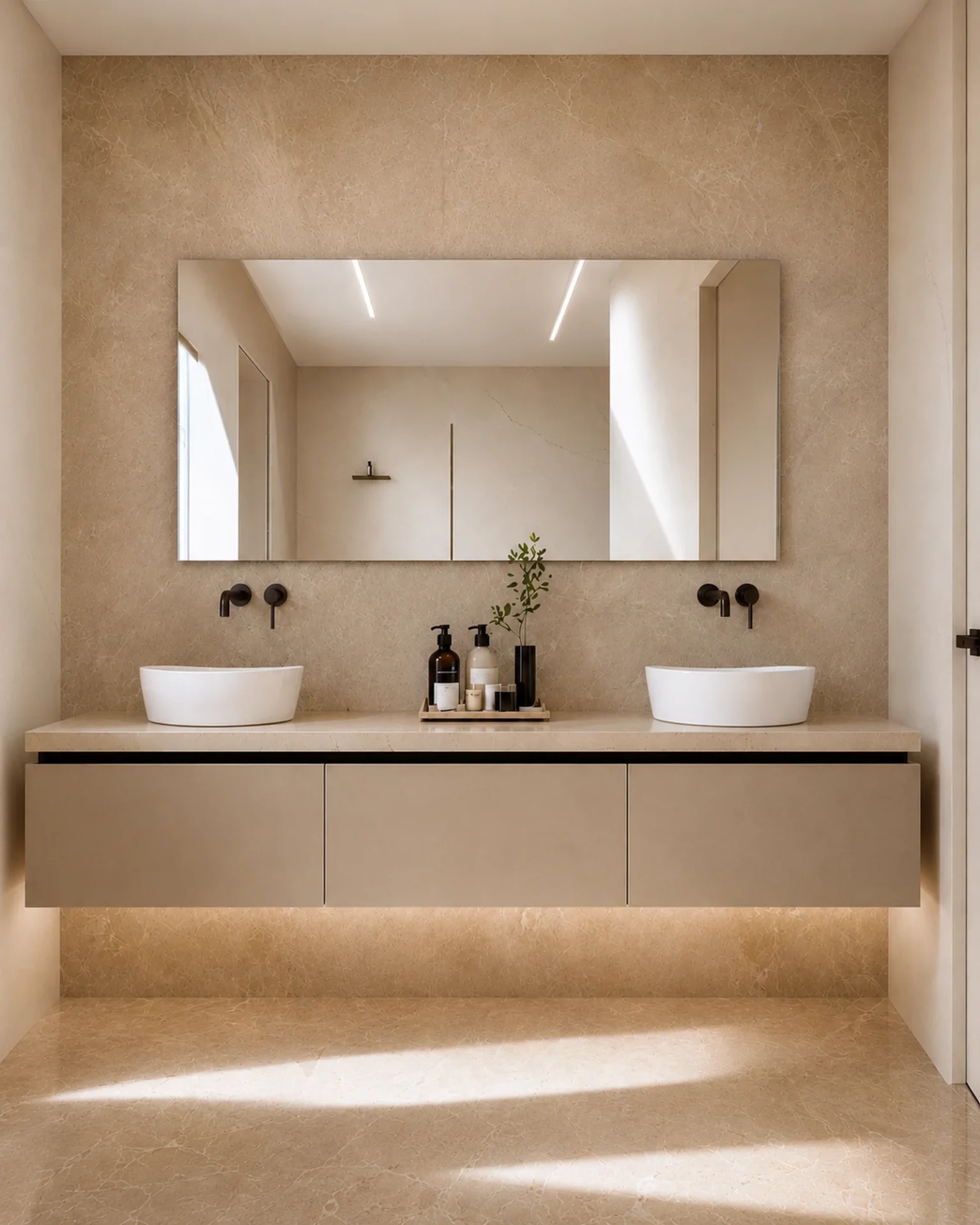
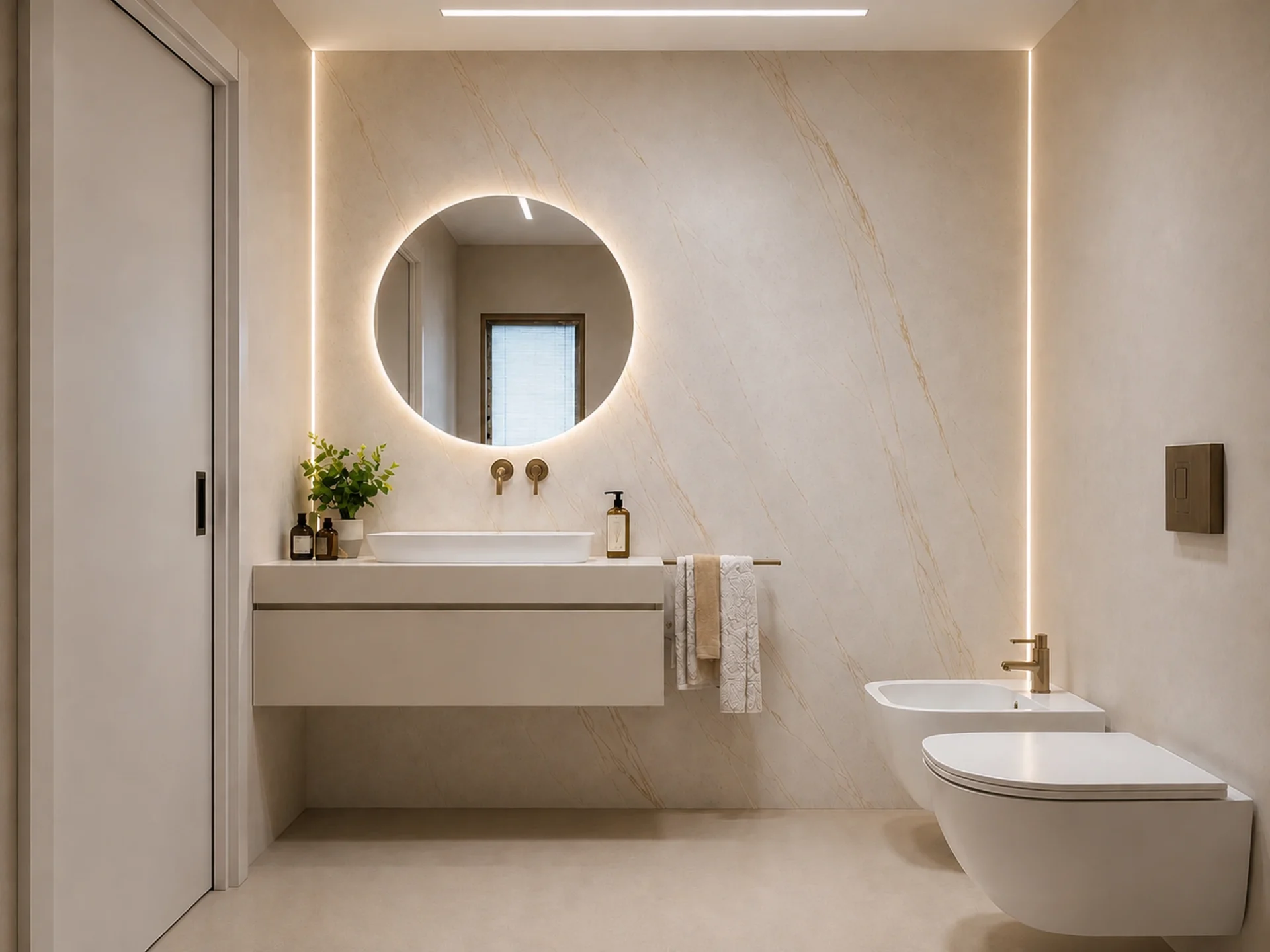
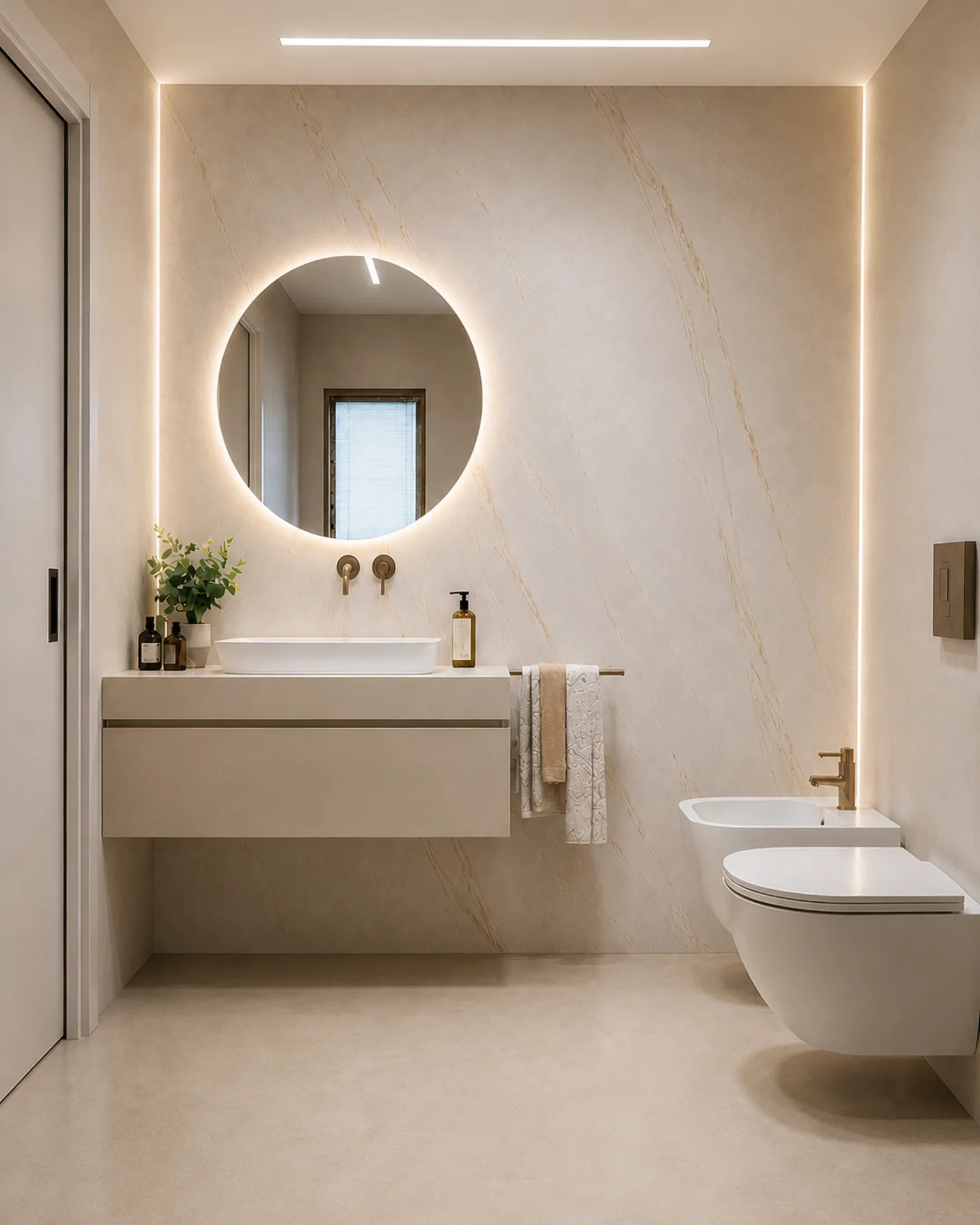
Warm Neutrality of Stone and Precise Lighting
The bathrooms are designed as calm, functional spaces where stone textures, light tones, and subtle ambient lighting take precedence. Large surfaces, clean lines, and carefully positioned elements create a sense of purity and spatial clarity.
A Private Residential Unit with Views as the Main Design Motif
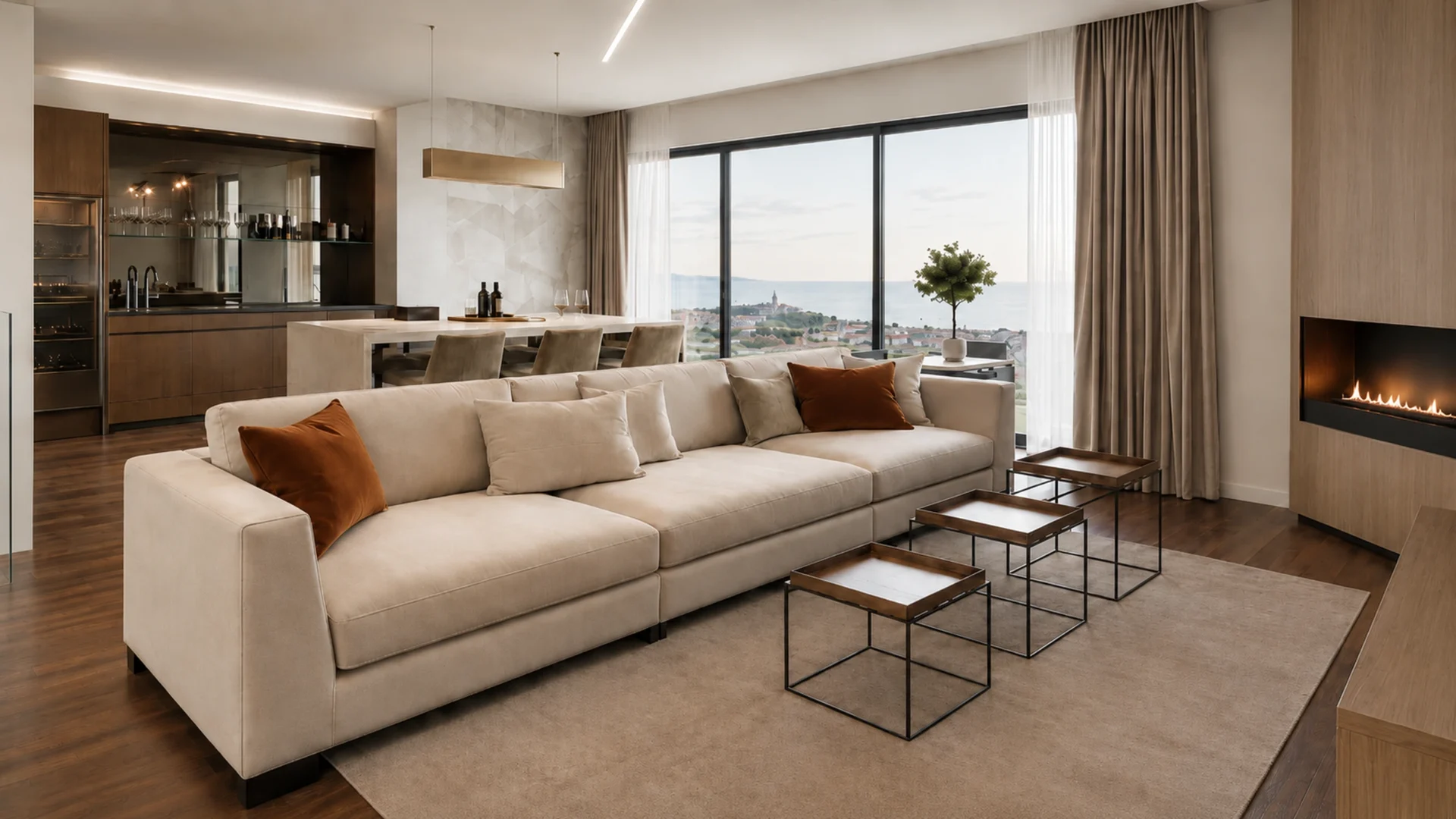
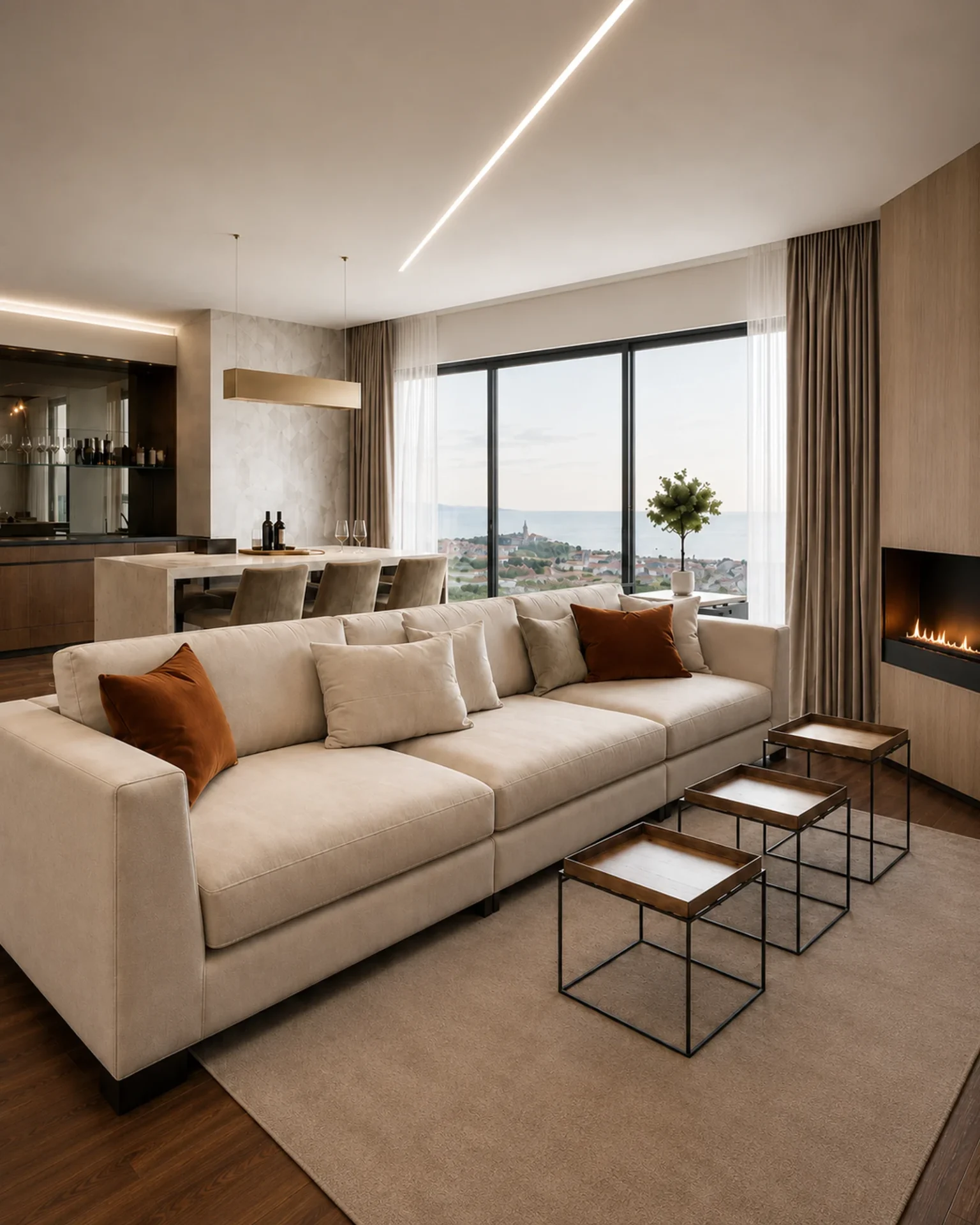
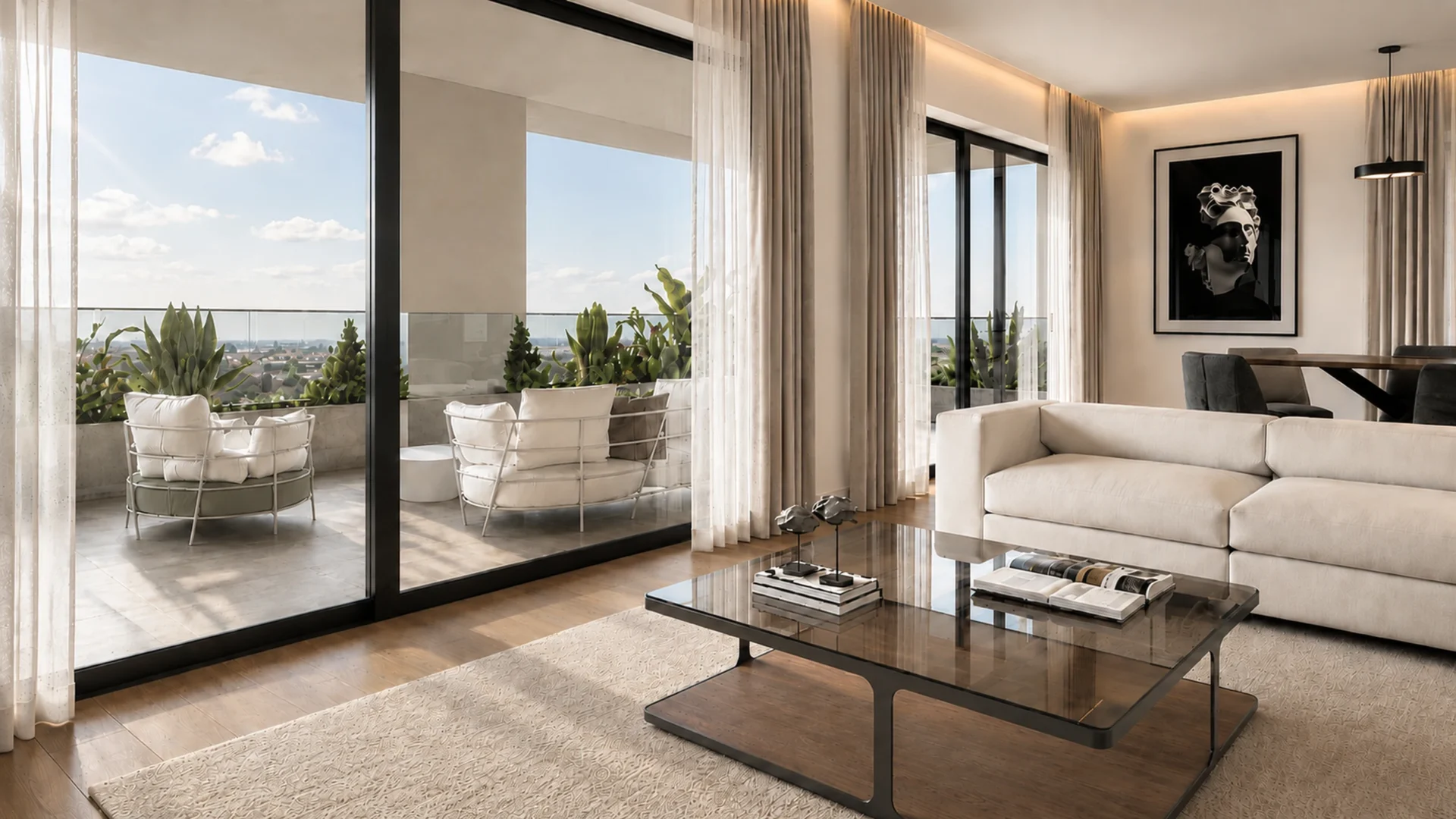
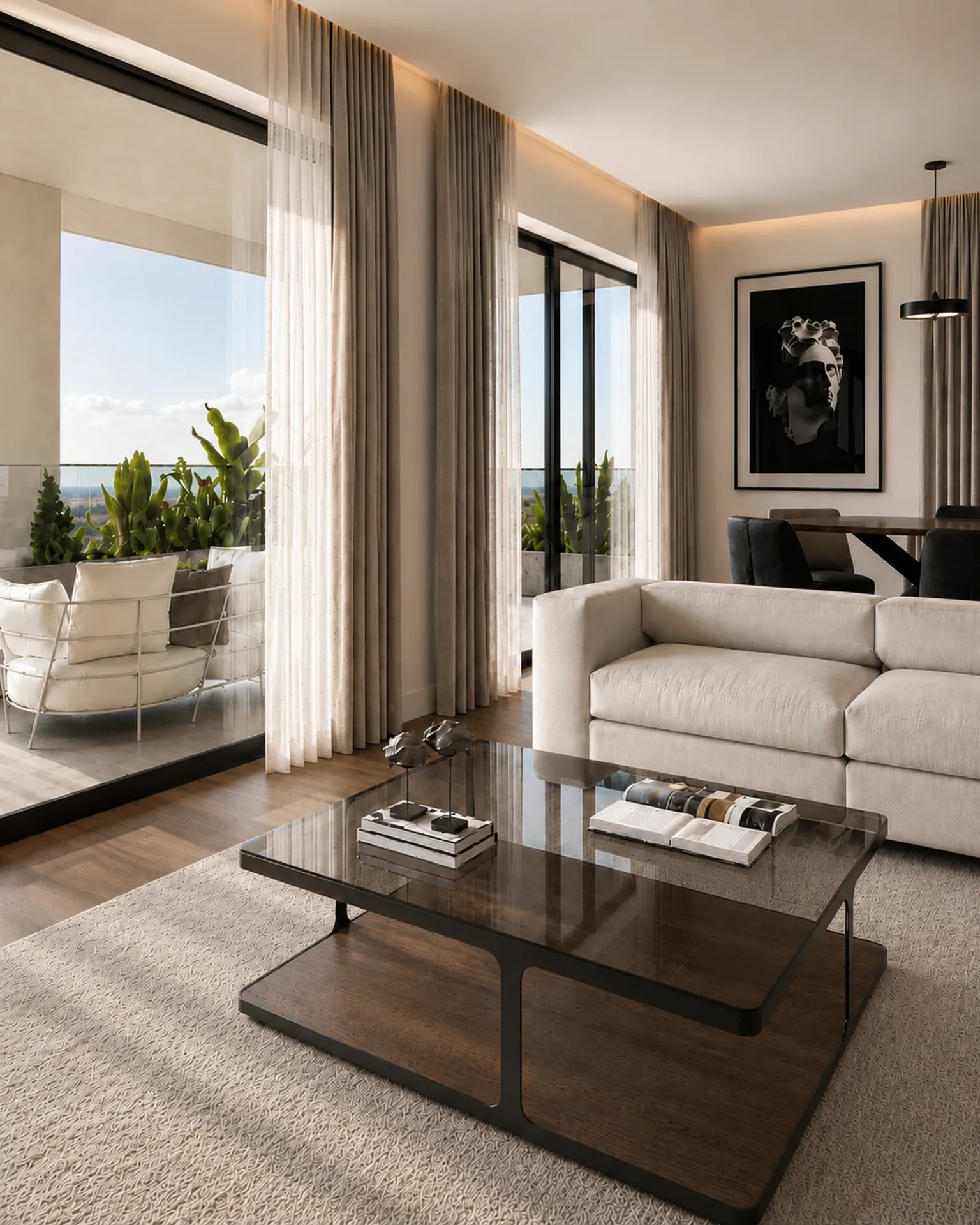
The penthouse is conceived as a separate residential unit within the building, with a stronger sense of privacy and a more expressive spatial rhythm. The open-plan living area connects the lounge, dining space, kitchen, and terrace, while large glazed openings introduce views, natural light, and a strong sense of openness.
Unlike the sale apartments, the penthouse carries a more individual atmosphere. The materials are warmer, the spaces more layered, and selected elements—such as the fireplace, stone cladding, wooden surfaces, and integrated lighting—give the interior a more distinctive residential character.
Staircase as a Transition to a More Private Level of the Penthouse
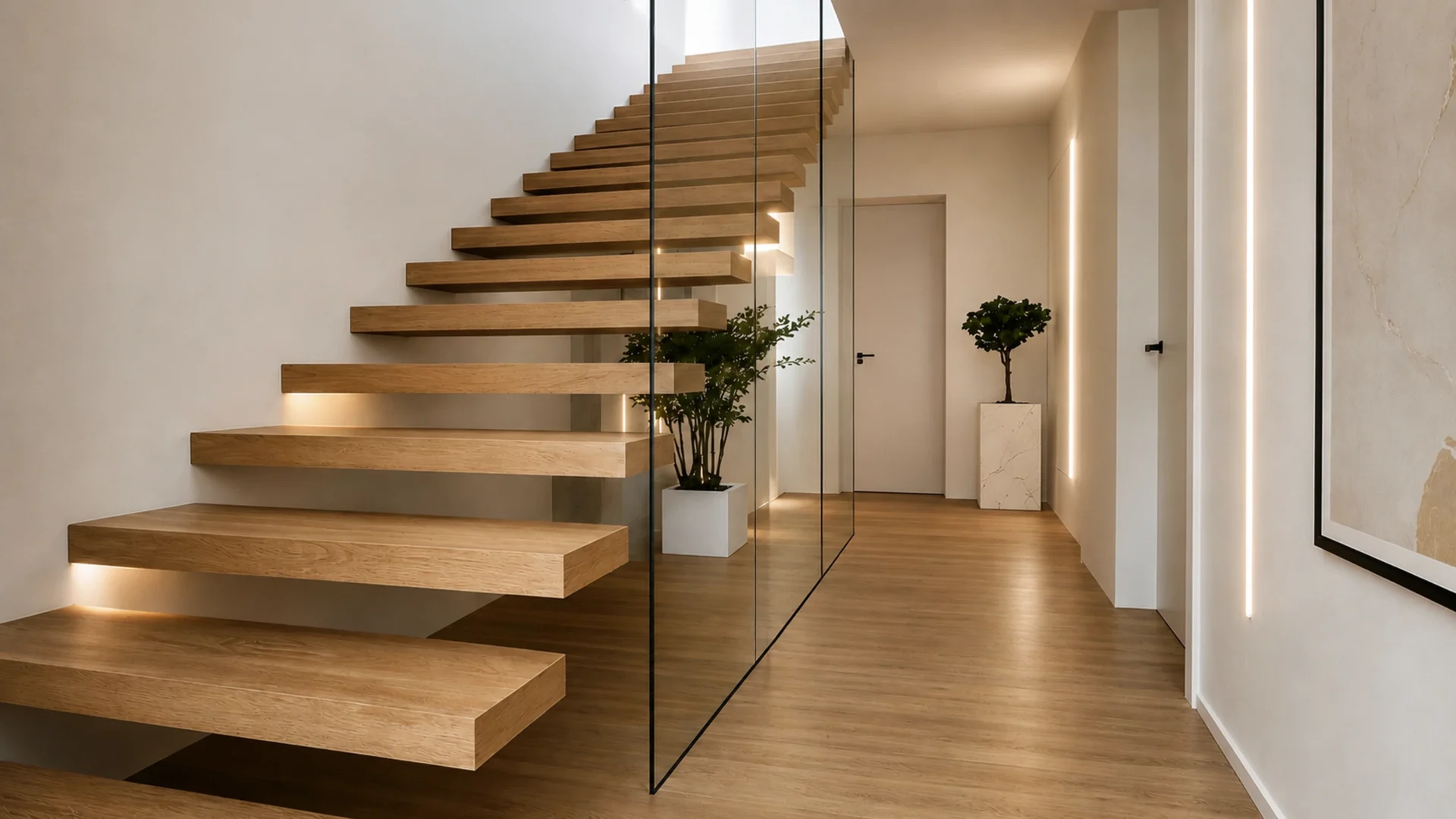
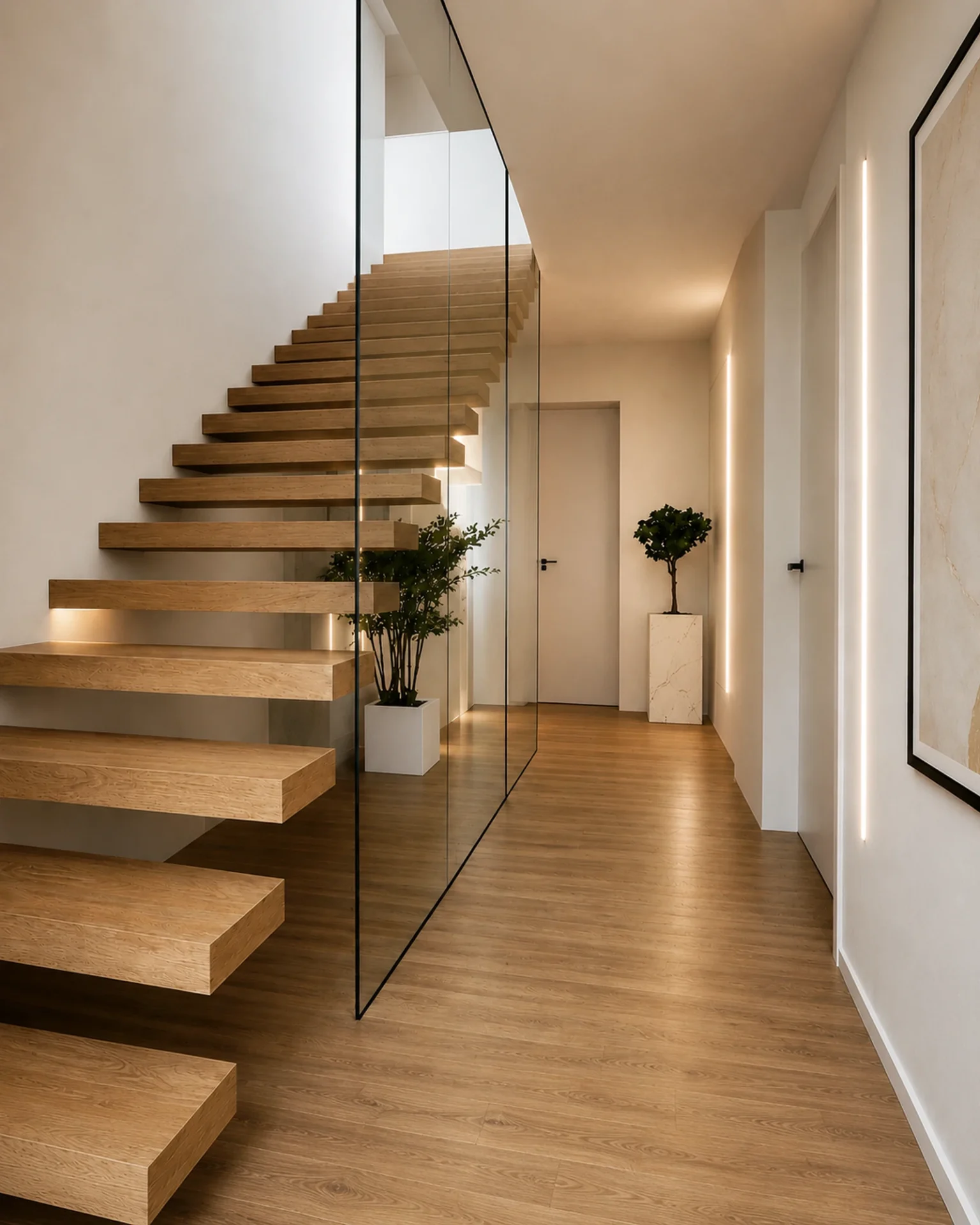
The internal circulation between the second floor and the attic is designed as an integral part of the penthouse experience. Floating wooden steps, a glass railing, and linear lighting create a light, almost gallery-like transition to the upper level.
This part of the project plays an important narrative role: it connects the main living area with the attic and rooftop terrace, while functioning not only as circulation, but also as a design feature that further enhances the character of the entire residential unit.
Lounge Space with Views, Fireplace, and a Warmer Living Atmosphere
The attic is conceived as a more relaxed and intimate zone of the penthouse—a space for socializing, quieter moments, and enjoying the view. Compared to the lower levels, the atmosphere here is warmer and more expressive, featuring darker accents, a fireplace, a bar area, and more pronounced ambient lighting.
Large glazed surfaces and views toward the sea give the space a sense of openness, while the materials and lighting maintain a feeling of privacy. The attic thus functions as a transition between the interior and the rooftop terrace, while also standing as one of the project’s most distinctive atmospheric spaces.