Stone House
In Bokordići
Stone House
In Bokordići
Renovating a stone heritage property as a holistic spatial narrative
The interior and exterior design project for the stone house in Bokordići was developed as a comprehensive transformation of an existing Istrian heritage property. The starting point was not merely the shaping of the final ambiance, but a profound understanding of the existing stone volume—its limitations, potential, and atmosphere.
From the outset, the house was conceived as an interconnected spatial entity where the interior, the auxiliary building, and the outdoor areas complement one another. The goal was not to obscure the character of the original structure with a contemporary layer, but rather to reveal its full spatial potential and adapt it to a new way of living.
The new spatial organization, the vertical opening of the volumes, the galleries, the mezzanine, the winter garden, as well as the outdoor zones and landscaping, were all shaped by the same design logic. The result is a residence that preserves the tranquility and materiality of stone architecture while gaining a new sense of functionality, clarity, and a contemporary rhythm of use.
Renovation of a stone house, interior and exterior design
Bokordići,
Svetvinčenat, Istria
Main building, auxiliary building, interior design, exterior design, and landscape architecture
440 m²
Lounge area, dining room, kitchen, wine cellar, galleries, bedrooms, bathrooms, mezzanine, studio apartment, and outdoor living zones
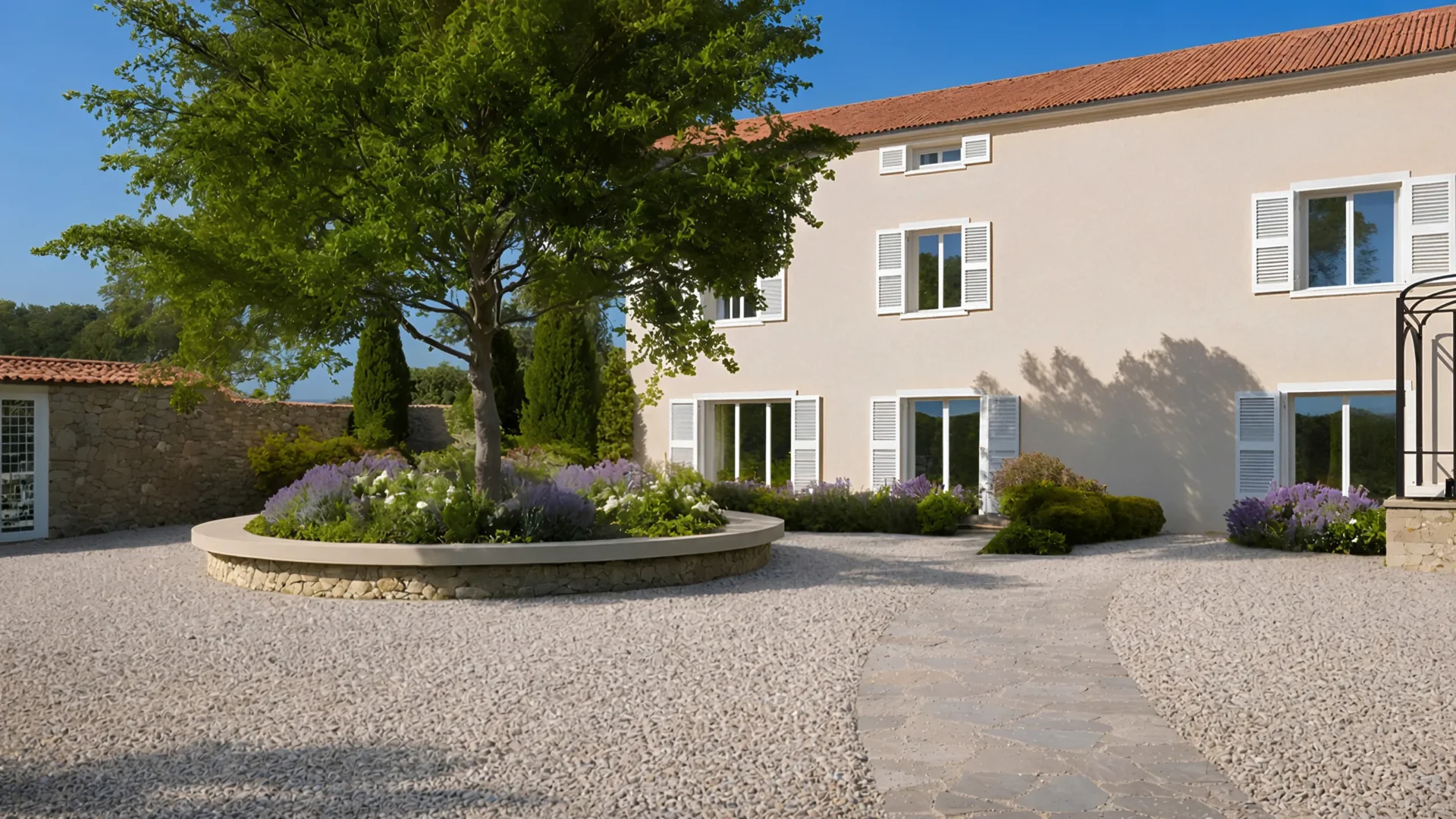
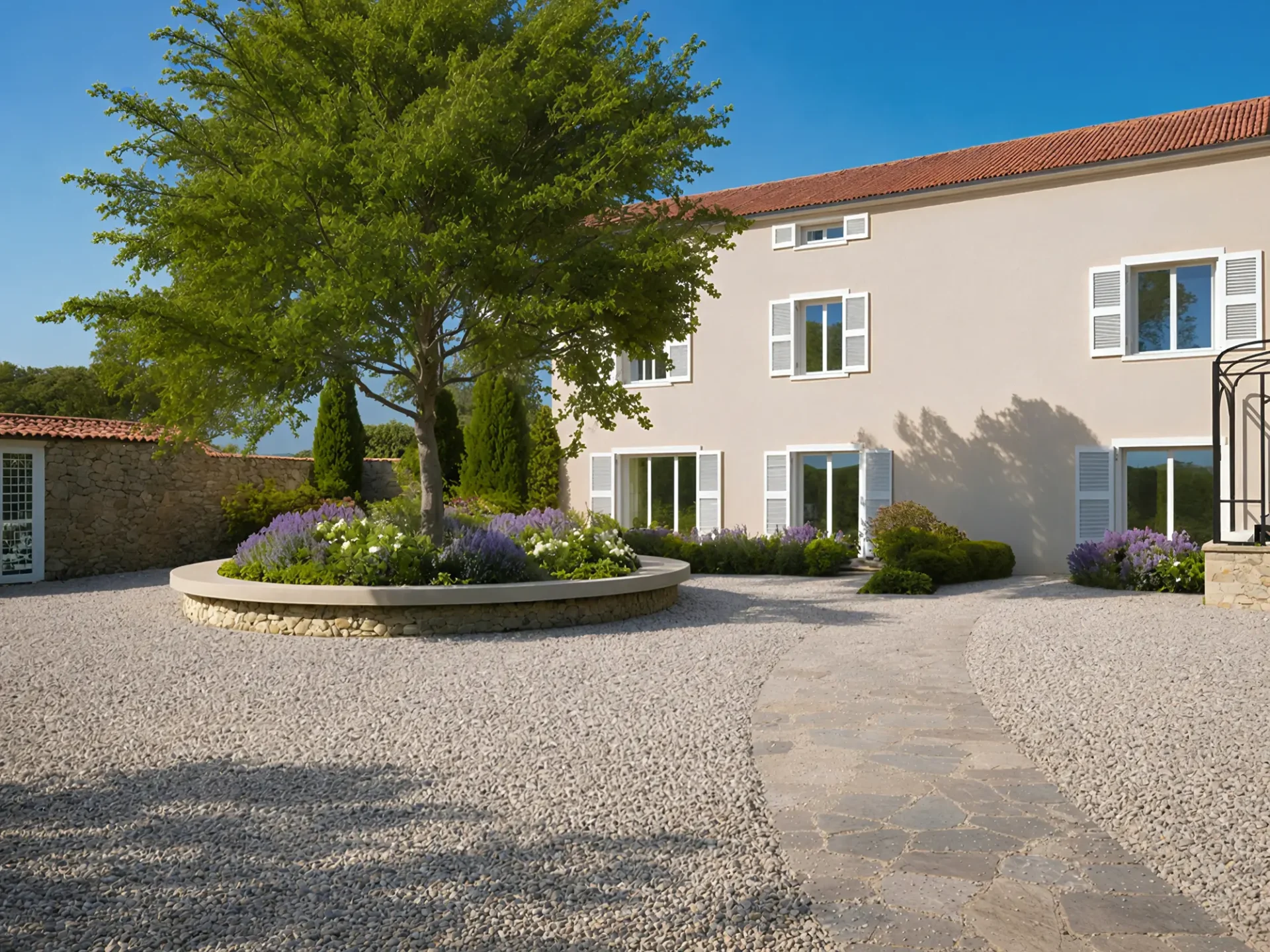
House and surroundings conceived as a single entity
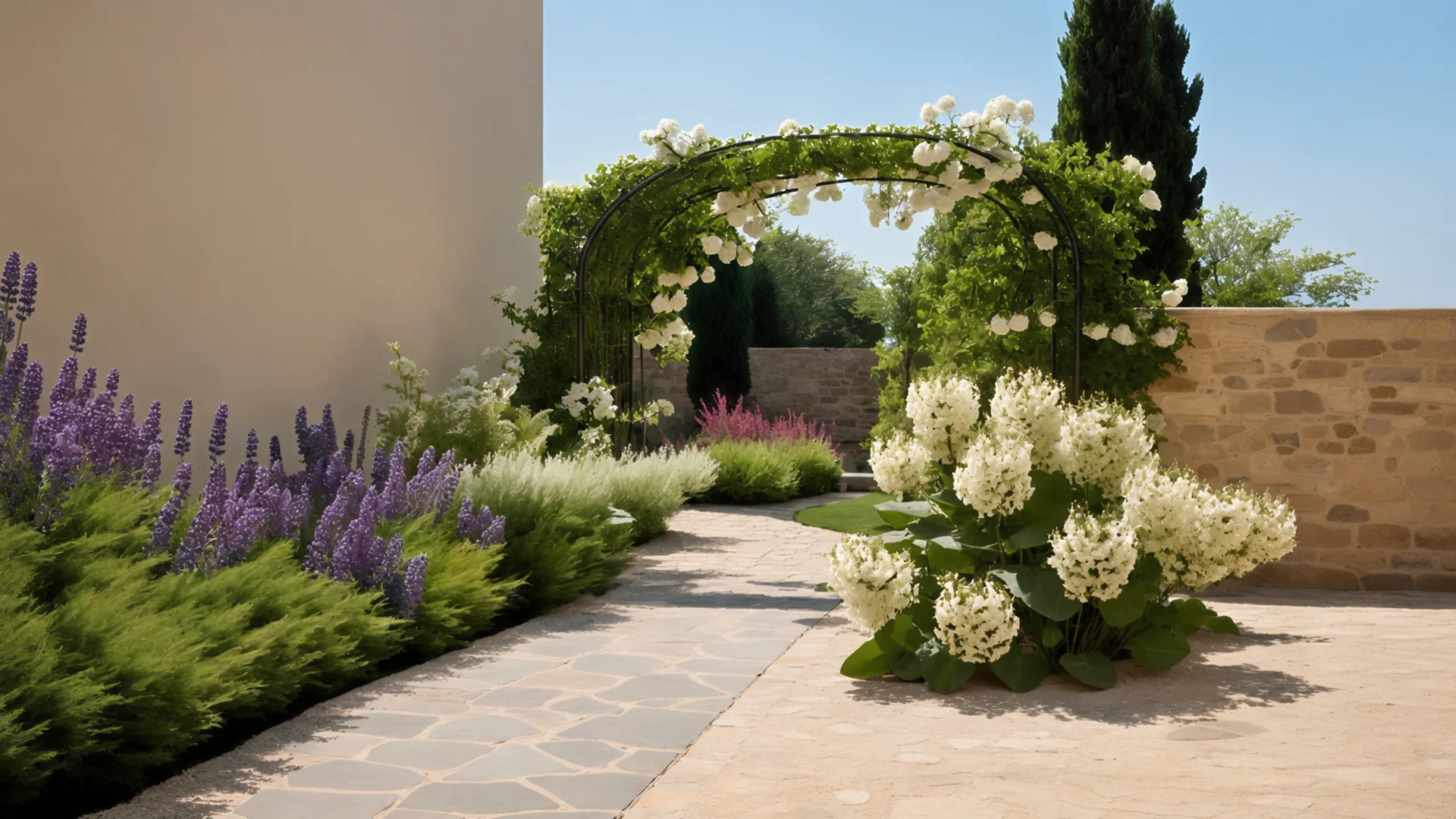
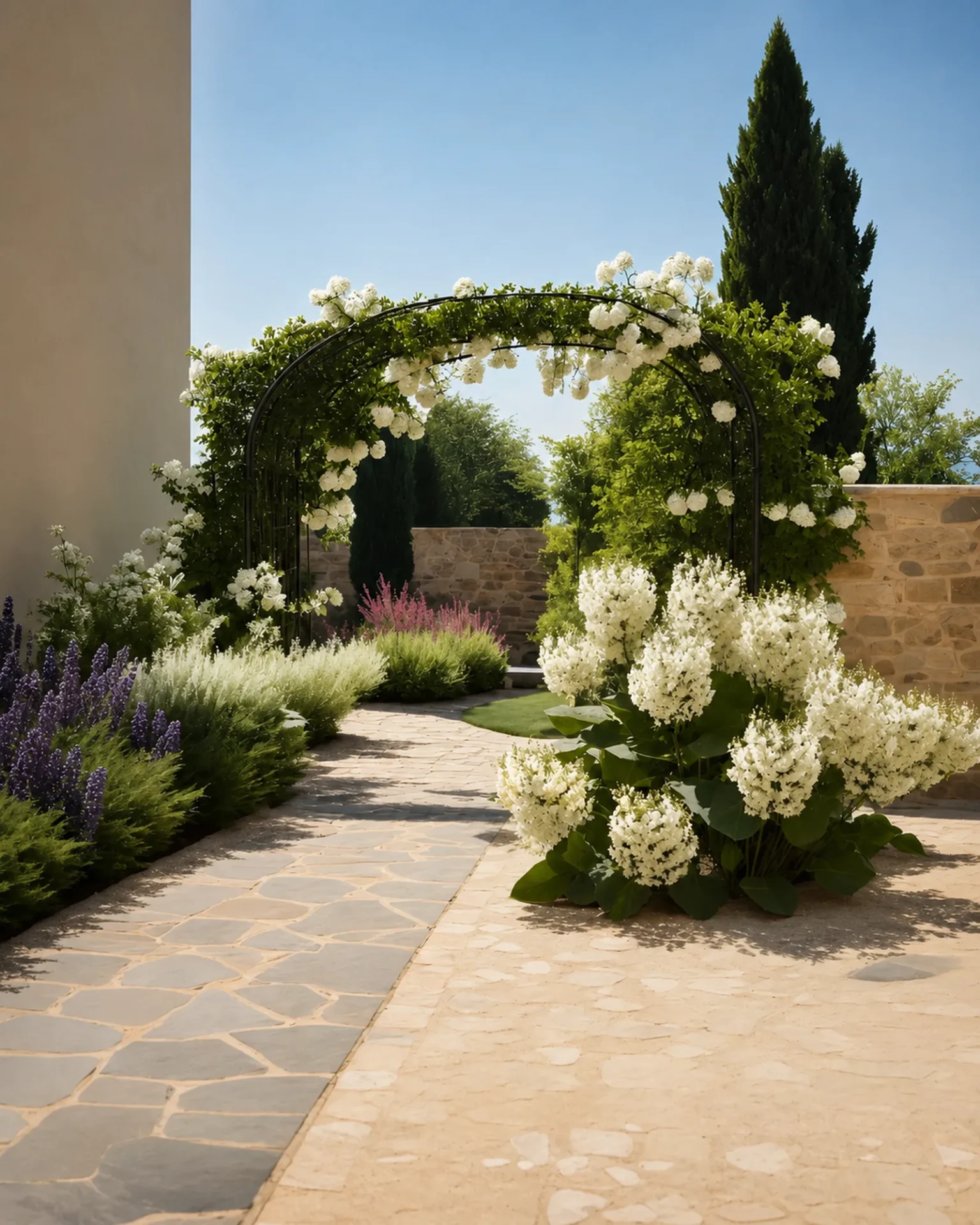
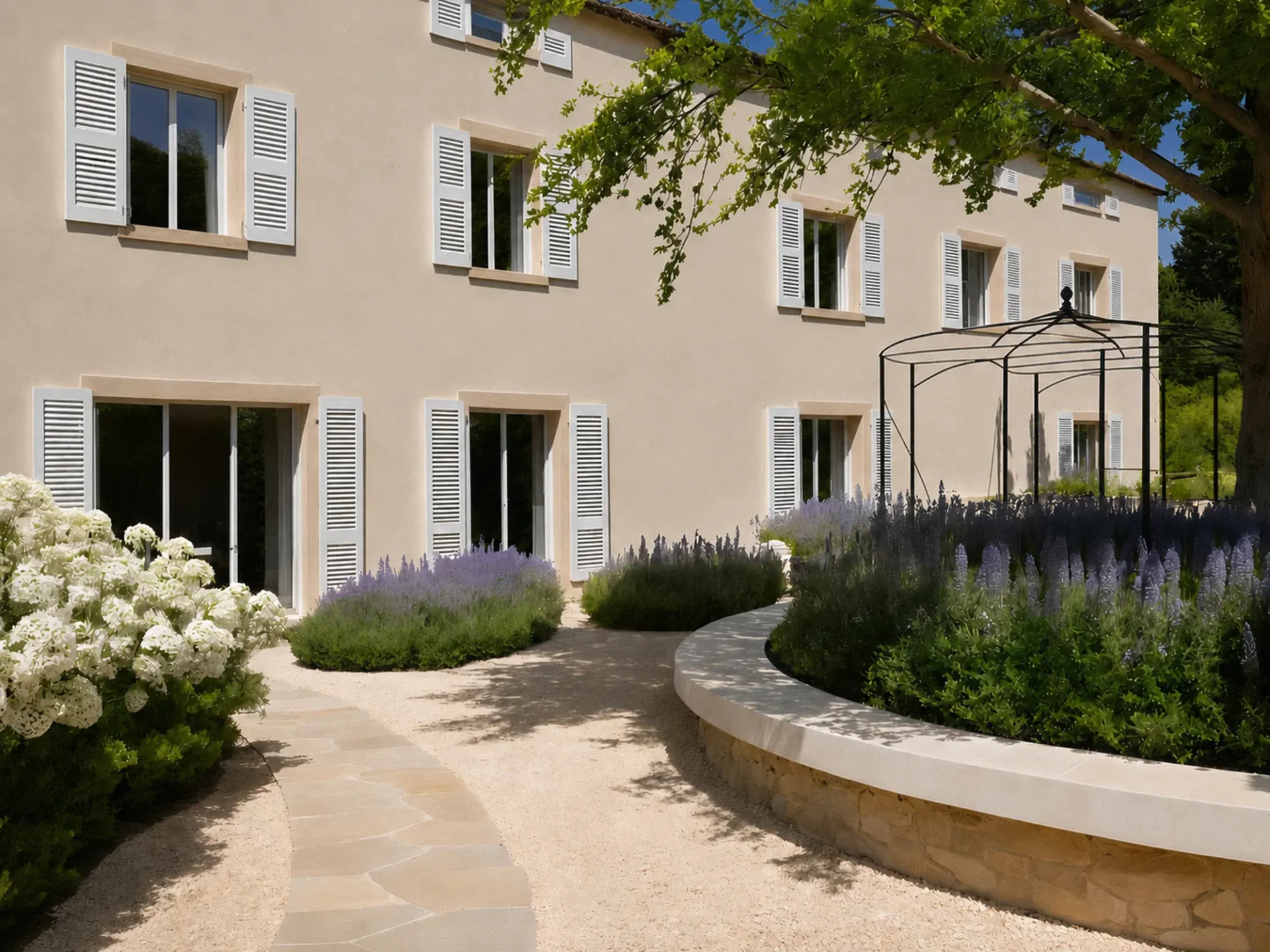
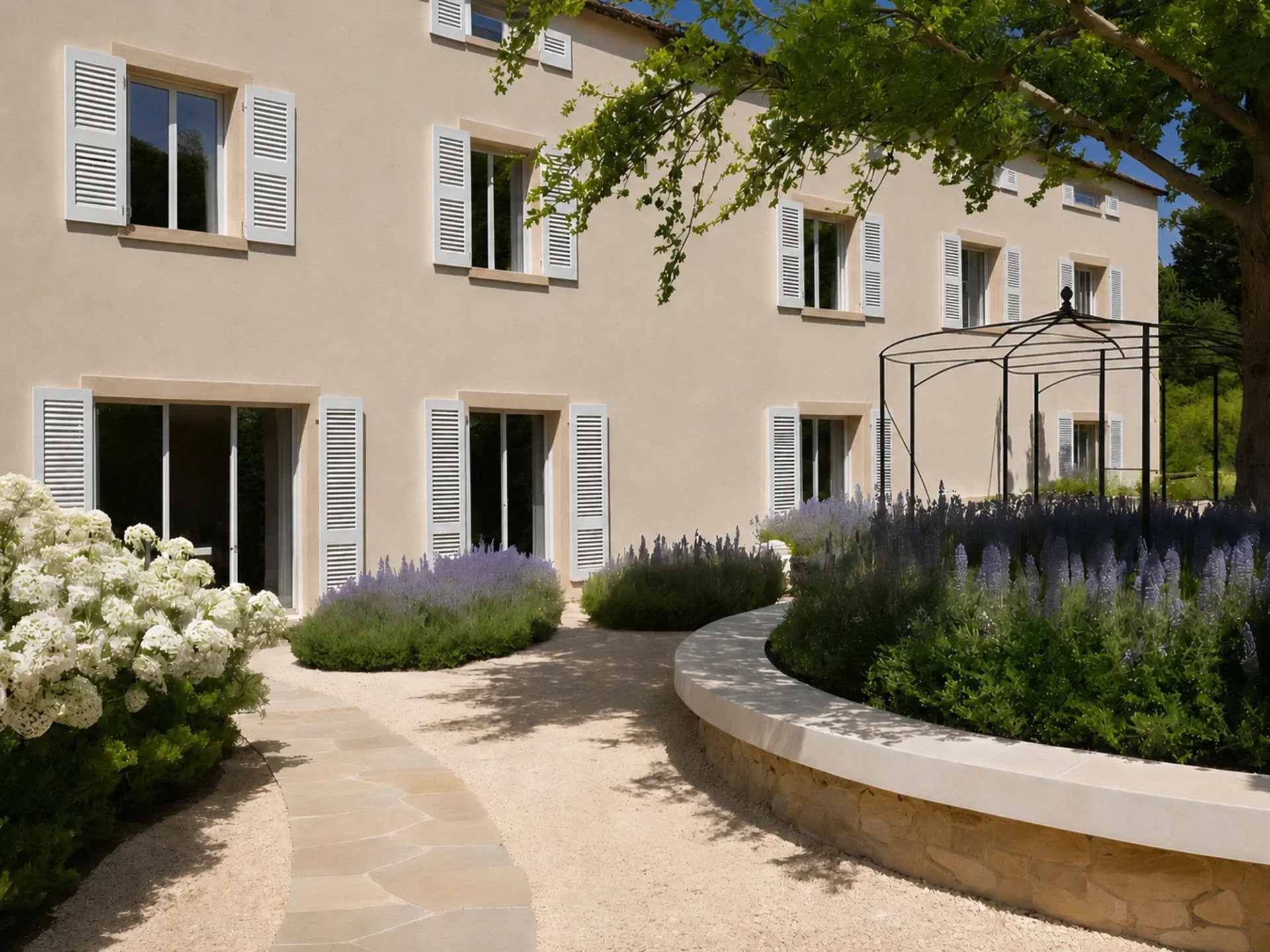
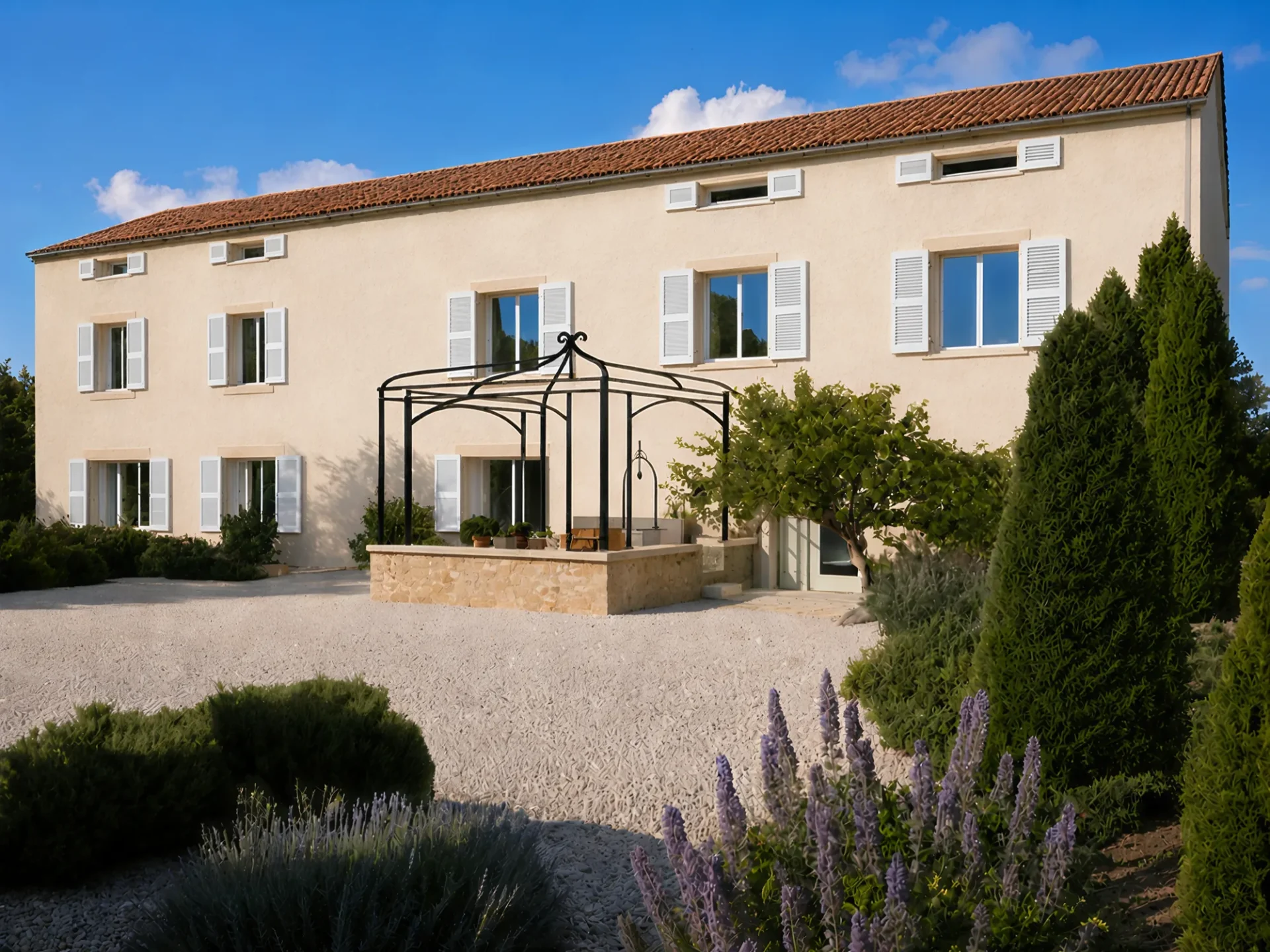
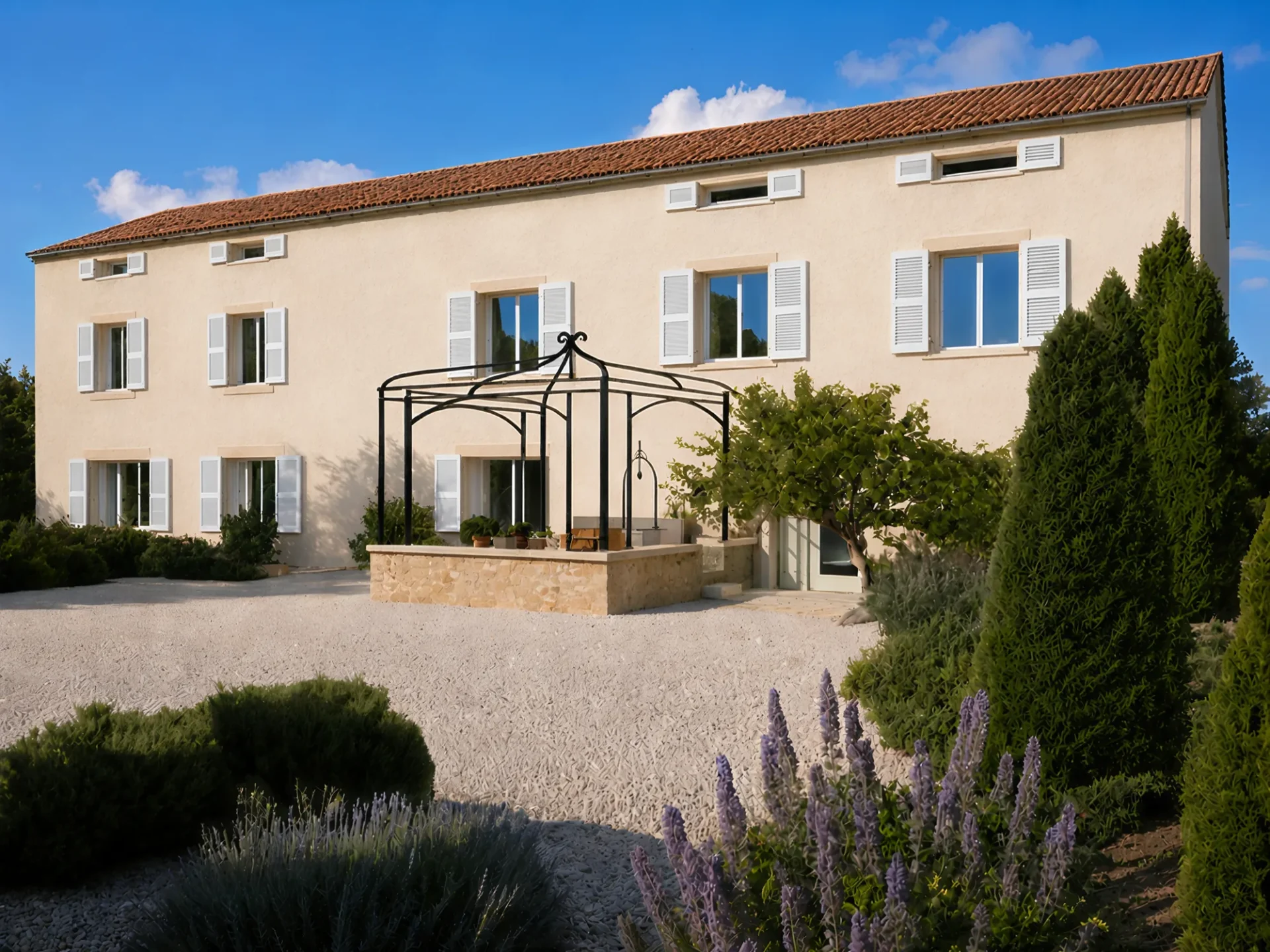
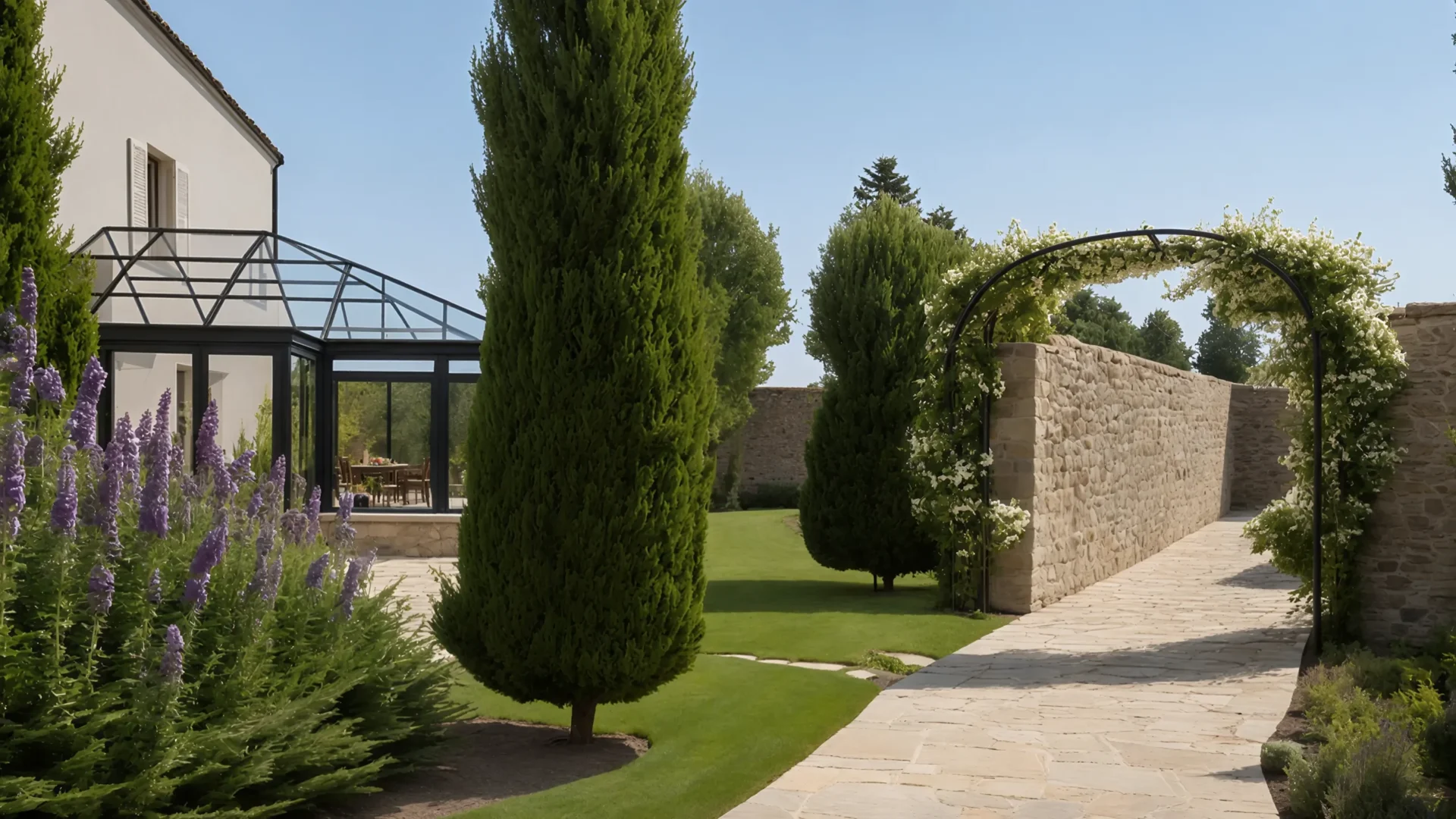
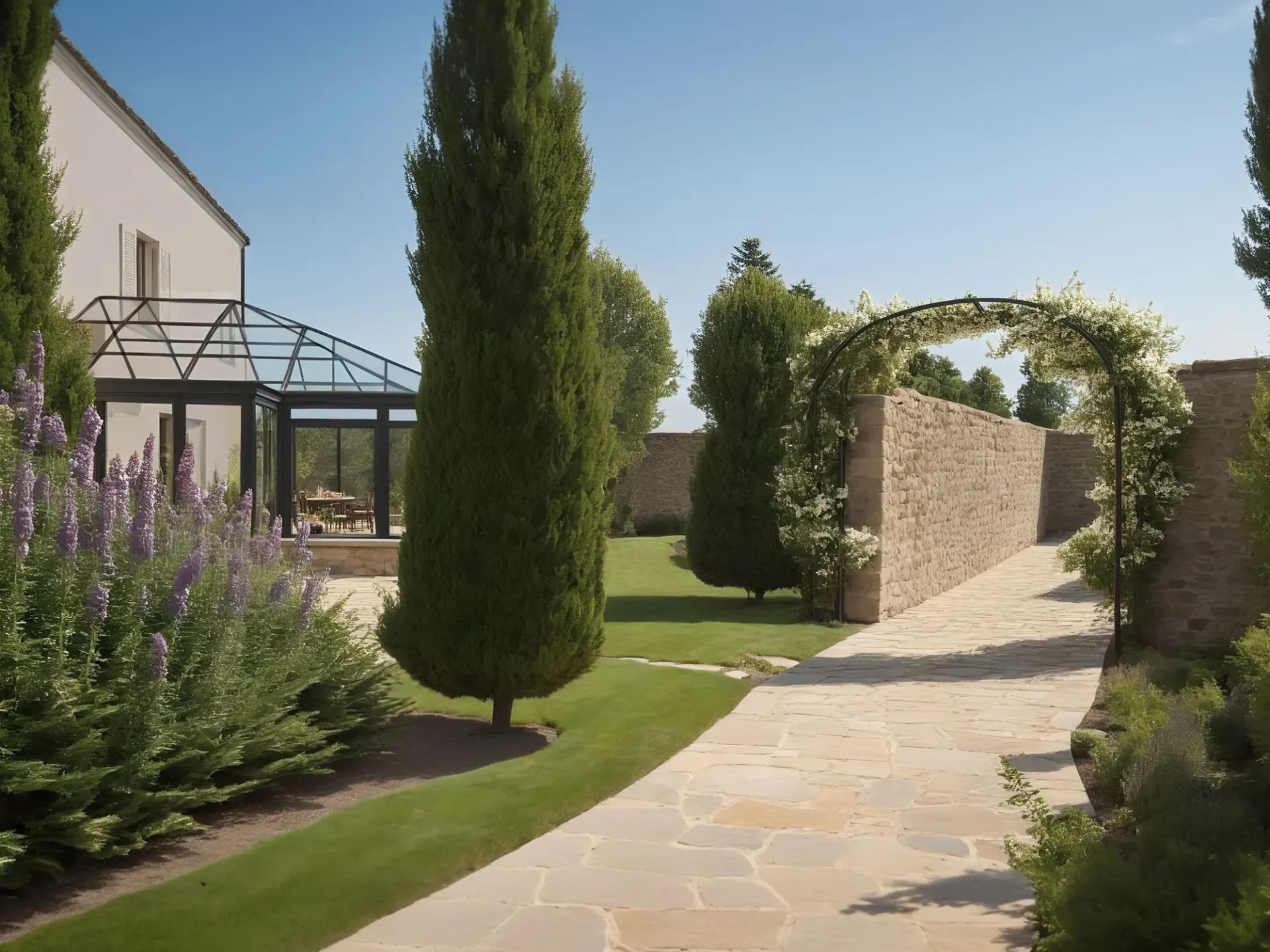
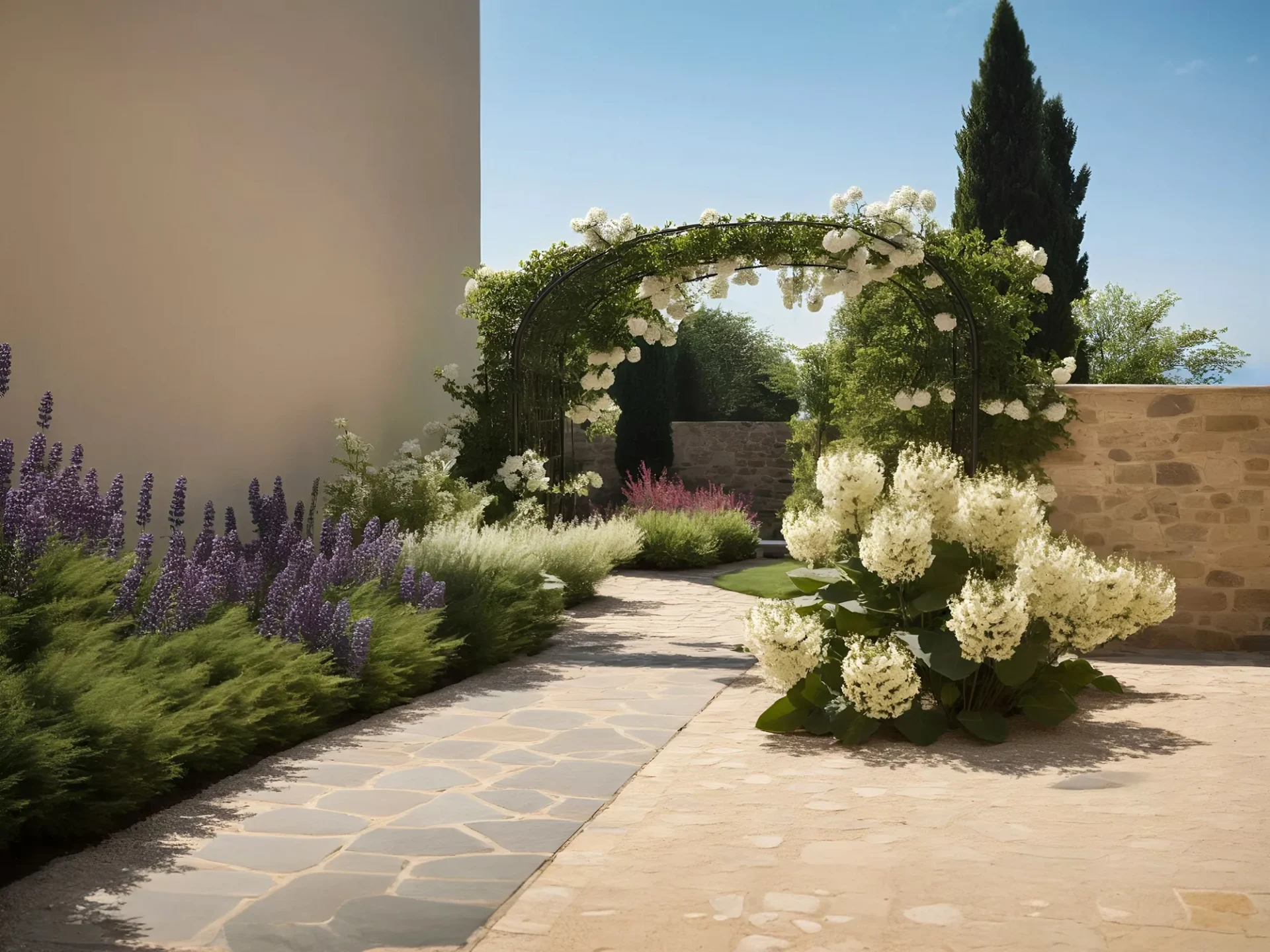
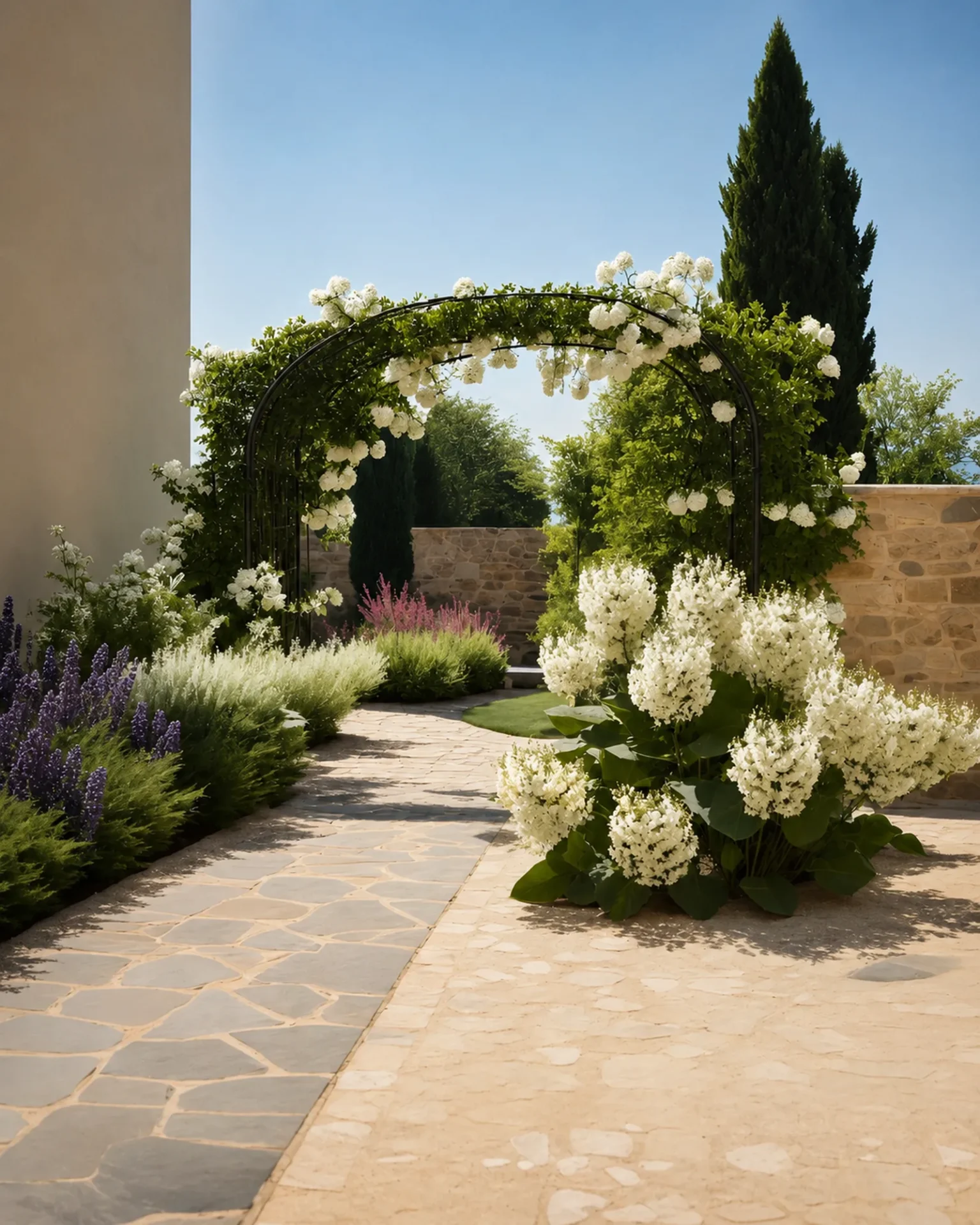
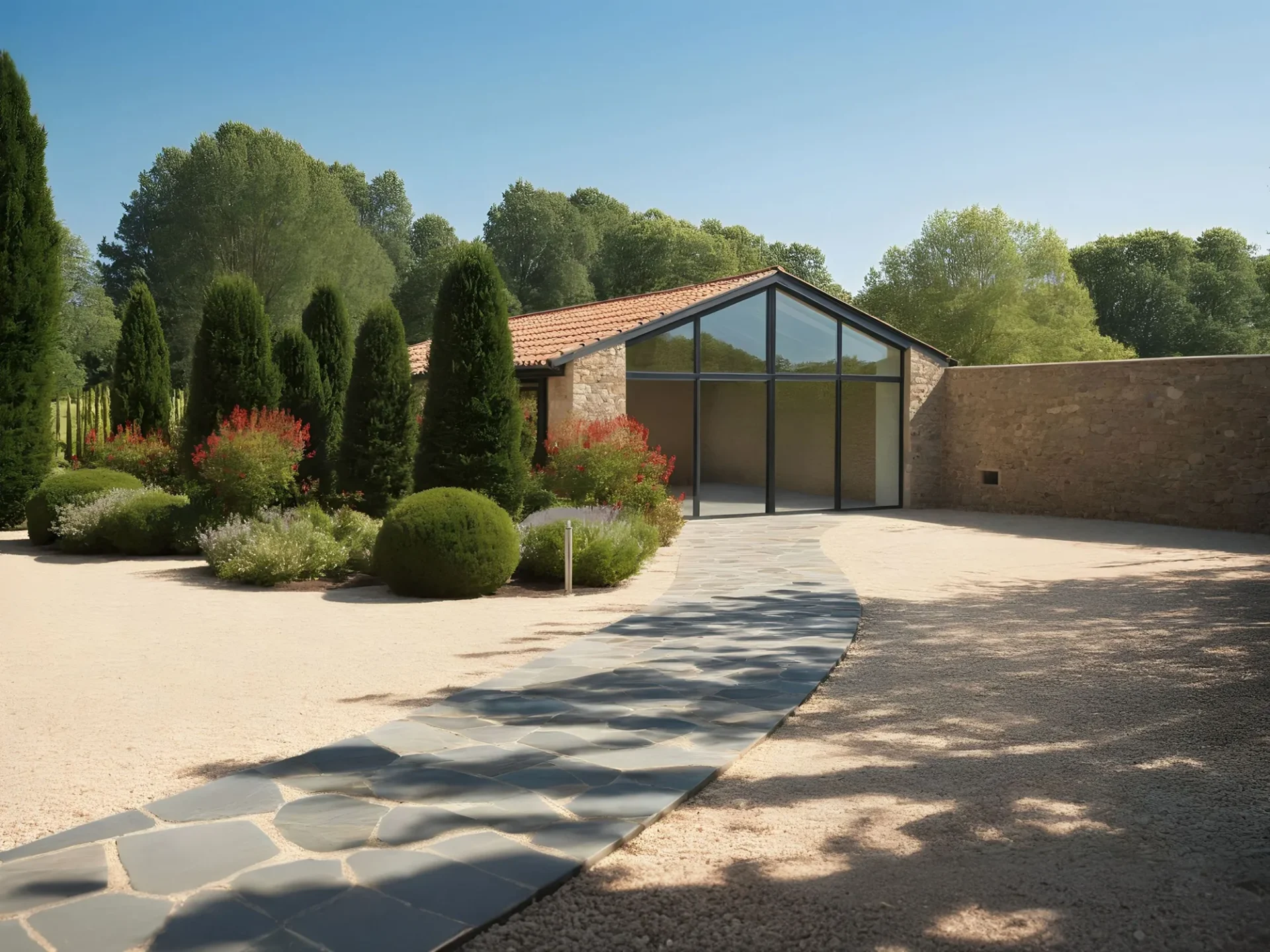
The outdoor spaces were developed as an integral part of the project rather than a final decorative addition. Stone paths, existing trees, Mediterranean plantings, and curated living zones create an ambiance that connects the house to the landscape while gently introducing the character of the interior.
The landscape is designed to facilitate arrival, movement throughout the property, everyday living, and special occasions. Consequently, the house is not perceived as an isolated structure, but as a holistic entity in which architecture, garden, and outdoor zones share a common rhythm.
New dynamics within the ancient stone structure
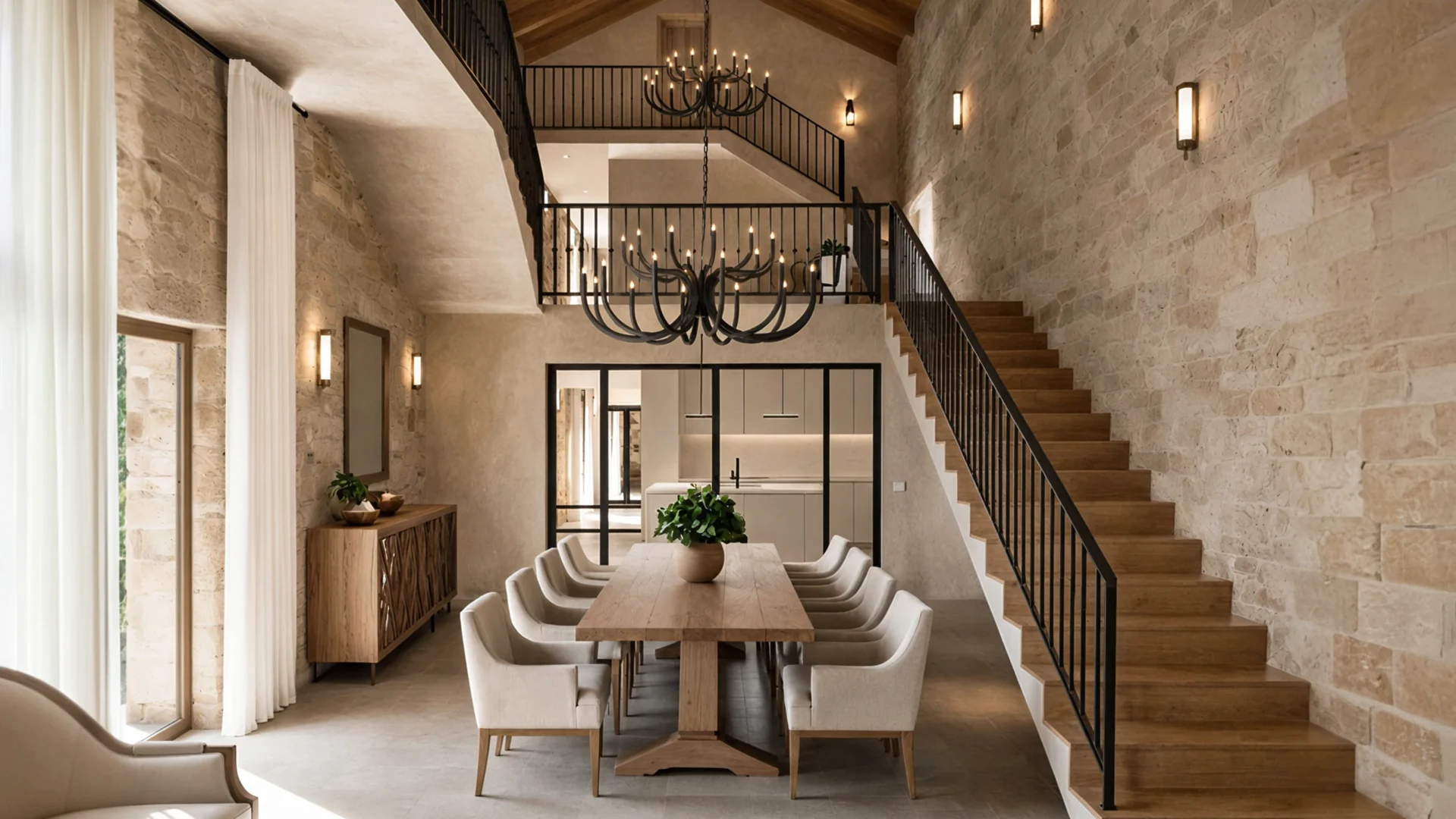
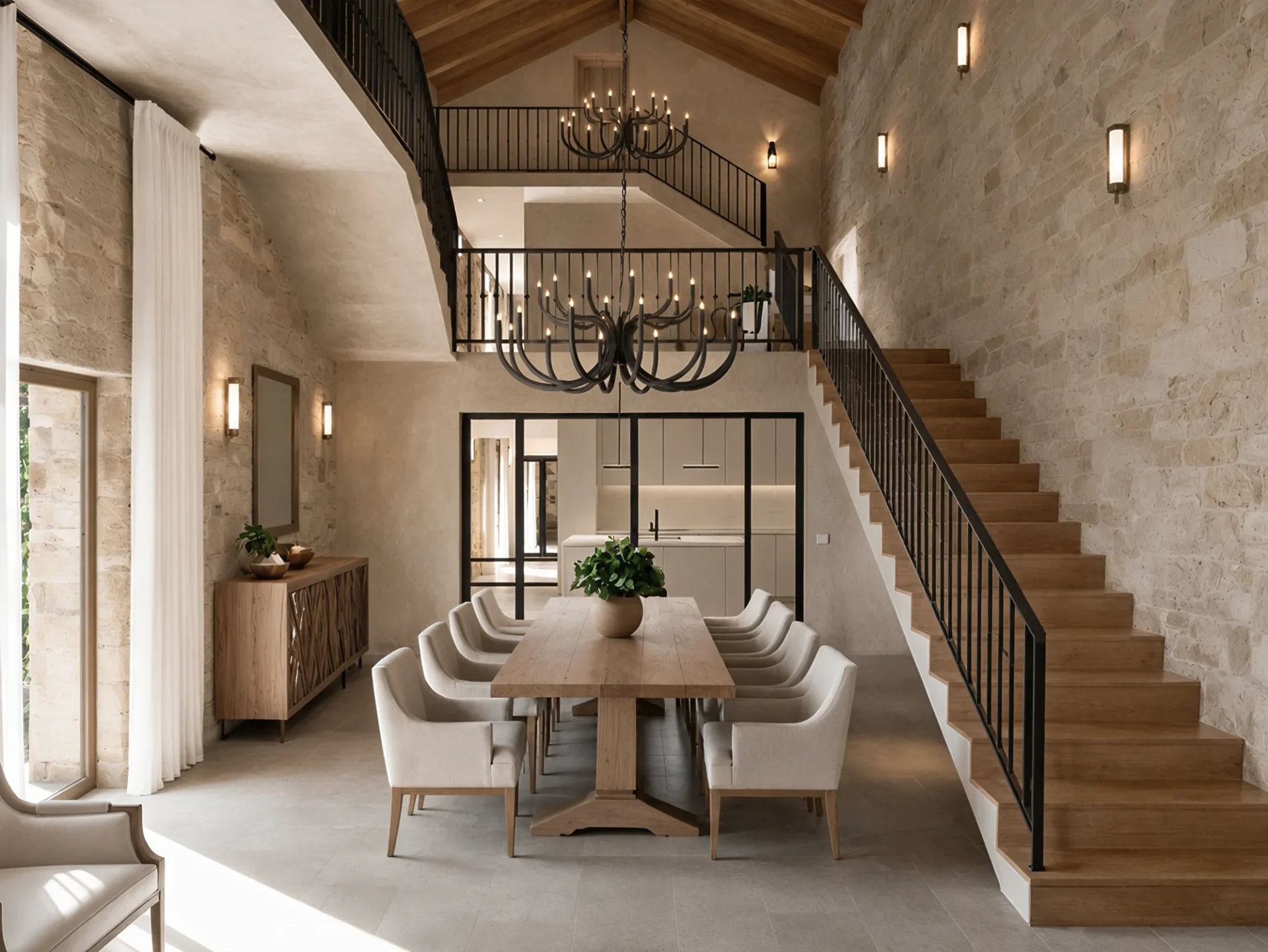
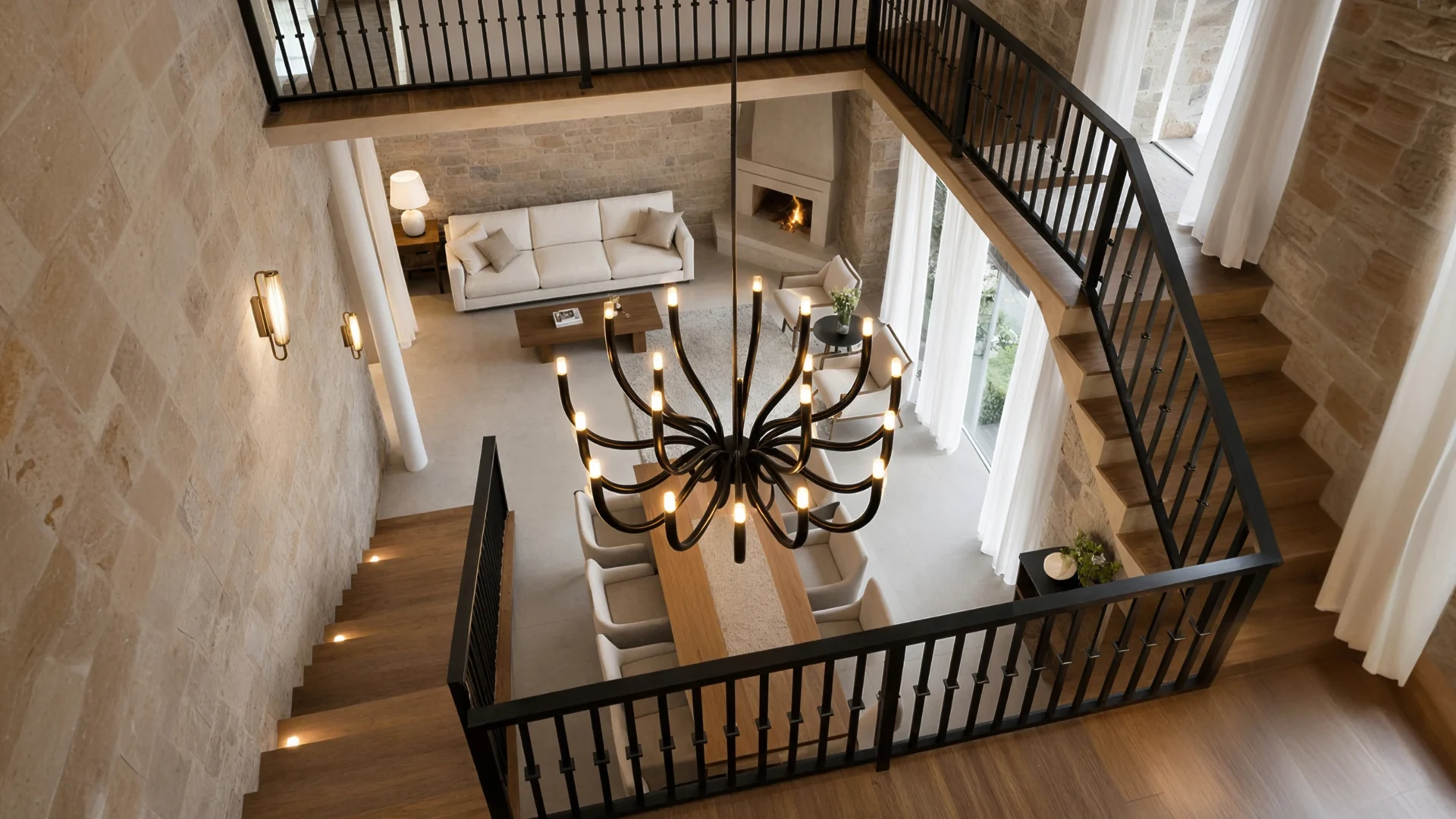
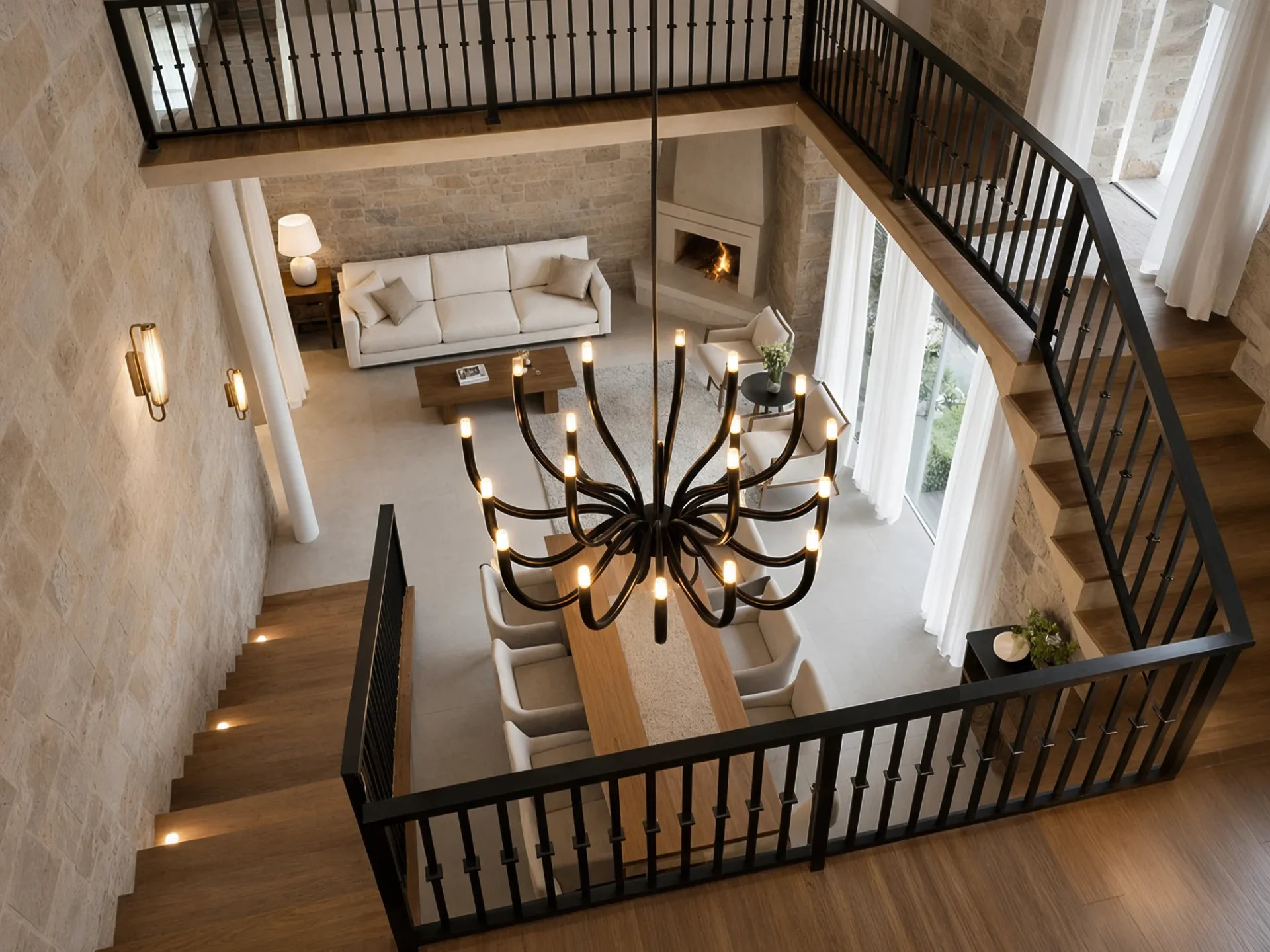
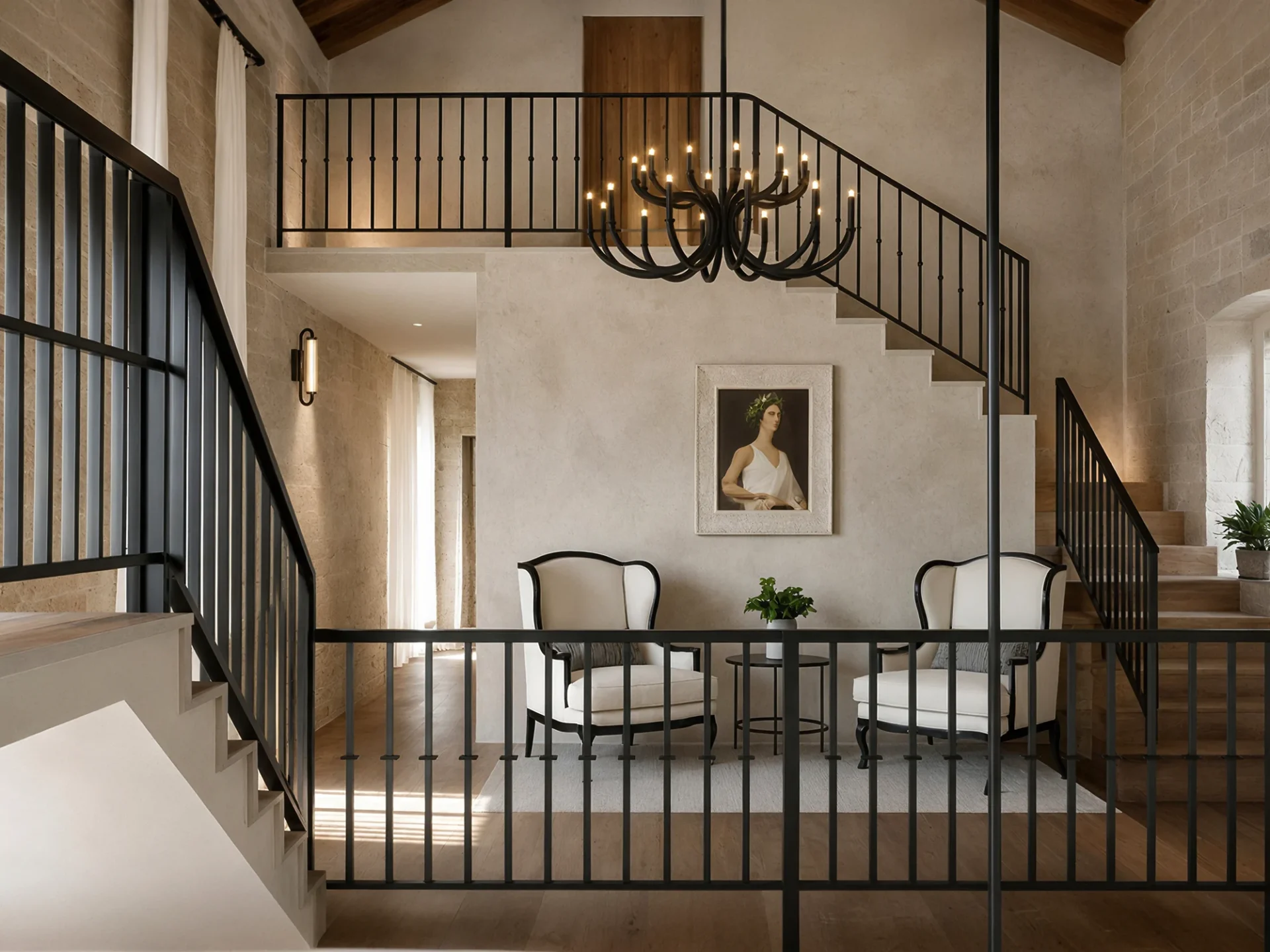
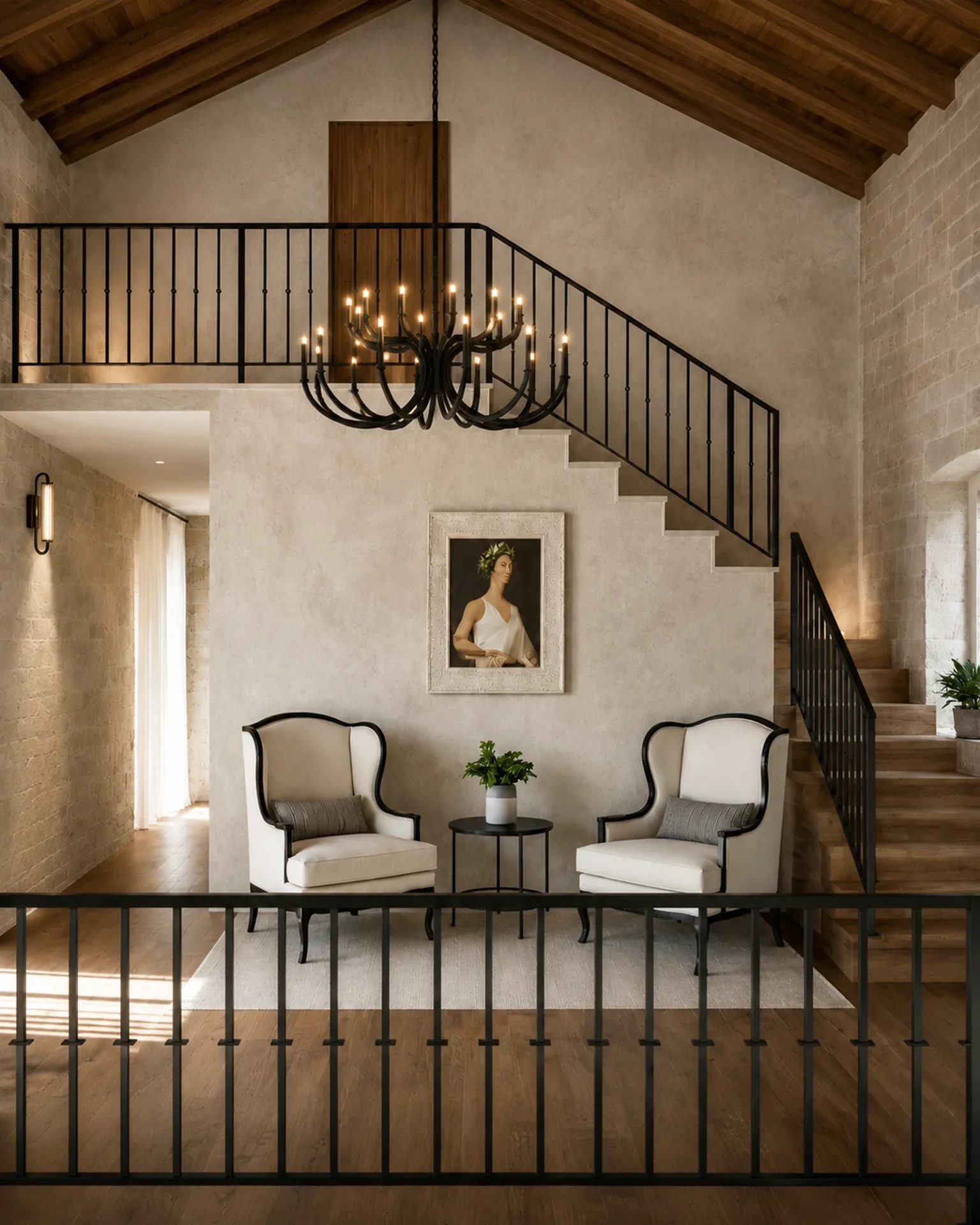
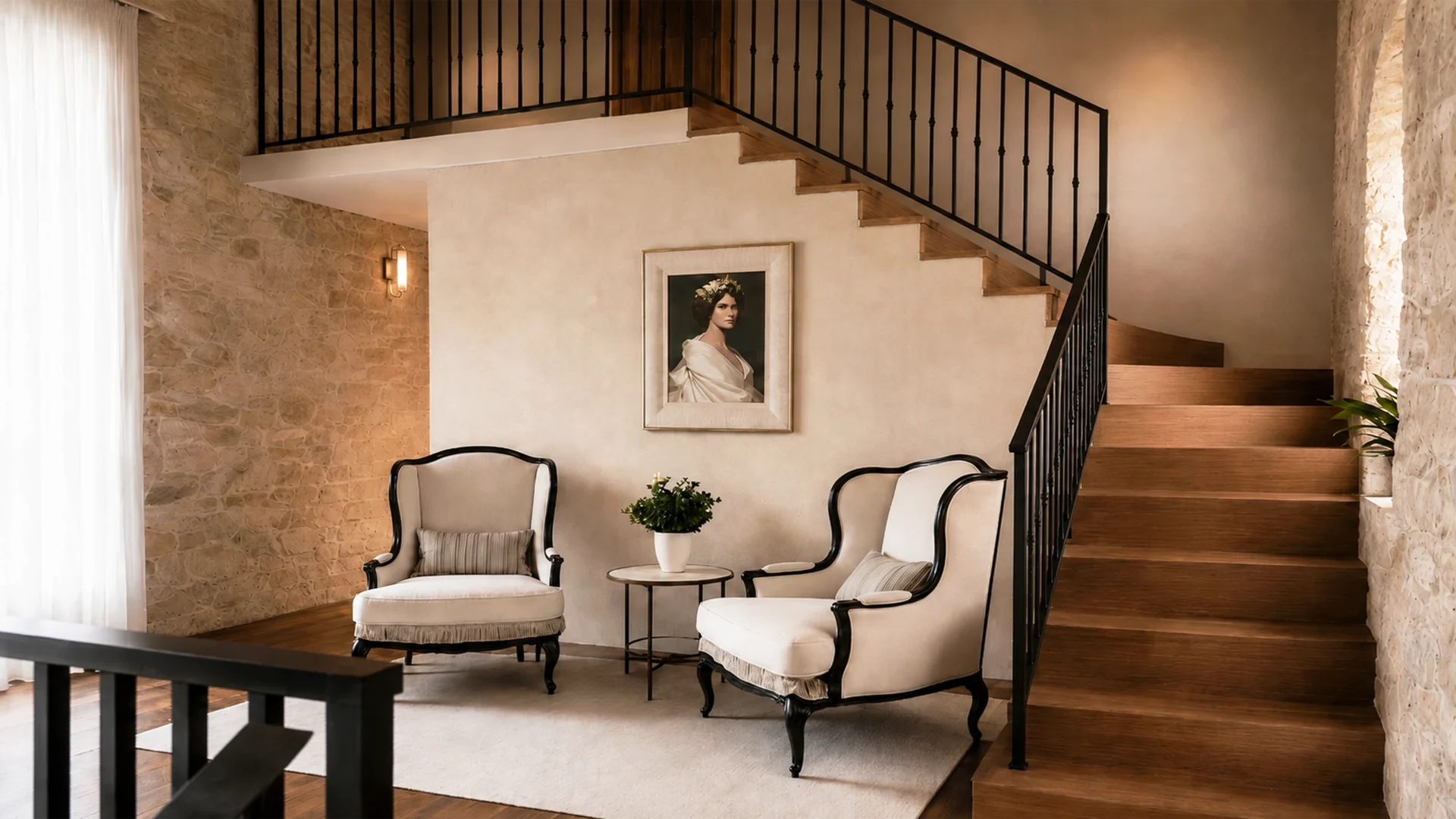
One of the key design decisions was to open up the space vertically. By removing sections of the intermediate floor structures and creating galleries, the ground floor, upper level, and roof volume have been connected into a unified spatial experience.
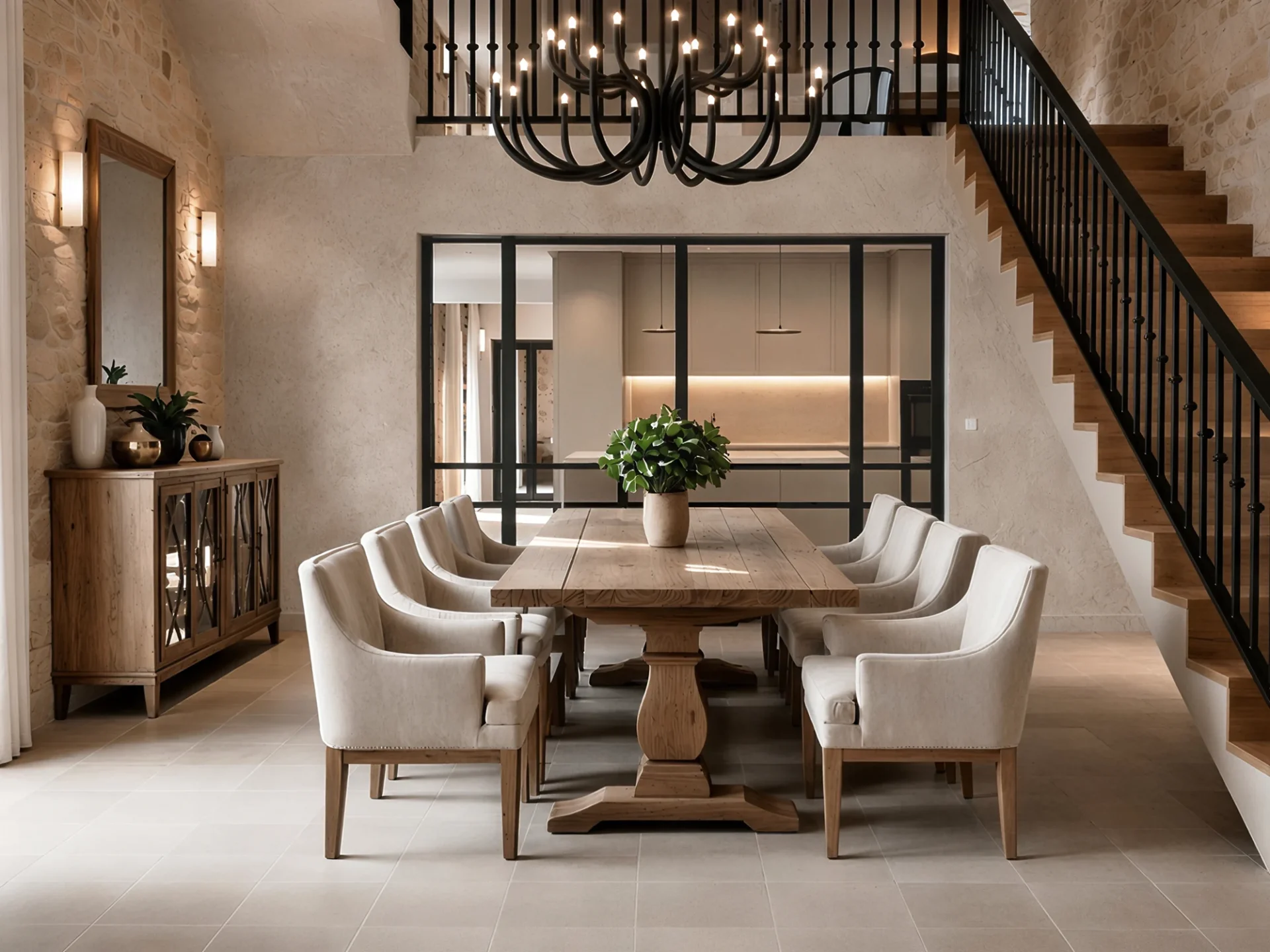
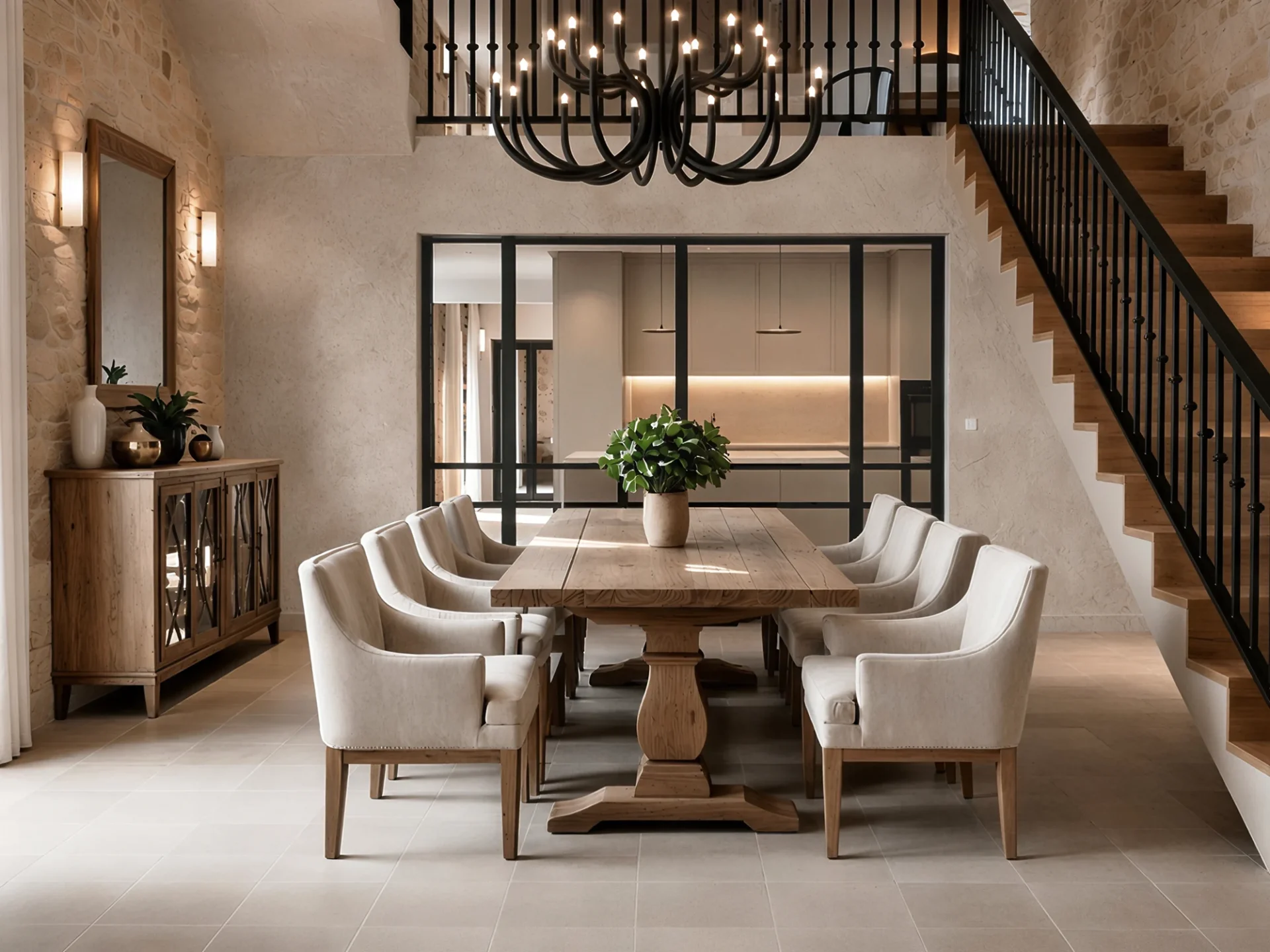
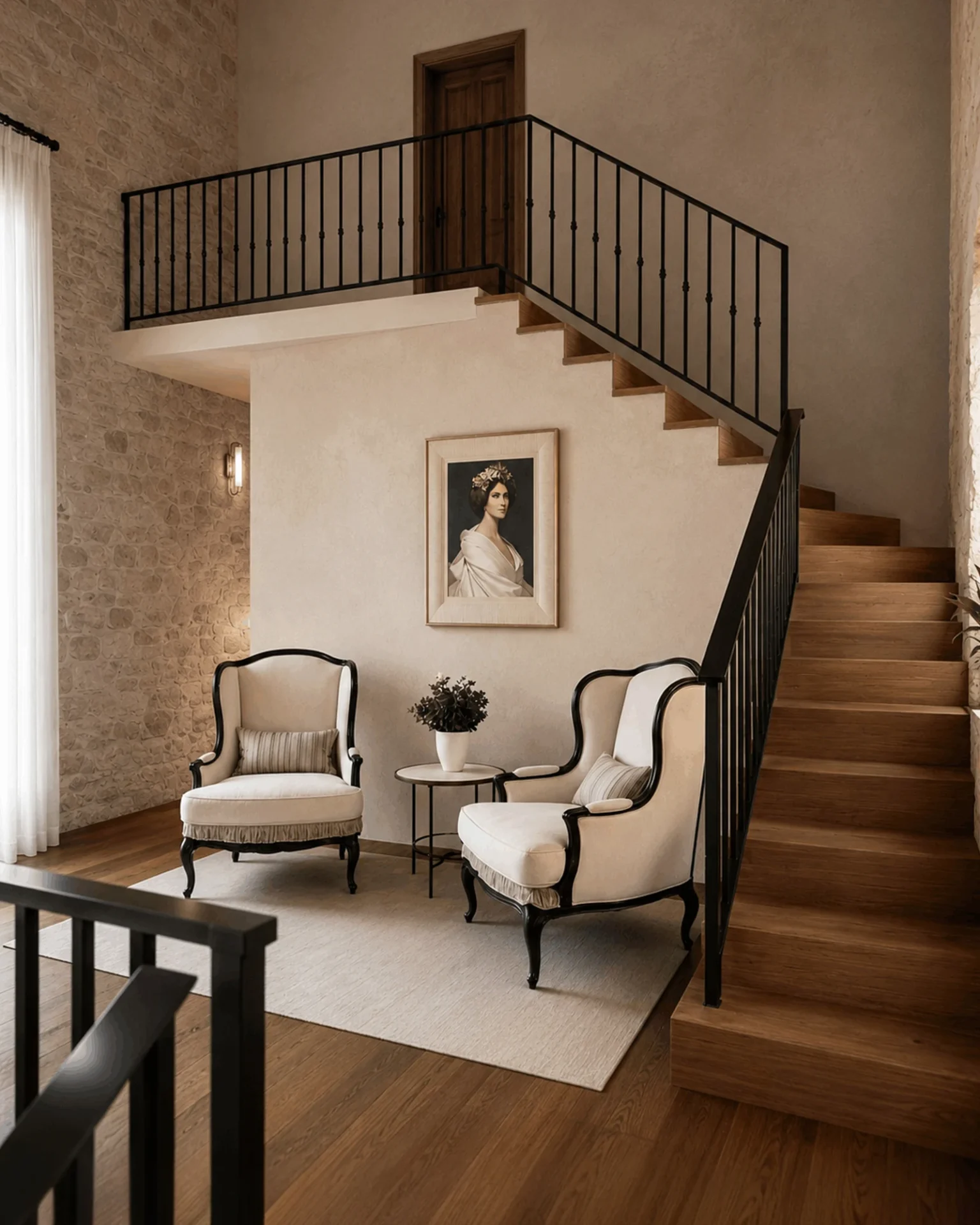
This intervention revealed the height and character that had been hidden within the existing stone structure. Staircases, metal railings, grand chandeliers, and exposed stone walls emphasize the new spatial logic, while wood, textiles, and subdued tones maintain the warmth of the residential ambiance.
The ground floor as the center of living and gathering
The ground floor is designed as the heart of life within the house. The lounge, dining area, and kitchen are connected in a clear spatial sequence, yet each zone retains its own character and functional logic.
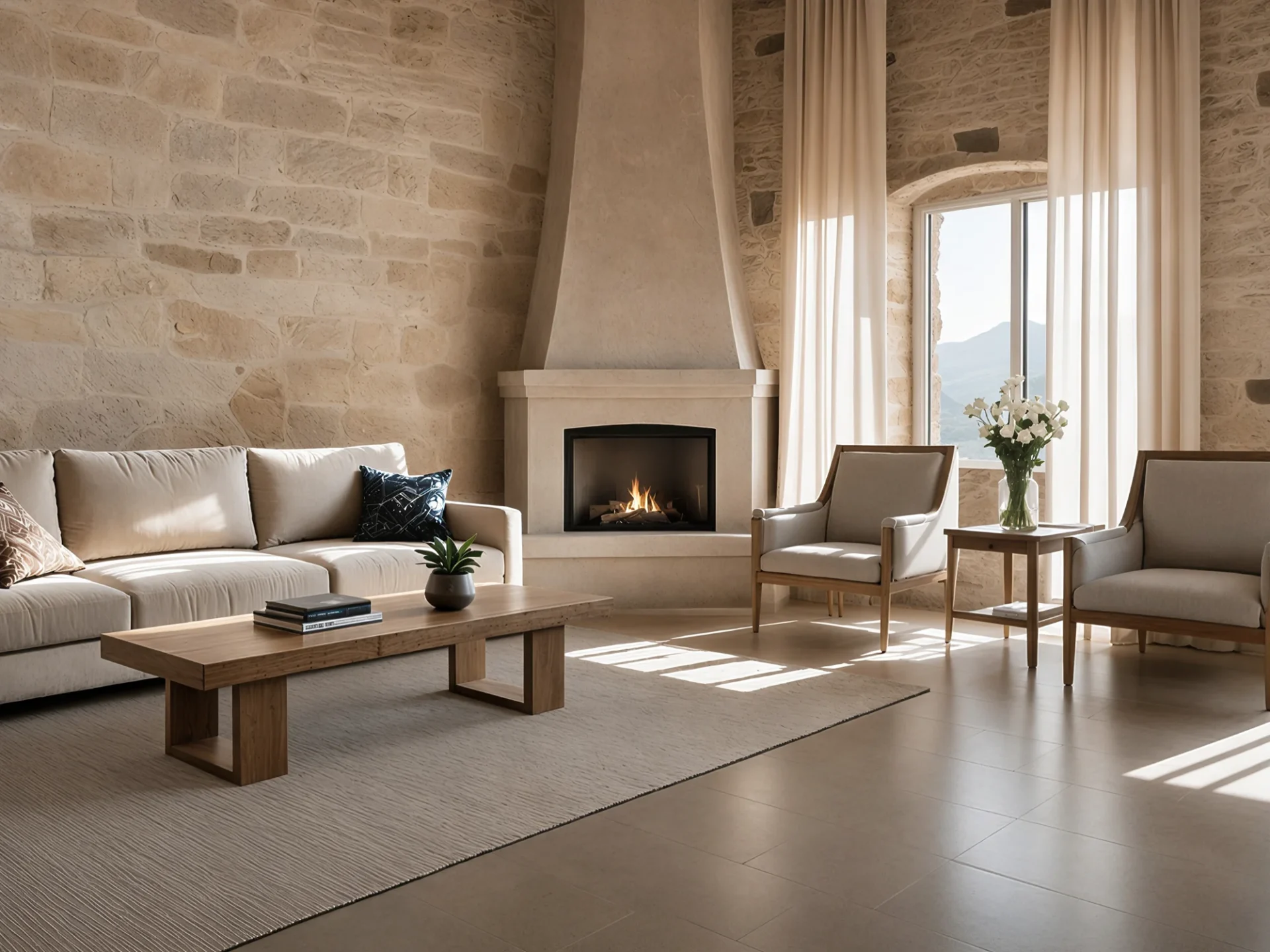
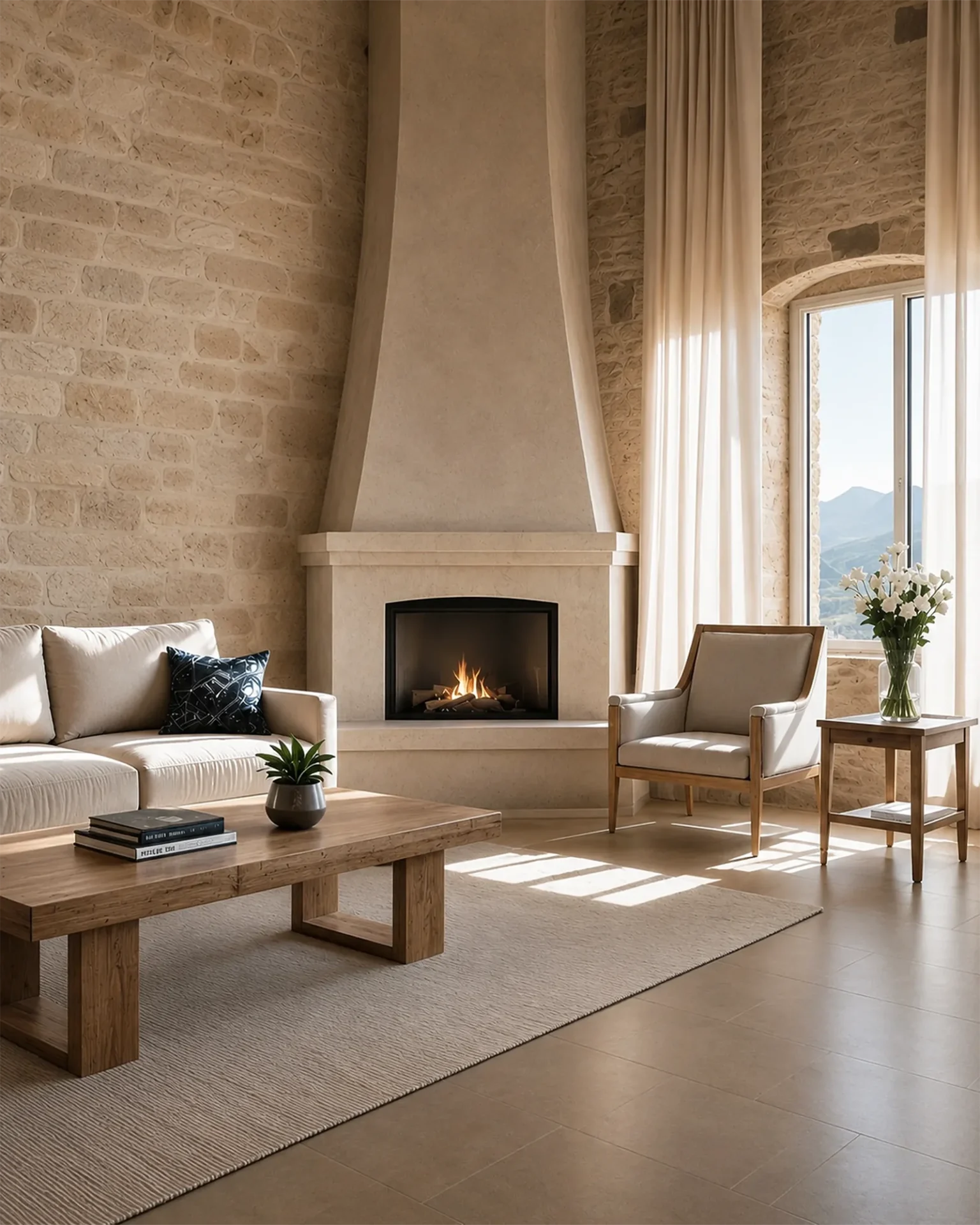
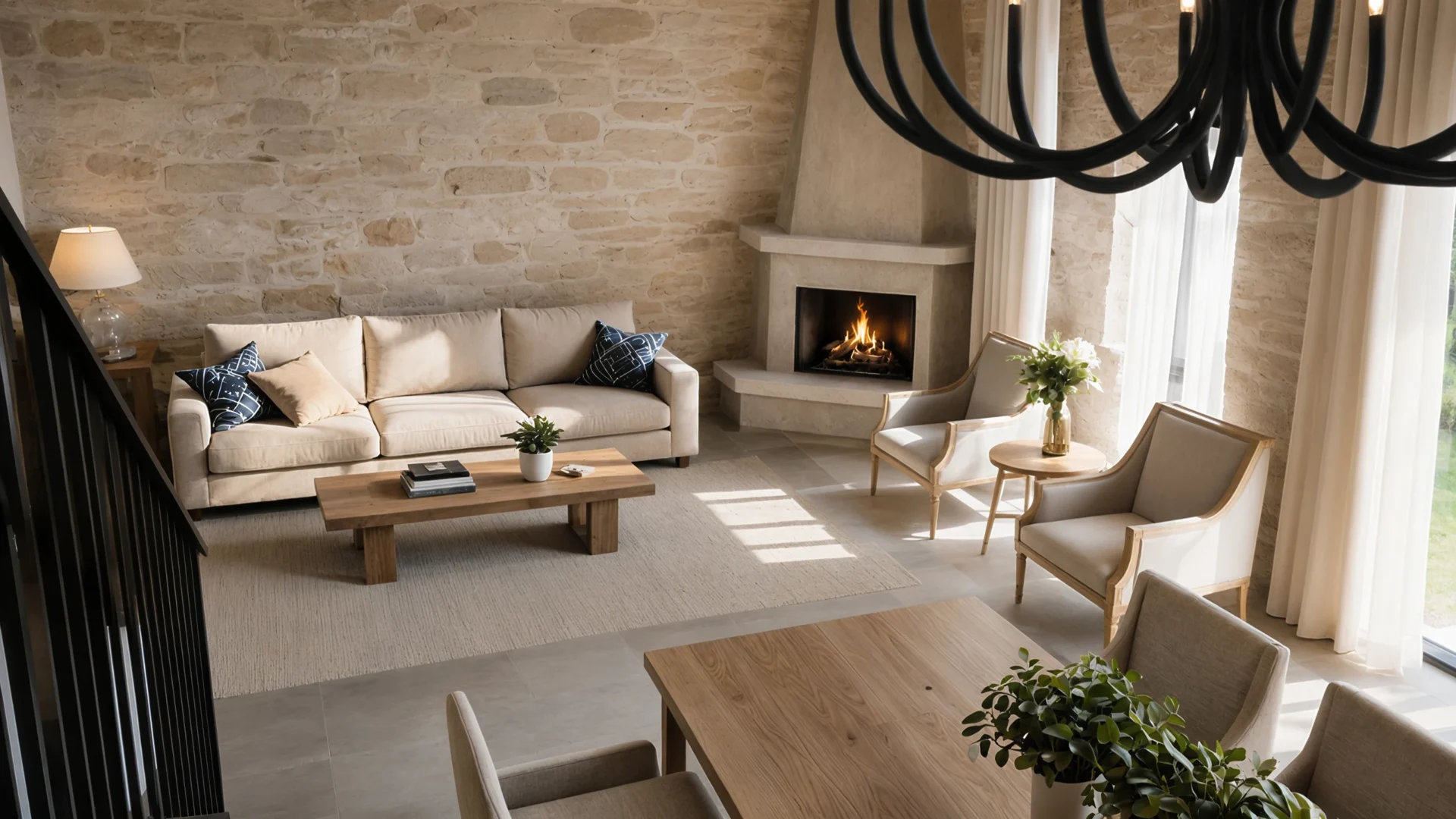
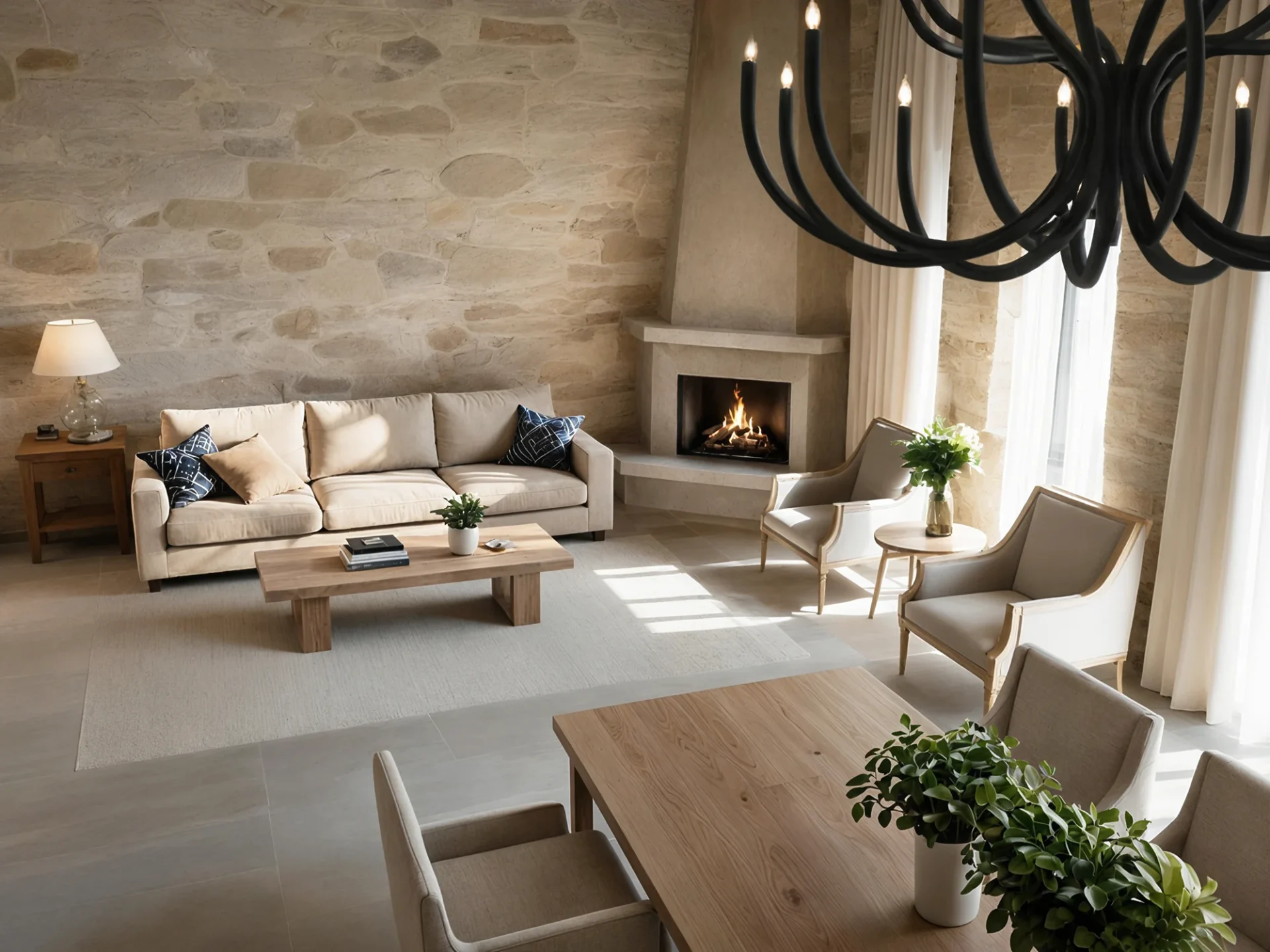
The lounge is serene and warm, with the fireplace serving as the natural anchor of the space. The dining room takes on a more formal, representative role; open to the galleries and connected to the kitchen, it becomes one of the main spots for gathering, socializing, and the daily enjoyment of the home.
Space experienced across multiple levels
The view towards the lounge and dining area reveals the house’s new spatial logic. The living room, dining area, staircases, and galleries do not function as isolated units, but rather as interconnected parts of a single volume. The vertical openness creates a sense of airiness, while stone, wood, lighting, and textiles maintain the intimacy of the space.
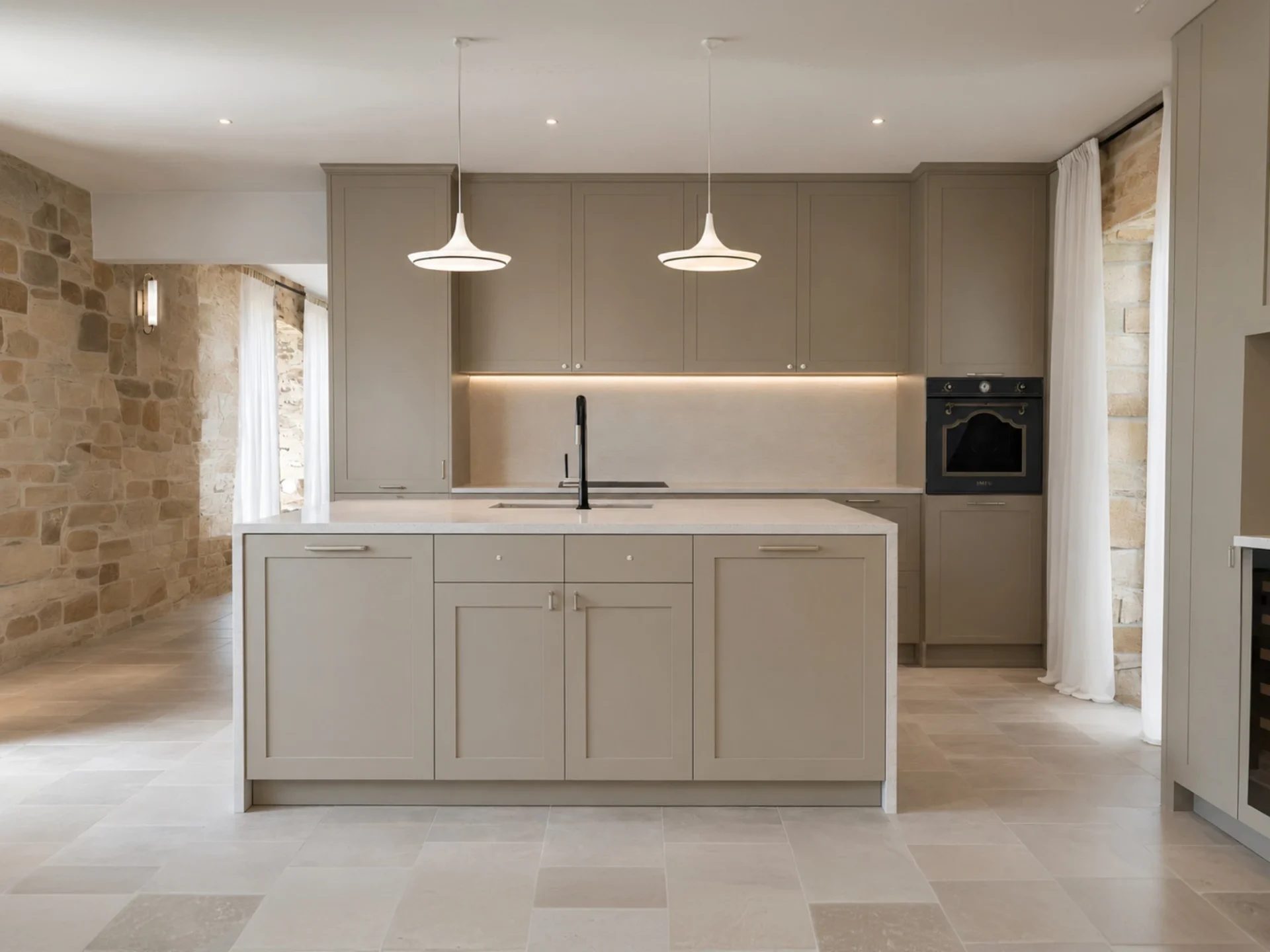
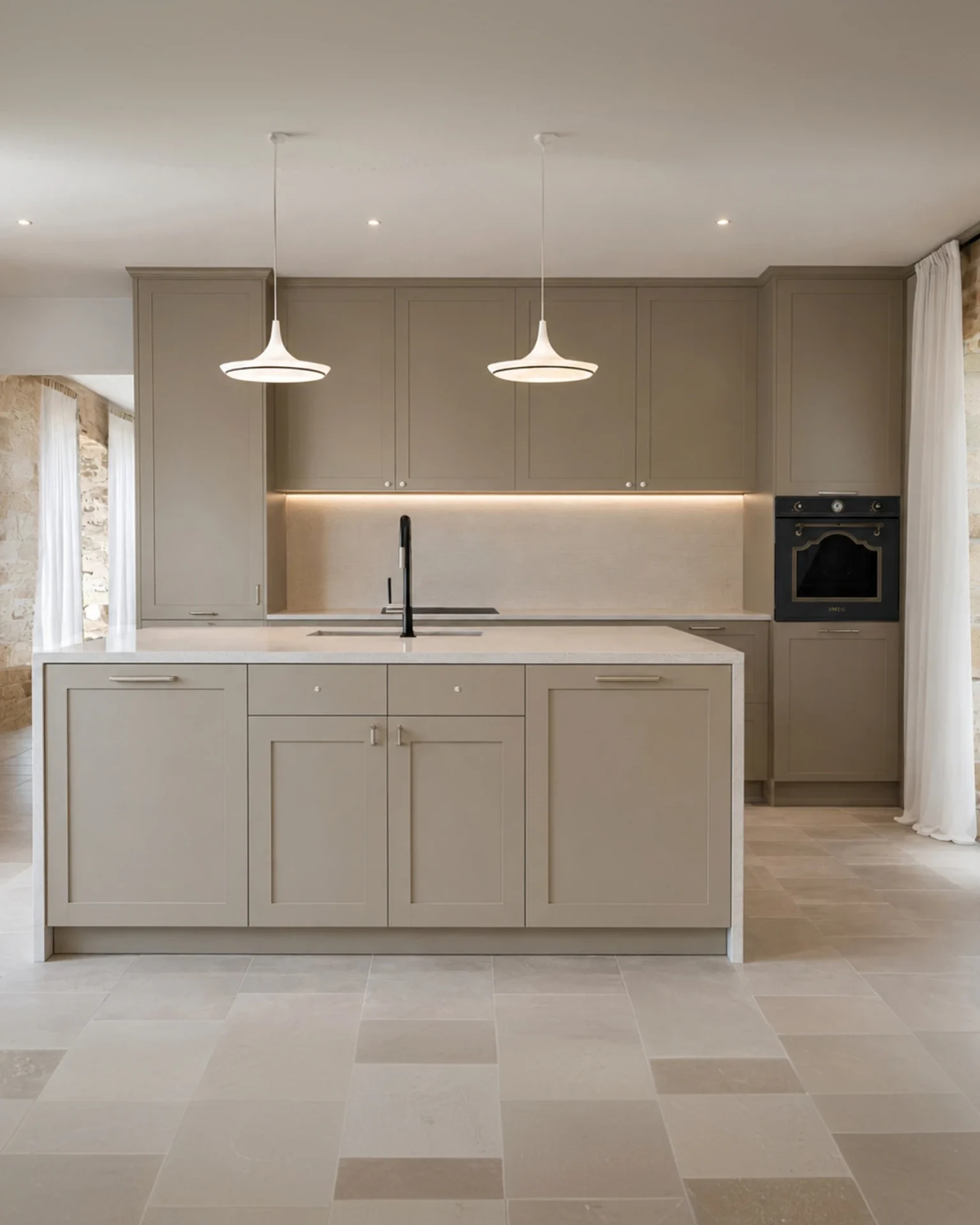
A kitchen integrated with the main living area
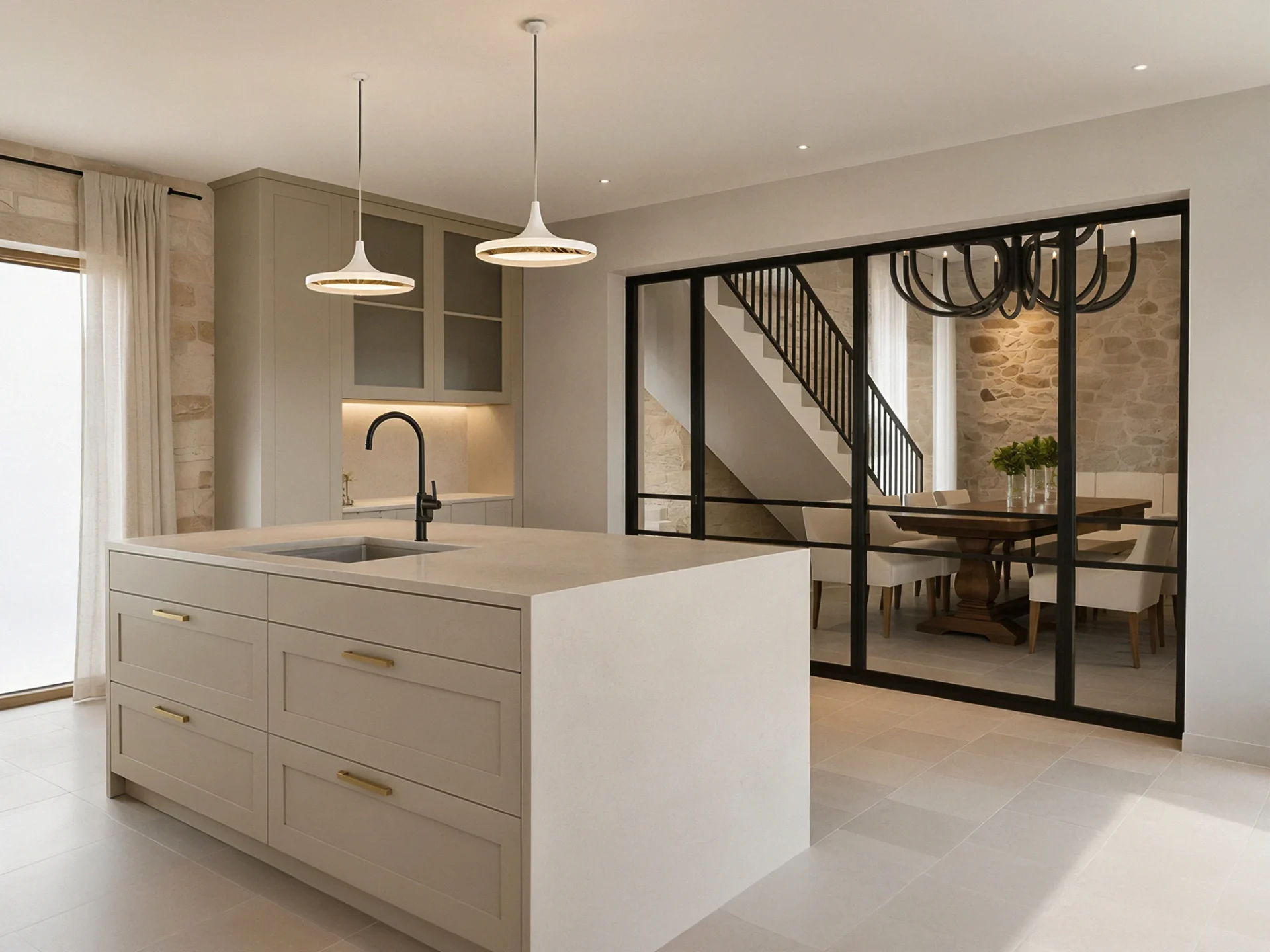
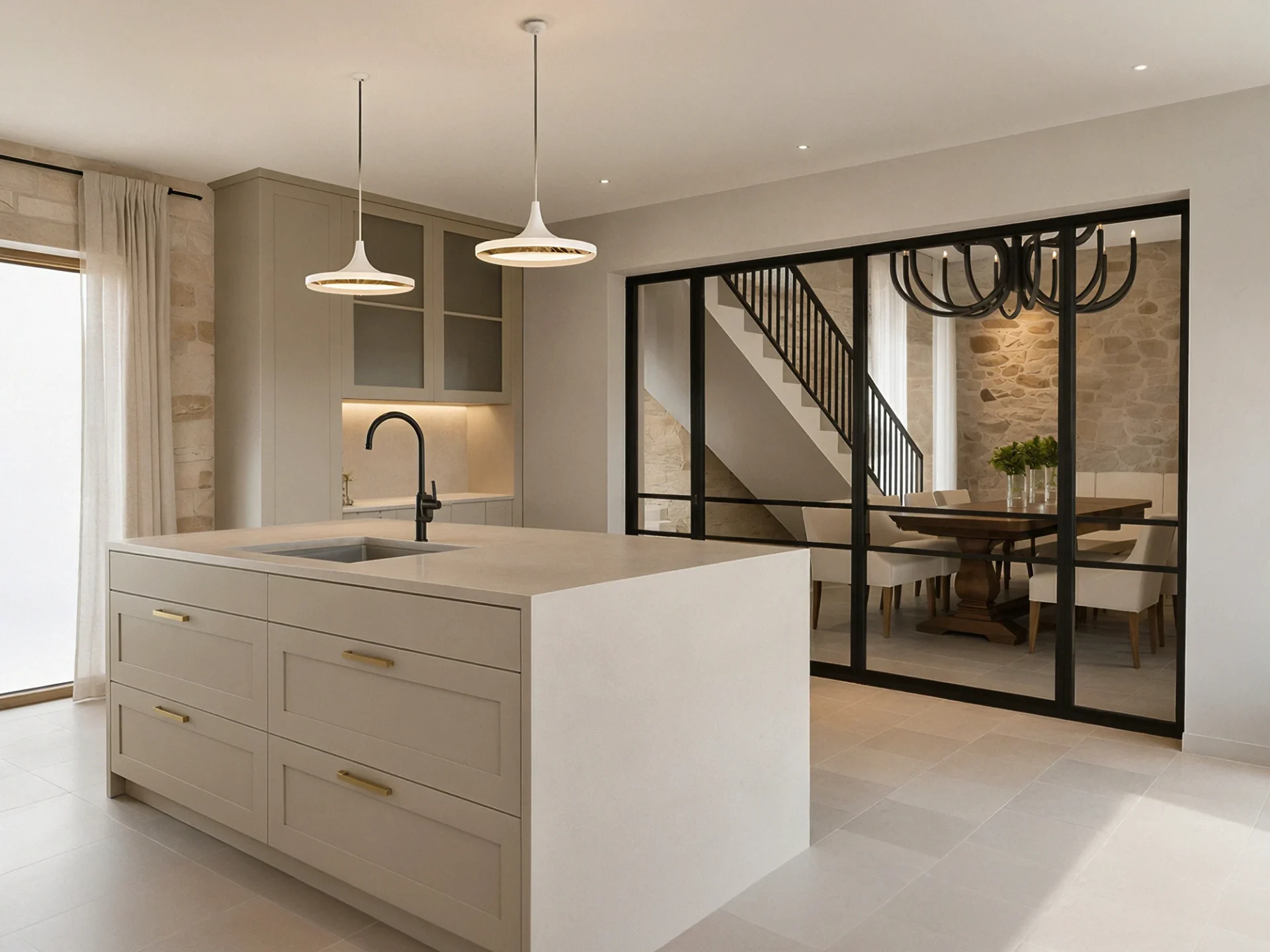
The kitchen is designed as the contemporary and functional core of the ground floor. Its aesthetic is serene, characterized by clean lines, warm neutral tones, and an island that serves as both a workspace and a social focal point.
A particularly important element is the glass connection to the dining area. It introduces a contemporary architectural layer without disrupting the character of the stone house. The kitchen remains a distinct, controlled space while simultaneously maintaining visual communication with the dining room, the staircase, and the main living area.
A wine cellar with a more intimate spatial rhythm
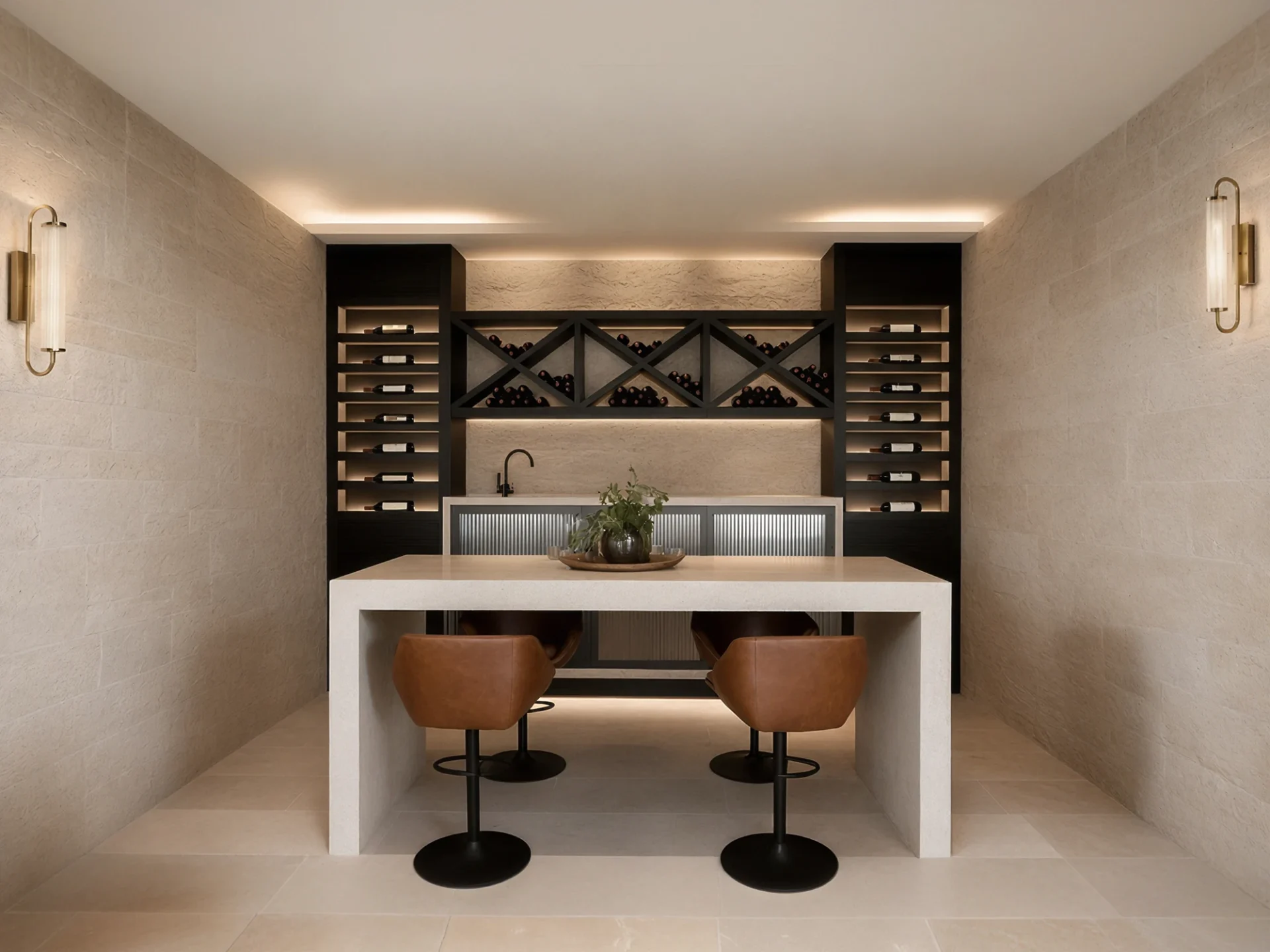
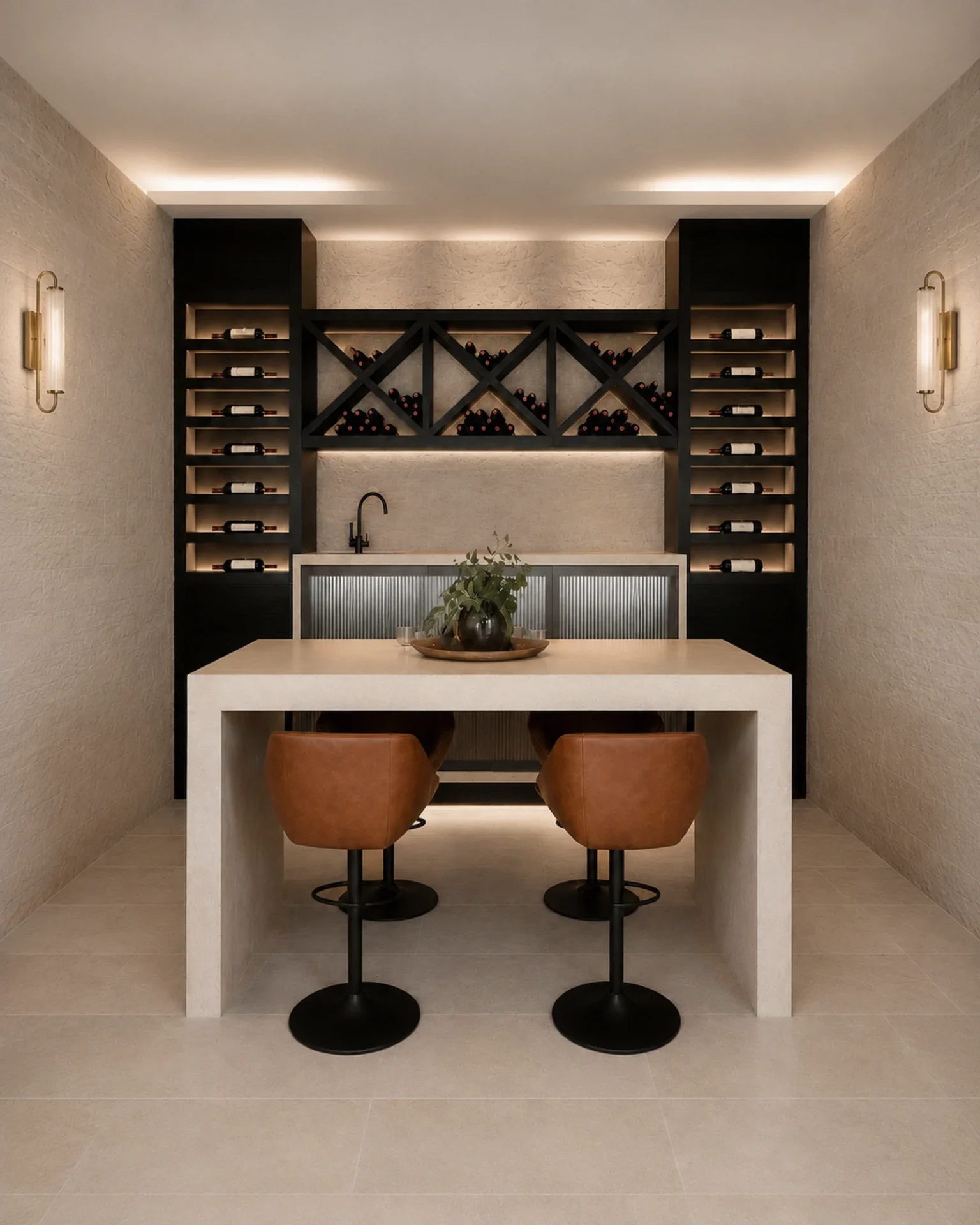
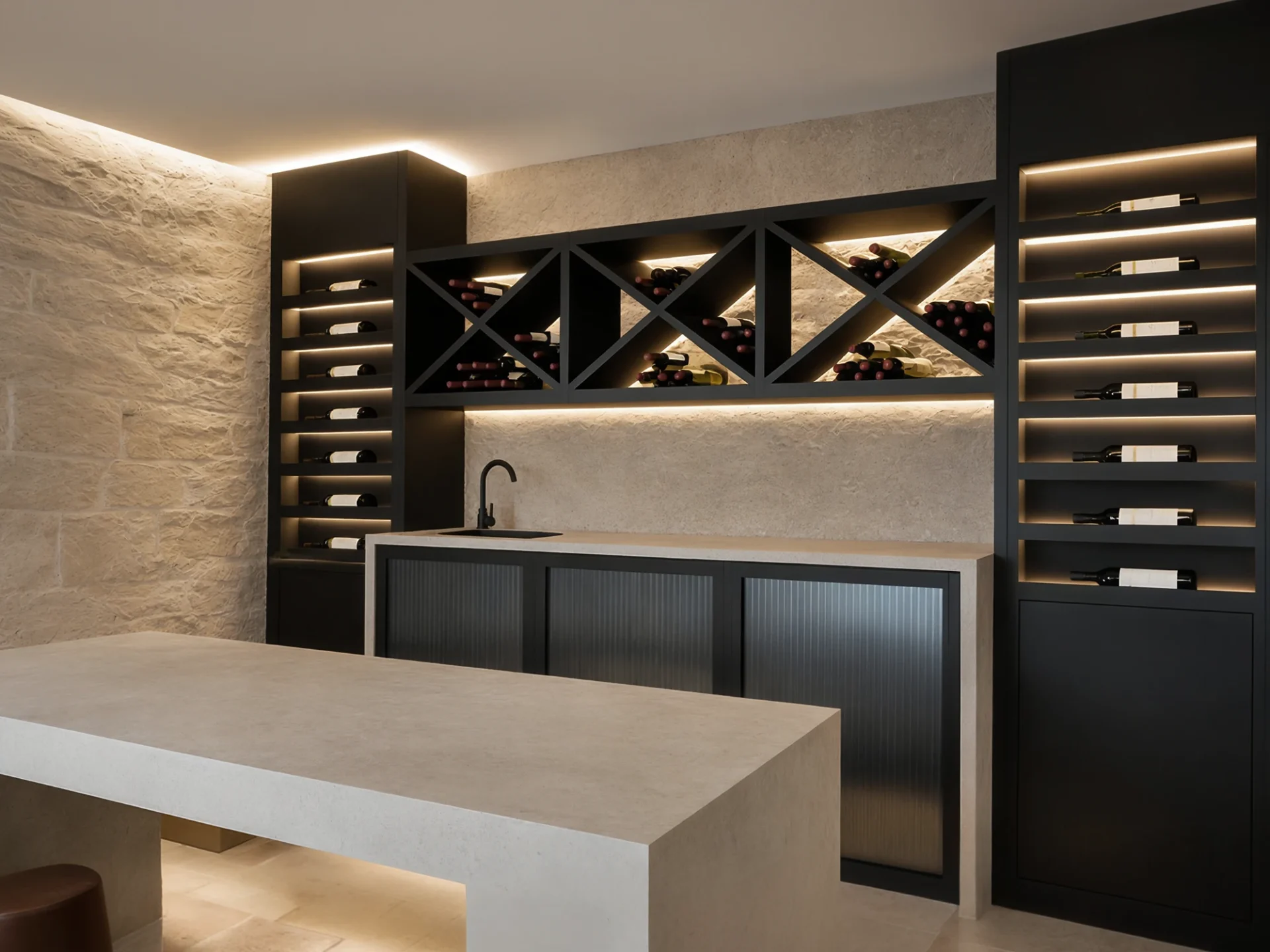
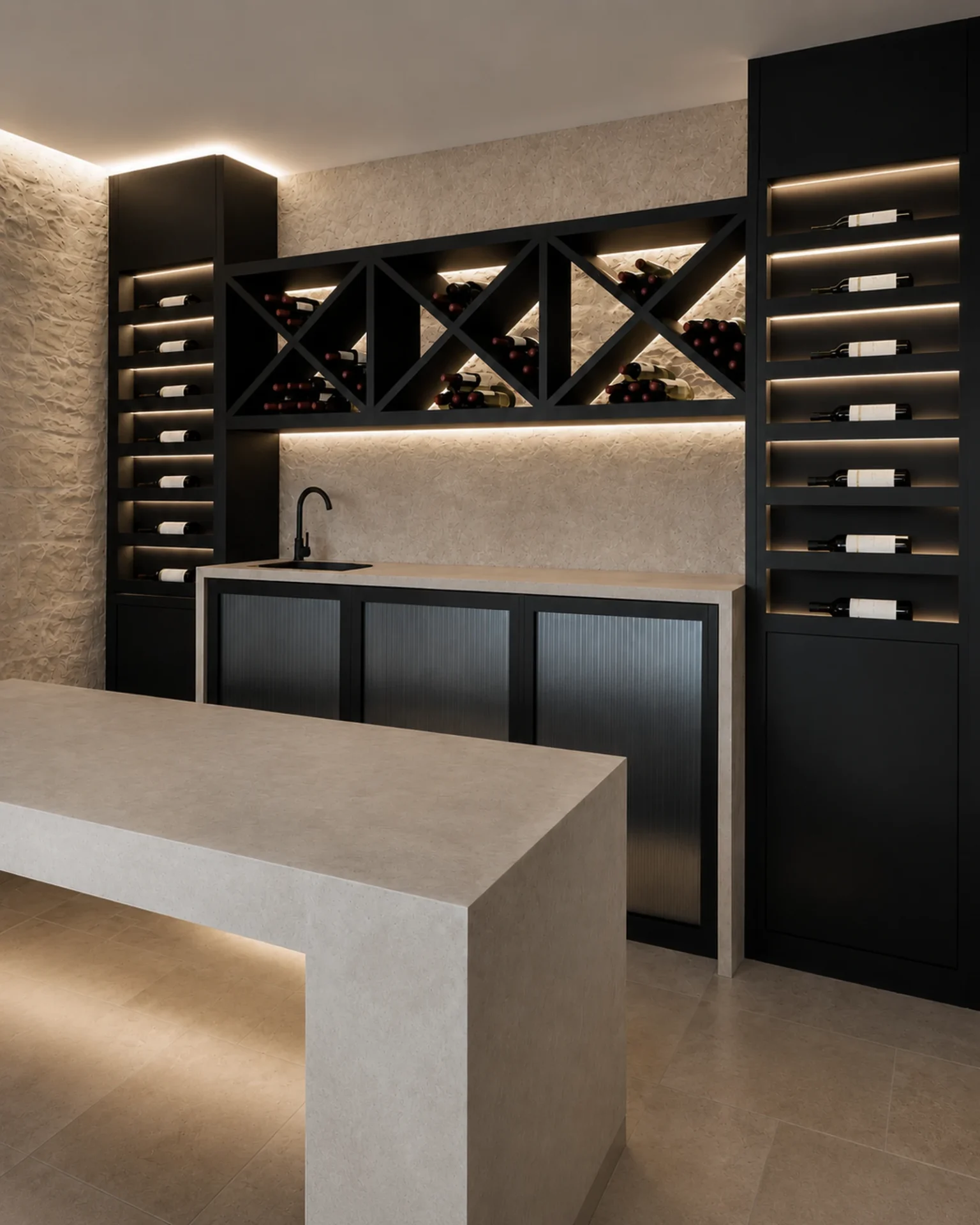
The wine cellar introduces a different tonality to the ground floor. In contrast to the bright and open main zones, this space emphasizes darker elements, ambient lighting, and a clear structure of wine racks.
The room is designed as a dedicated, almost scenographic entity, yet it remains connected to the rest of the house through stone, proportions, and carefully measured materials. As a result, the wine cellar becomes an intimate space for lingering, display, and enjoyment.
Galleries that expand the home’s usage
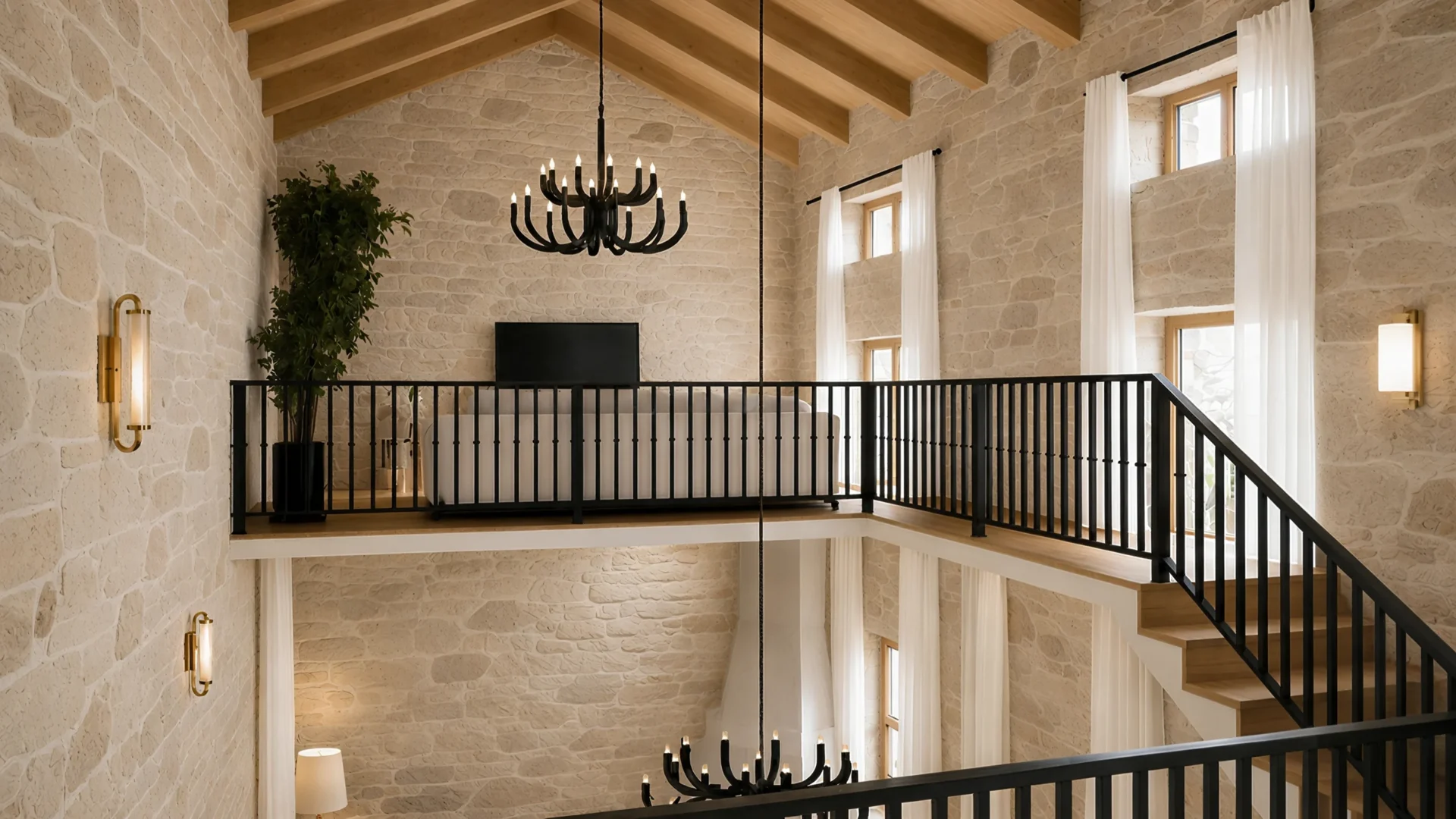
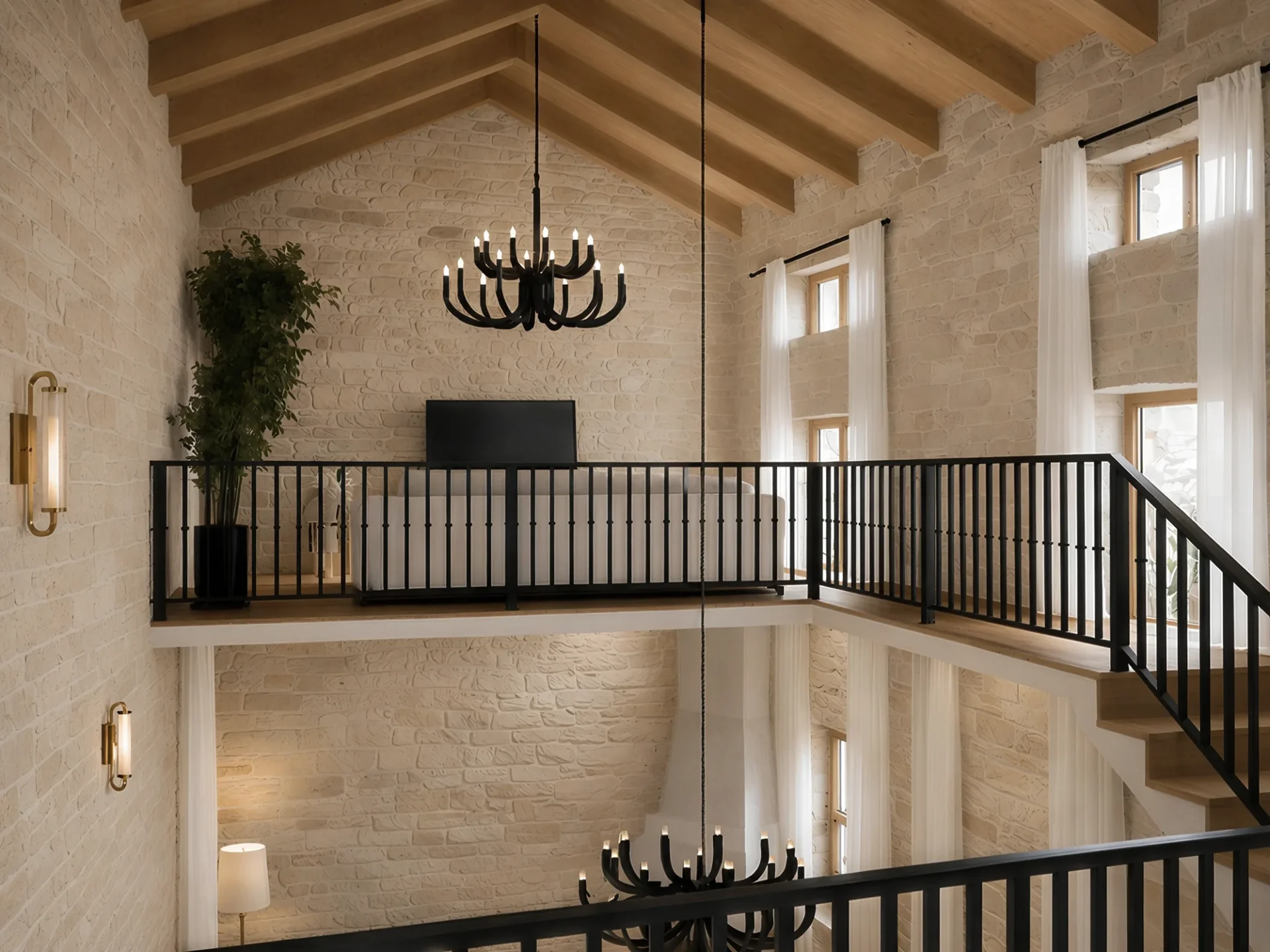
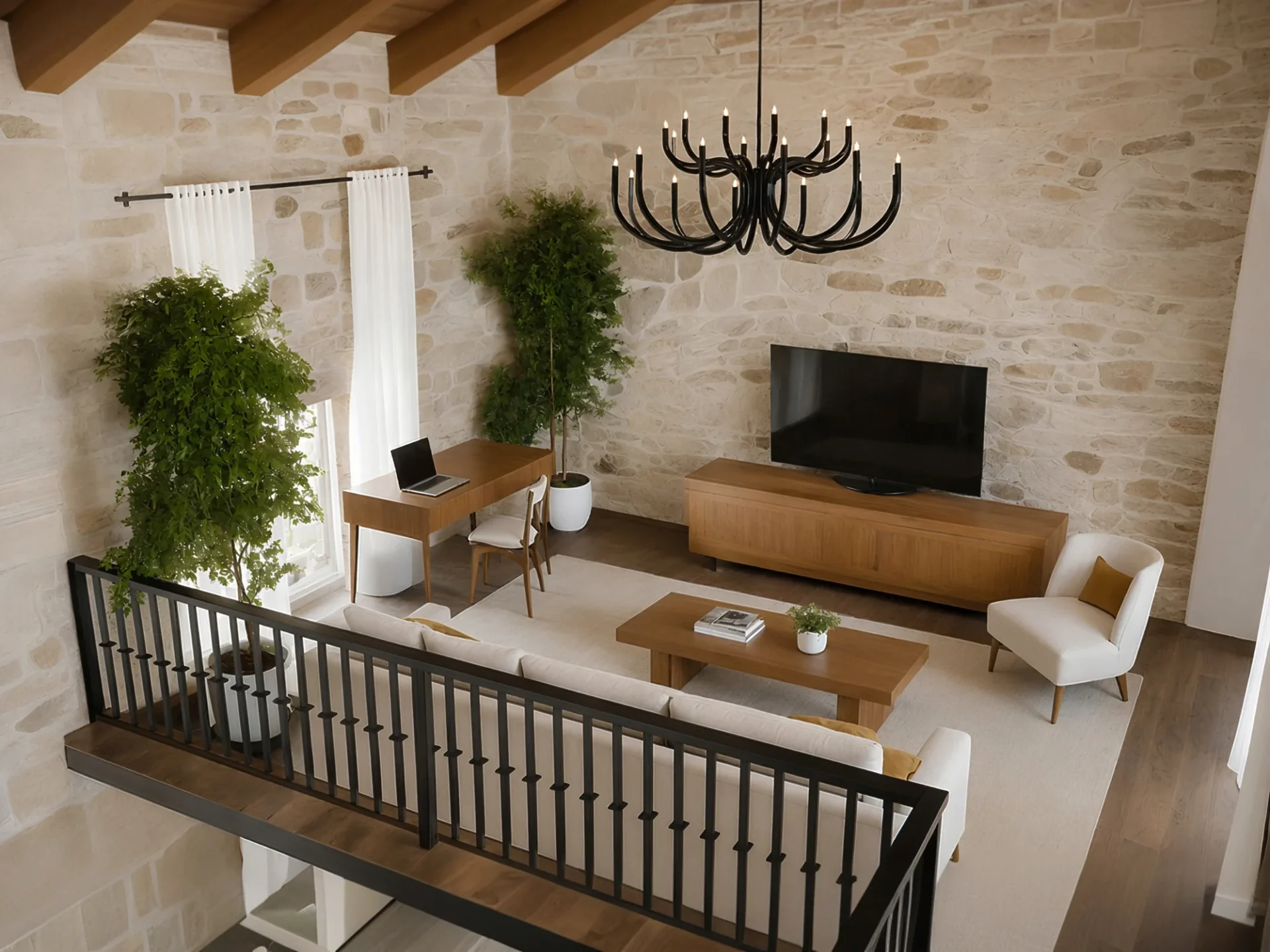
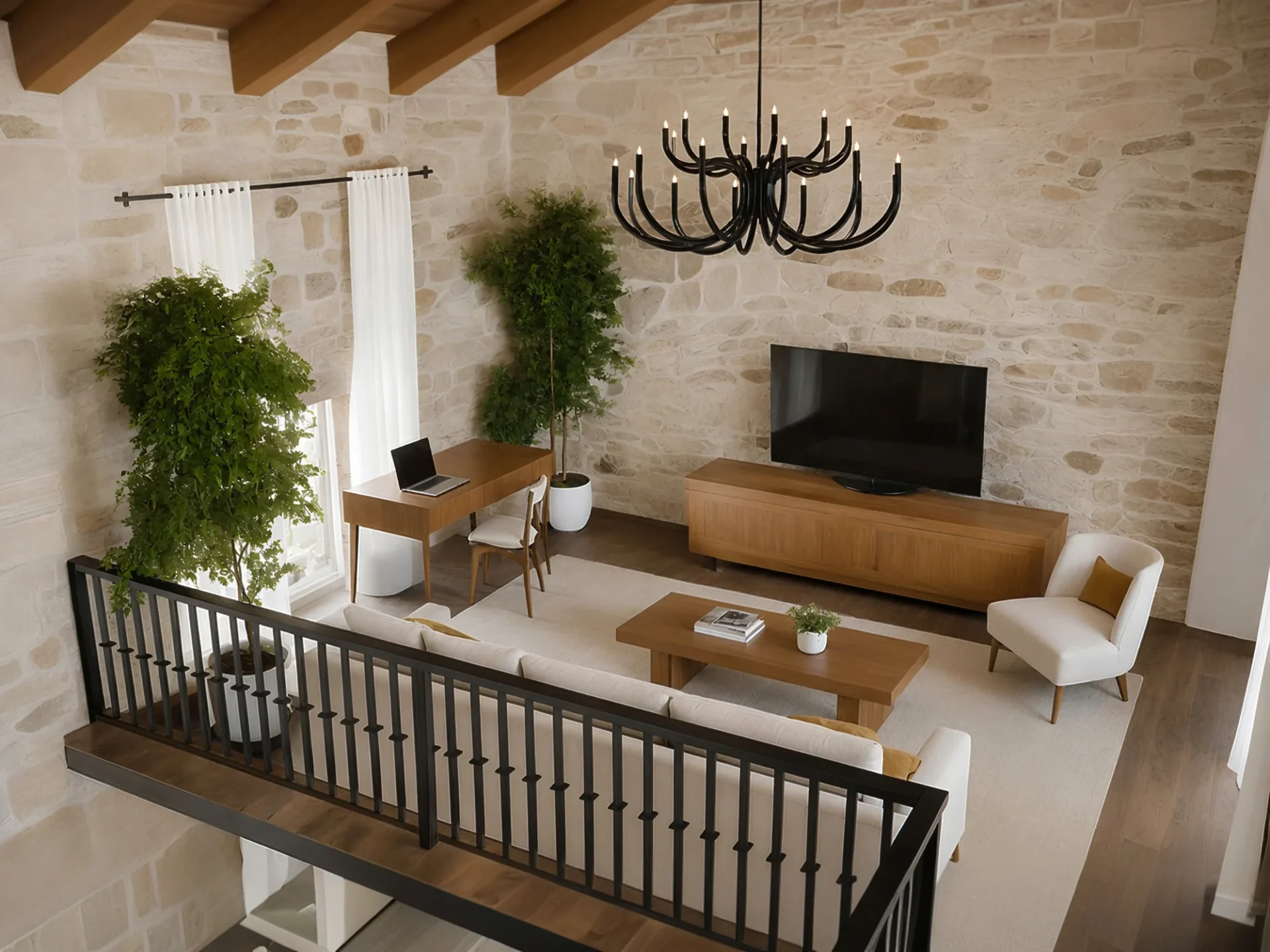
The galleries are designed as active living areas rather than mere transitional spaces between floors. Their positioning allows for constant visual contact with the ground floor, while the increased height, exposed stone walls, and roof structure create a calmer, more secluded character.
This level features additional zones for relaxation, work, and quiet moments. Thus, the galleries serve as a spatial bridge between the representative ground floor and the home’s more private, intimate zones.
Intimate areas shaped by the character of the space
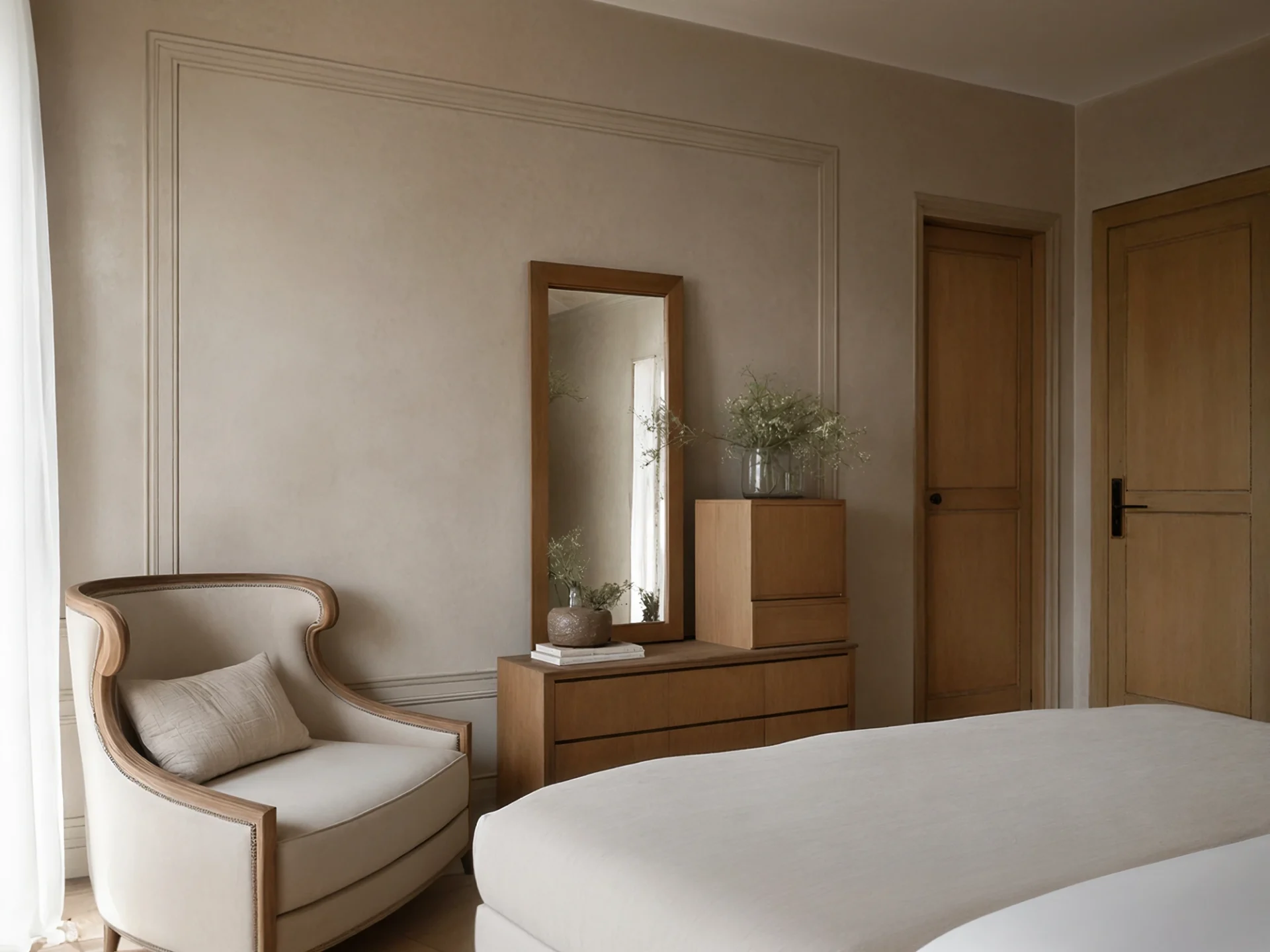
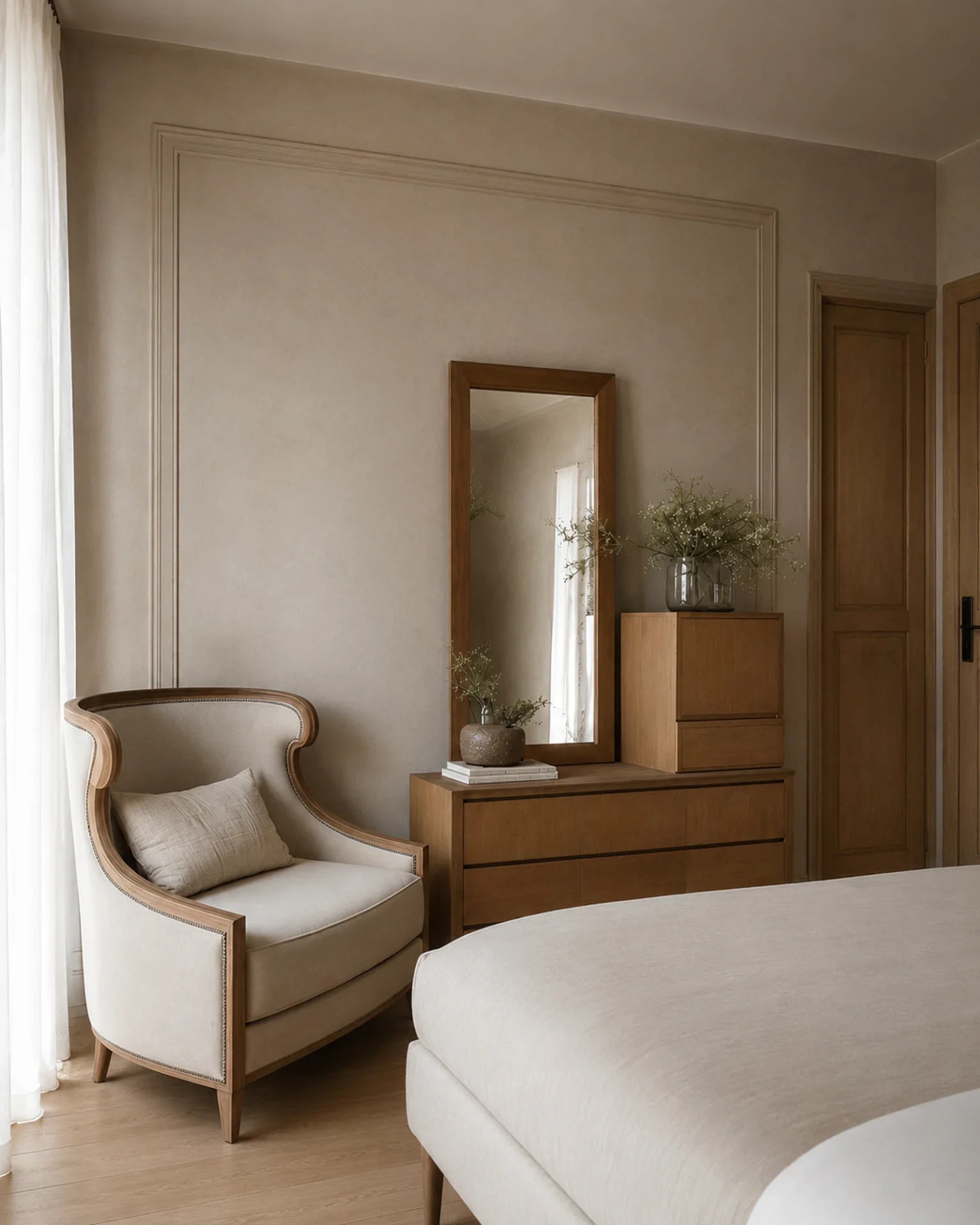
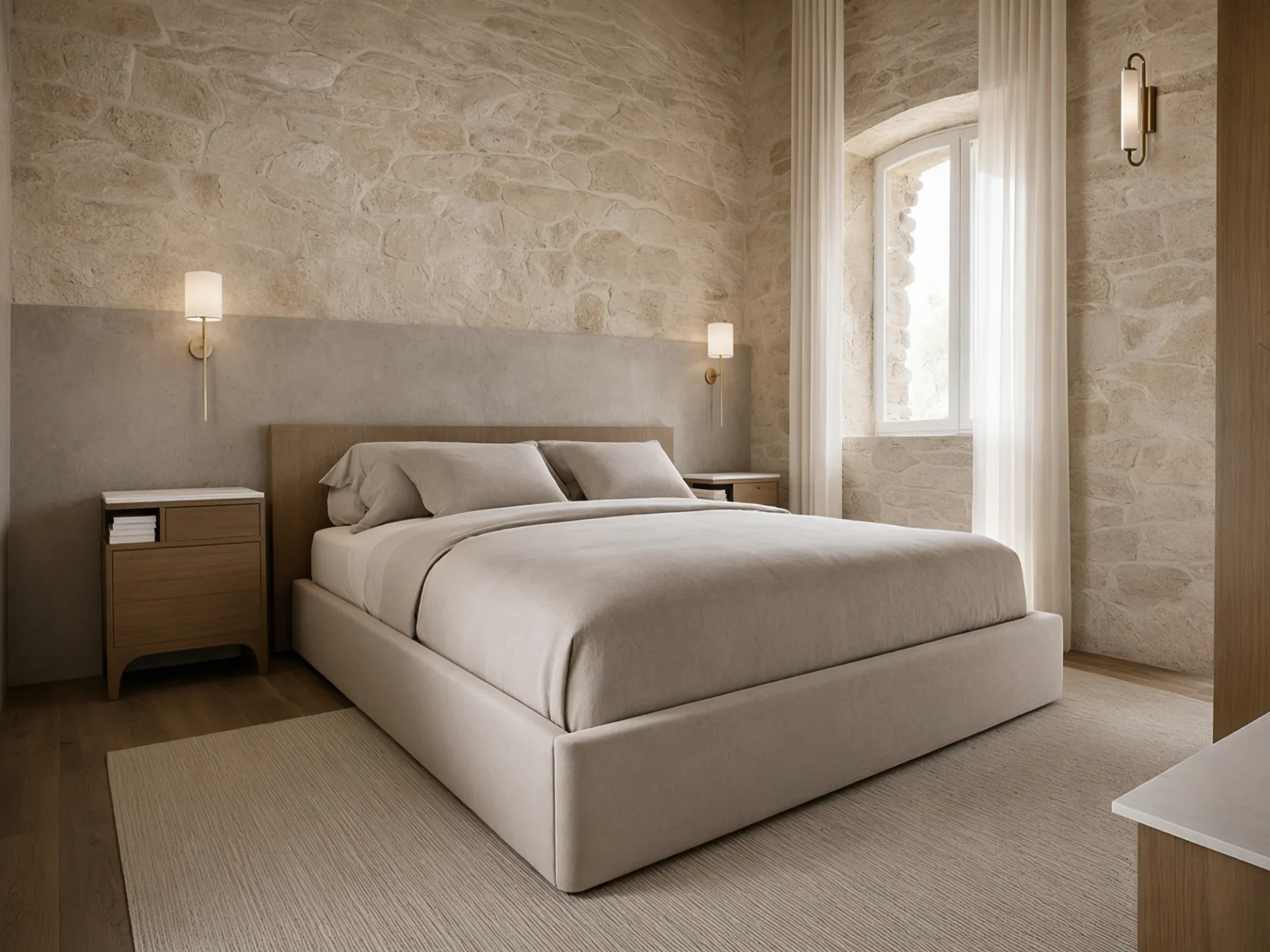
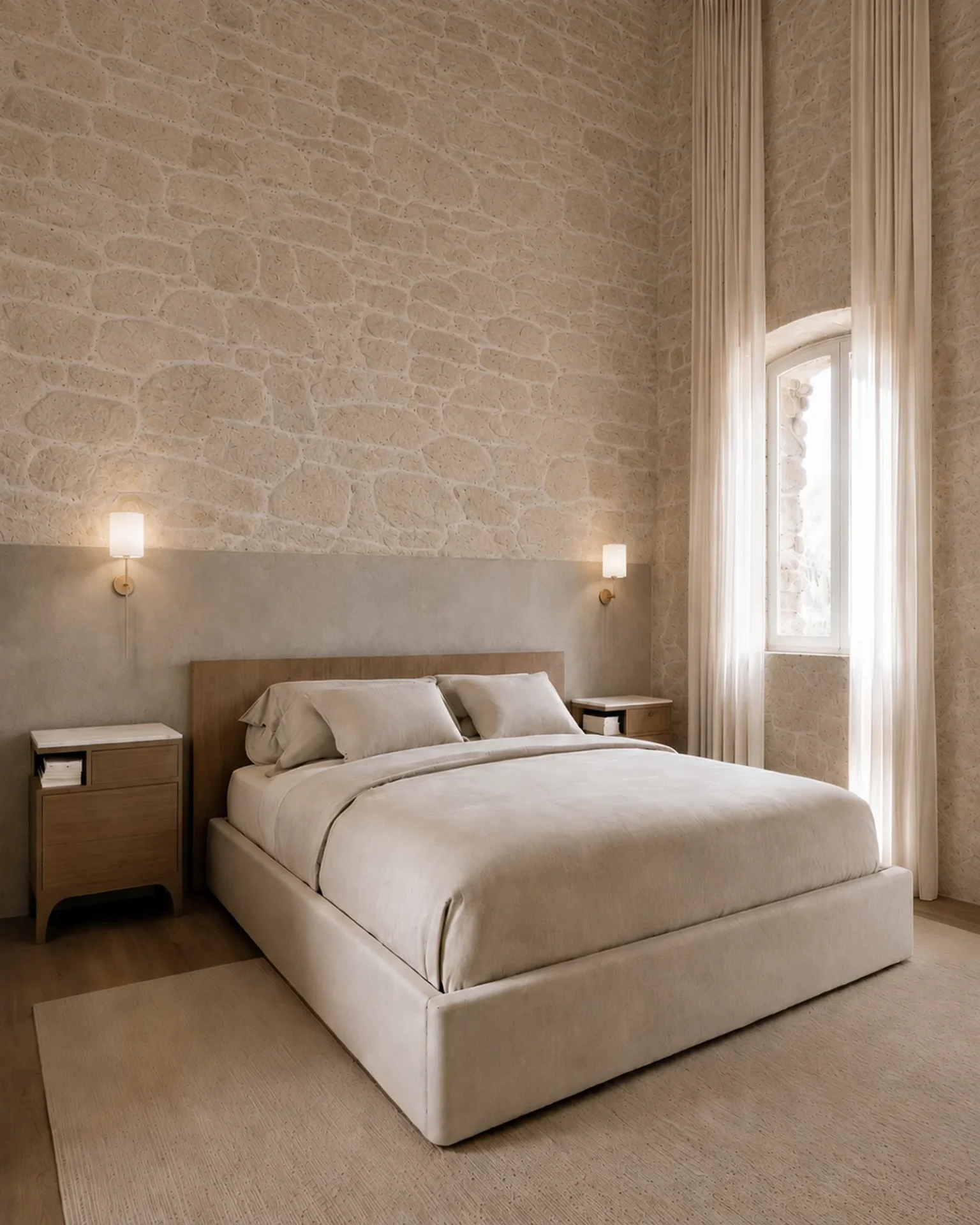
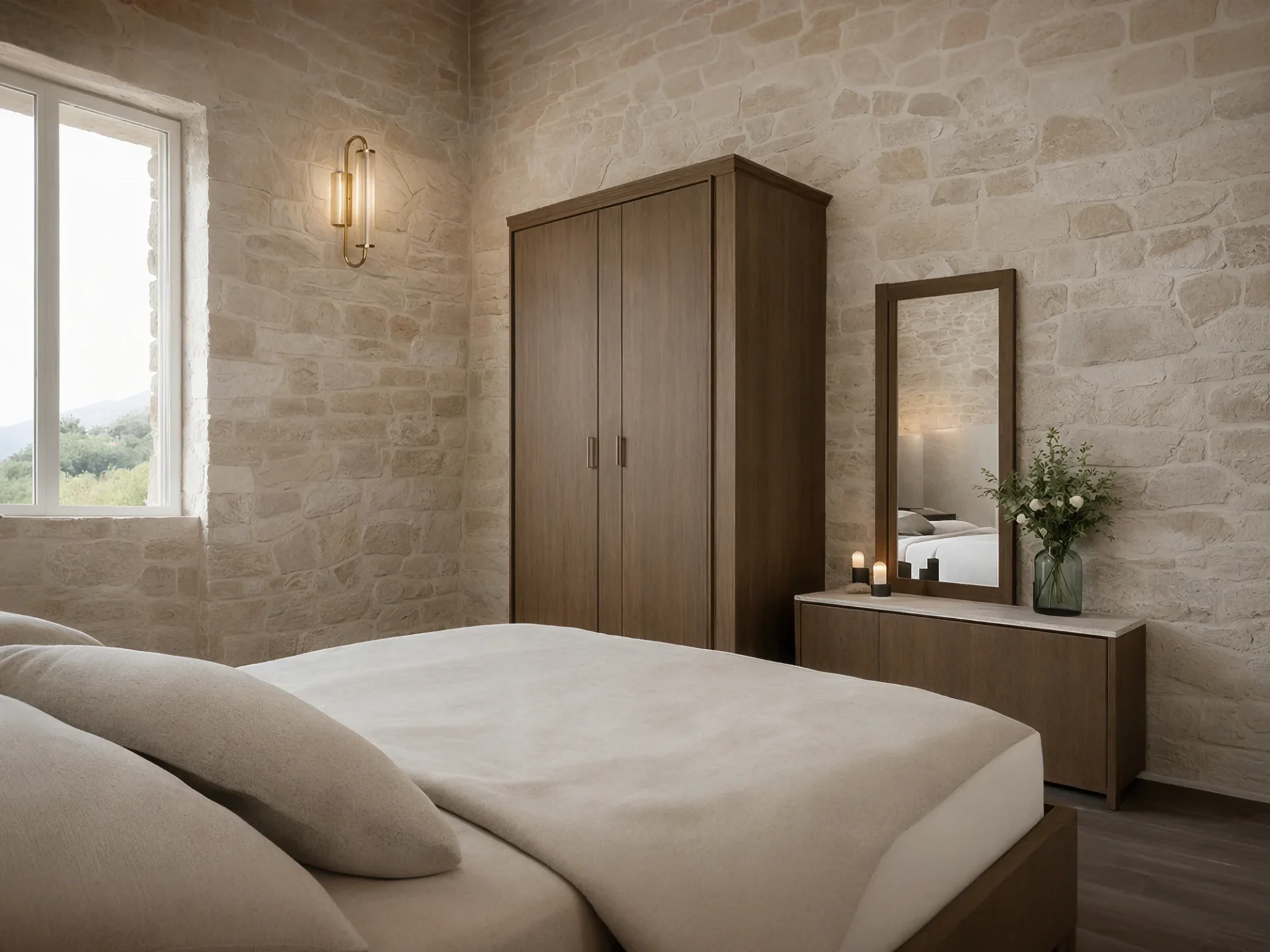
The private rooms are designed as the quieter zones of the house, yet each maintains its own unique character. Room 1 adopts a serene, more classic tone, with an emphasis on the warmth of wood, neutral colors, and a sense of shelter.
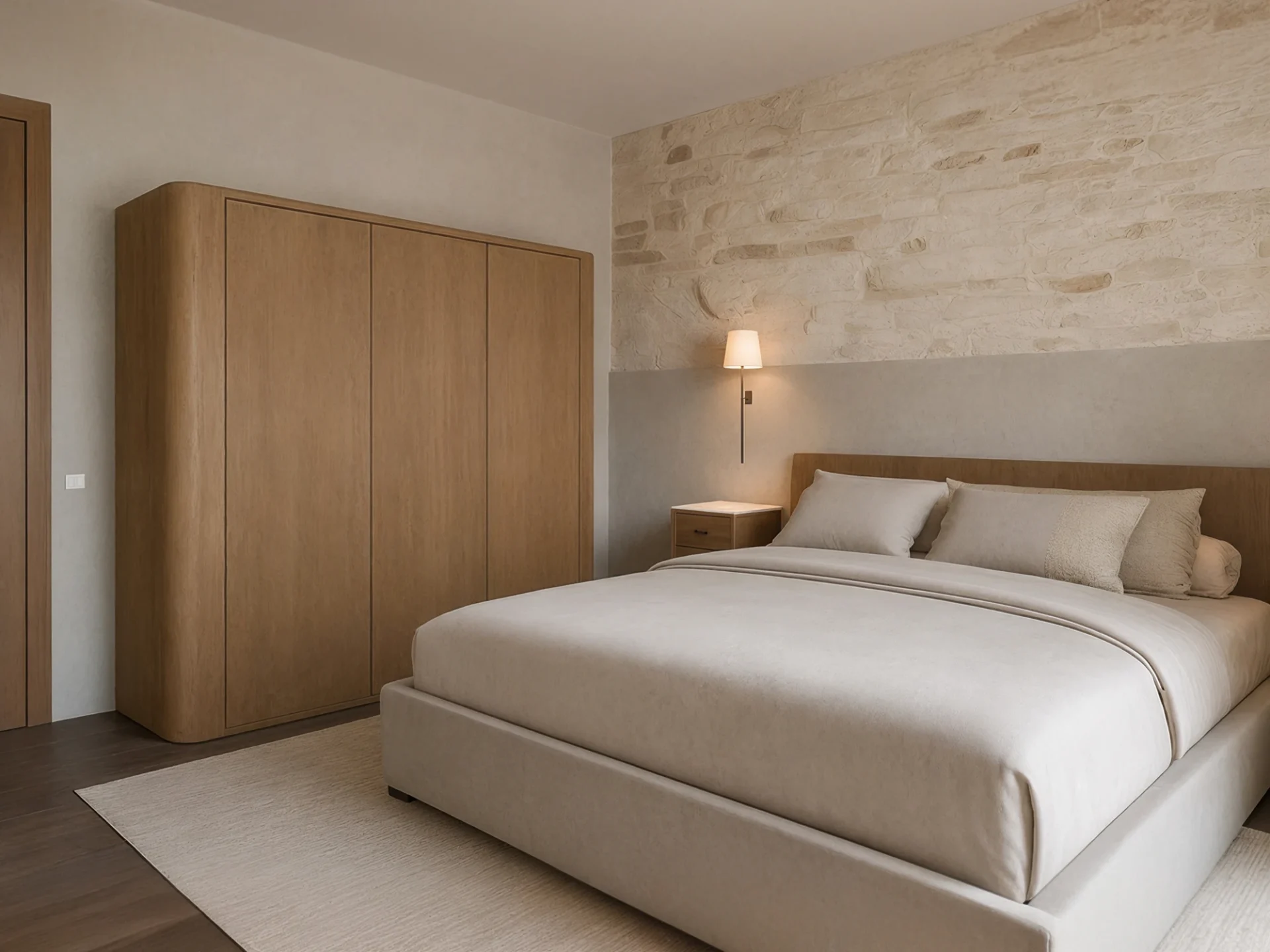
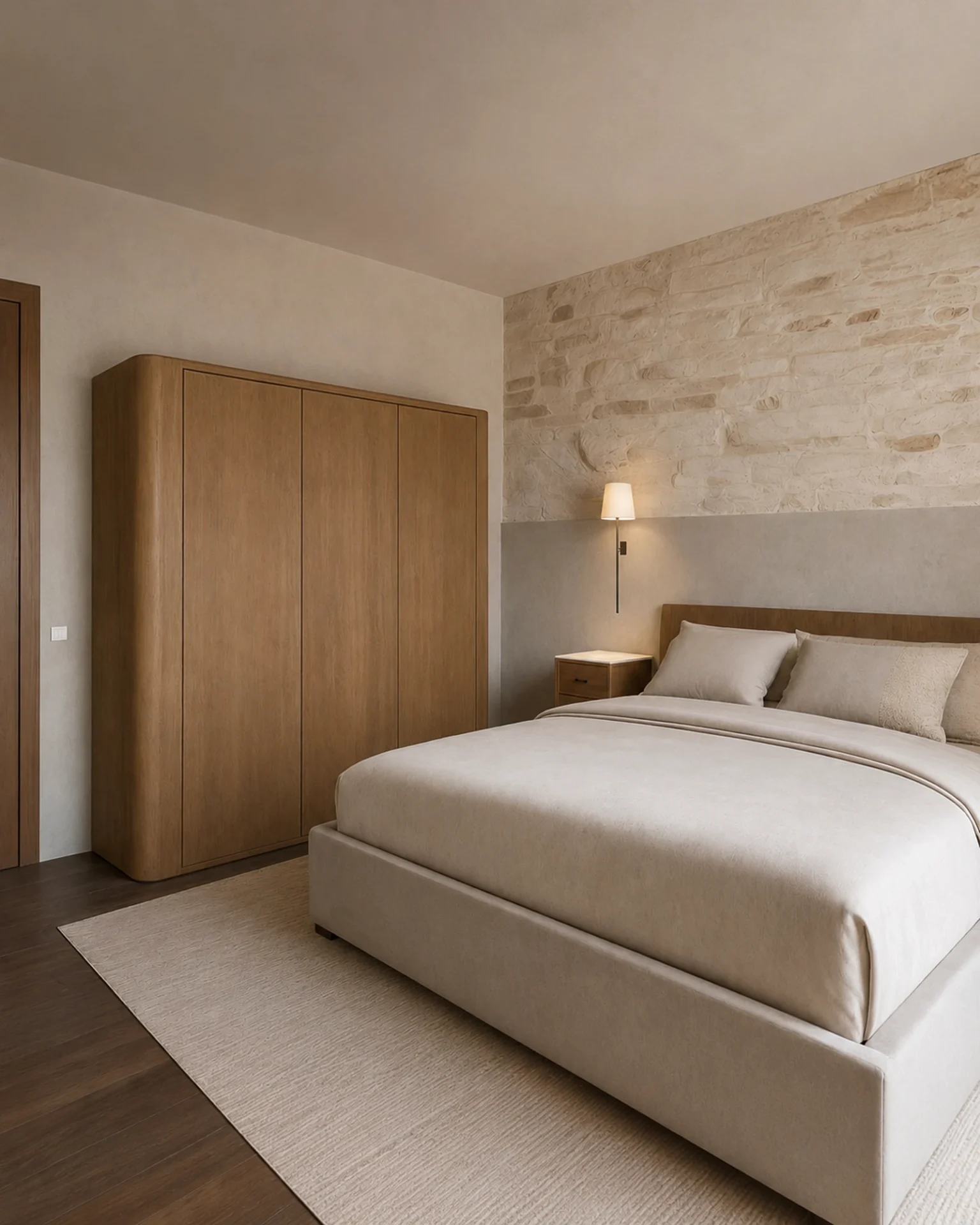
Room 2 makes a stronger statement, utilizing the character of the stone, light, and volume. The differences between the rooms are not merely decorative; they arise from the house’s spatial organization, its relationship with the existing walls, and the way each level receives natural light.
Bathrooms bridging stone, ceramics, and light
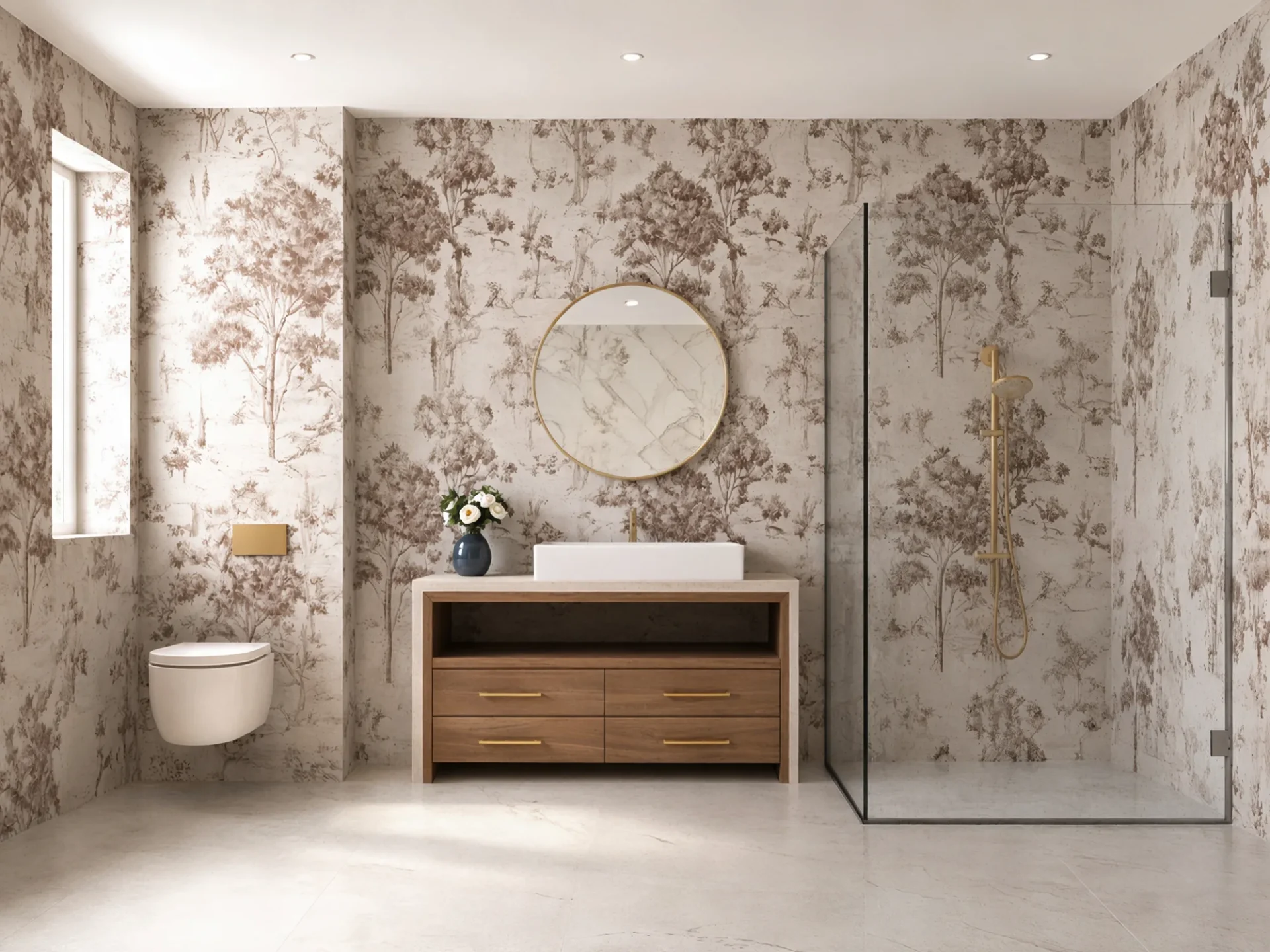
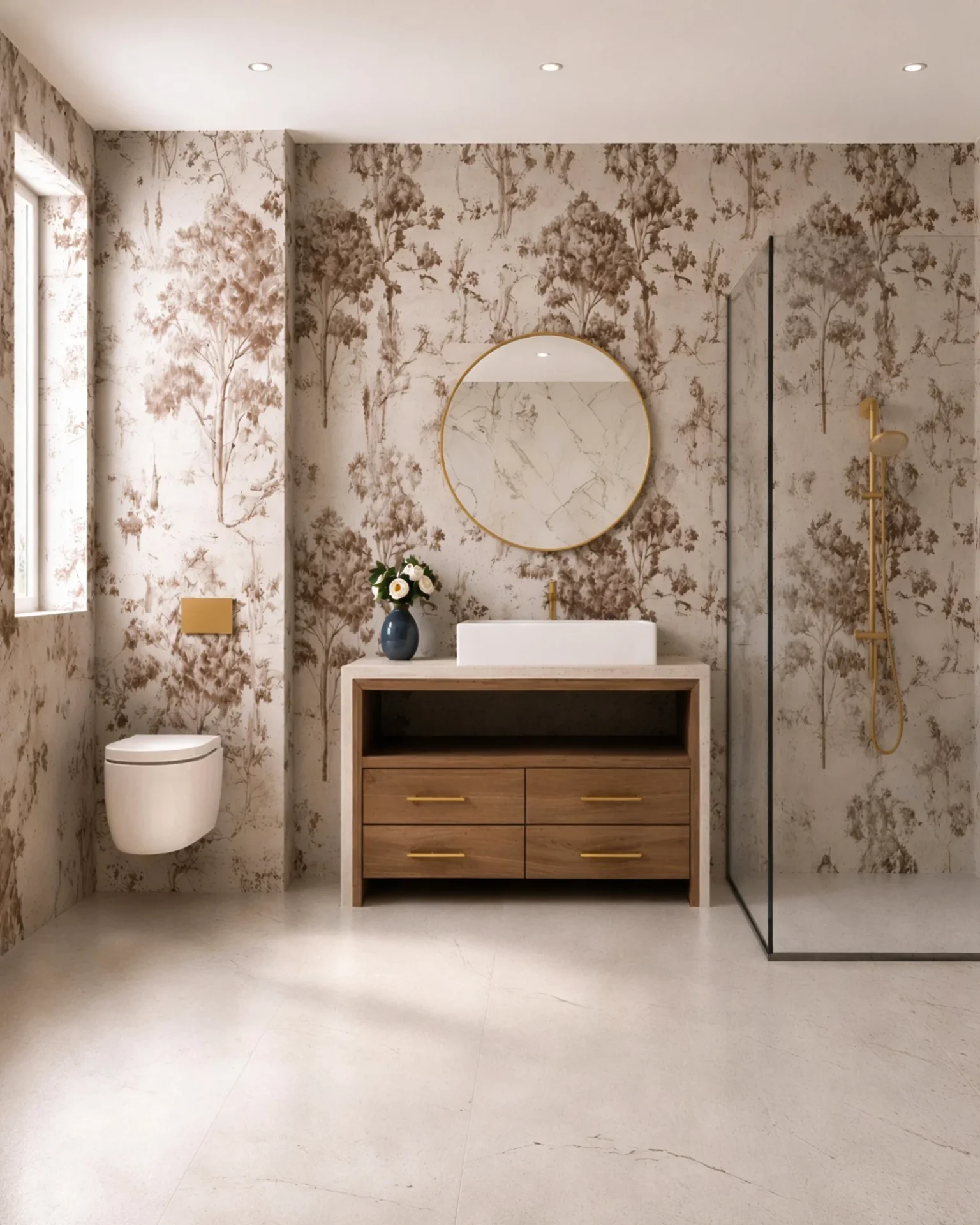
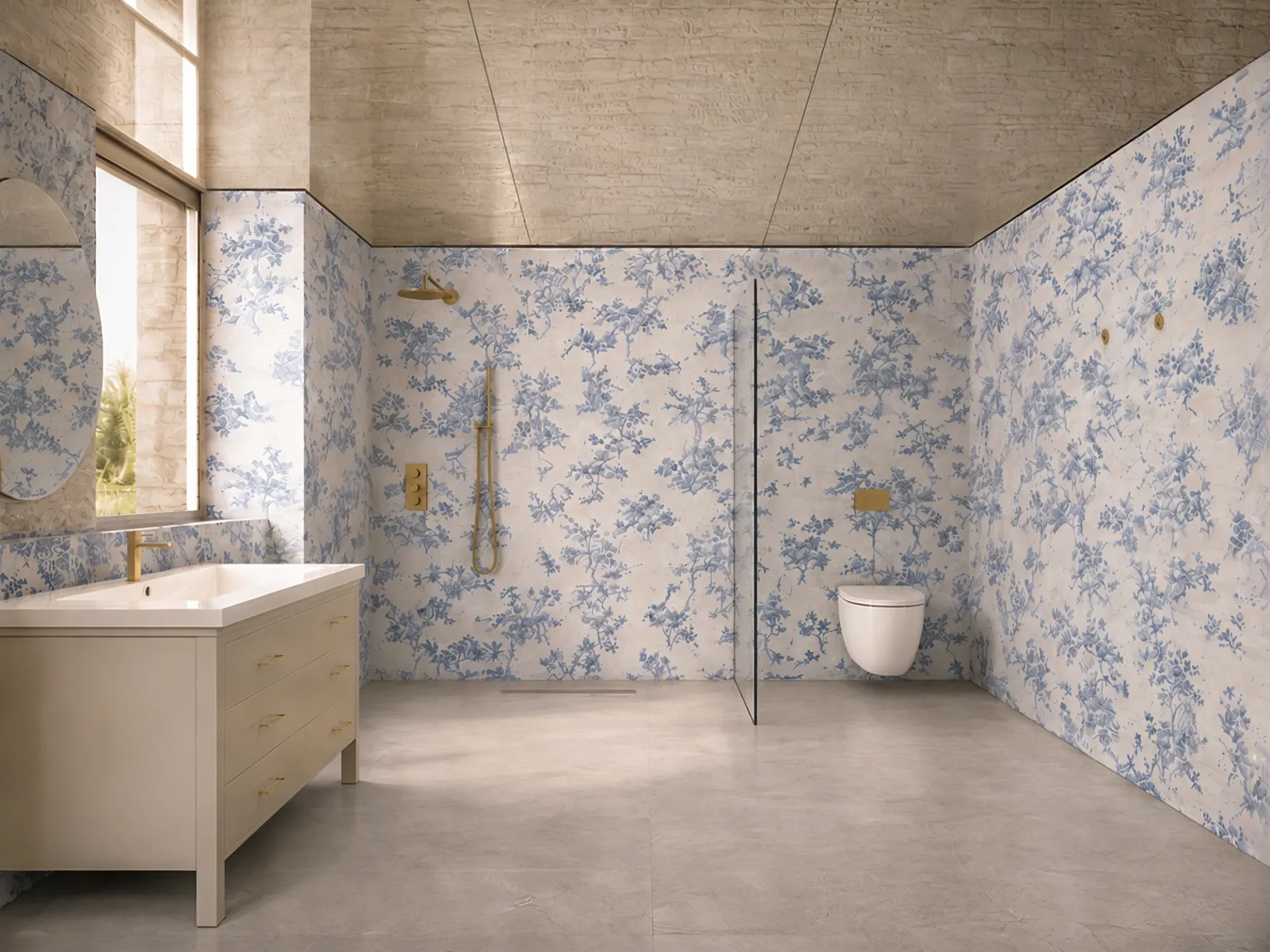
The bathrooms introduce a more expressive layer of materials through ceramic tiles with natural motifs, while remaining in harmony with the house’s serene character. These decorative patterns do not act as a departure from the overall concept, but rather as a softer counterpoint to the stone, wood, and neutral tones.
The bathroom with full-height ceilings and a glass skylight is particularly noteworthy; here, the functional design preserves the clarity of the verticality and allows for the penetration of natural light. In this way, even the secondary spaces become an integral part of the project’s broader architectural narrative.
A serene zone tucked under the roof
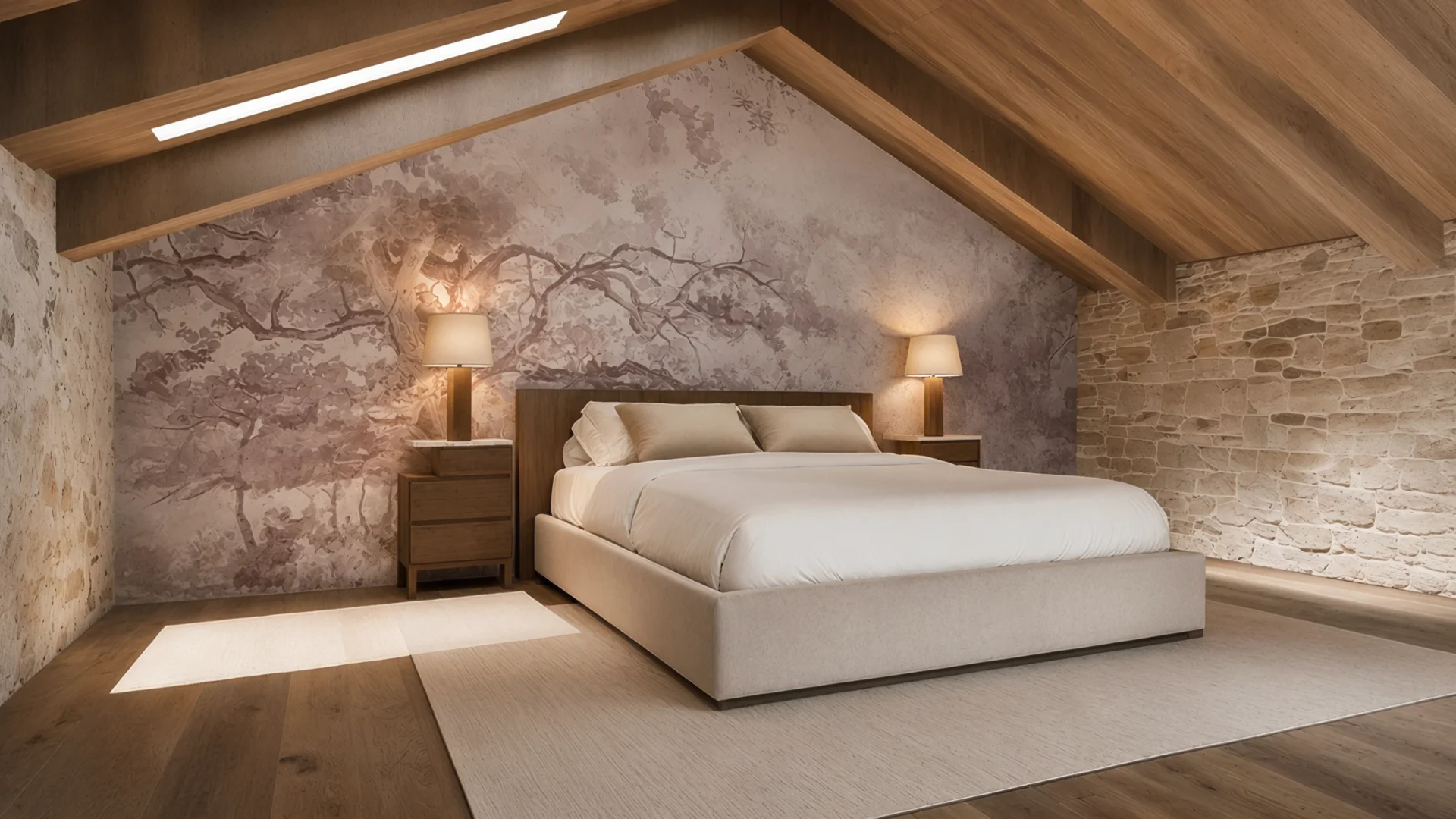
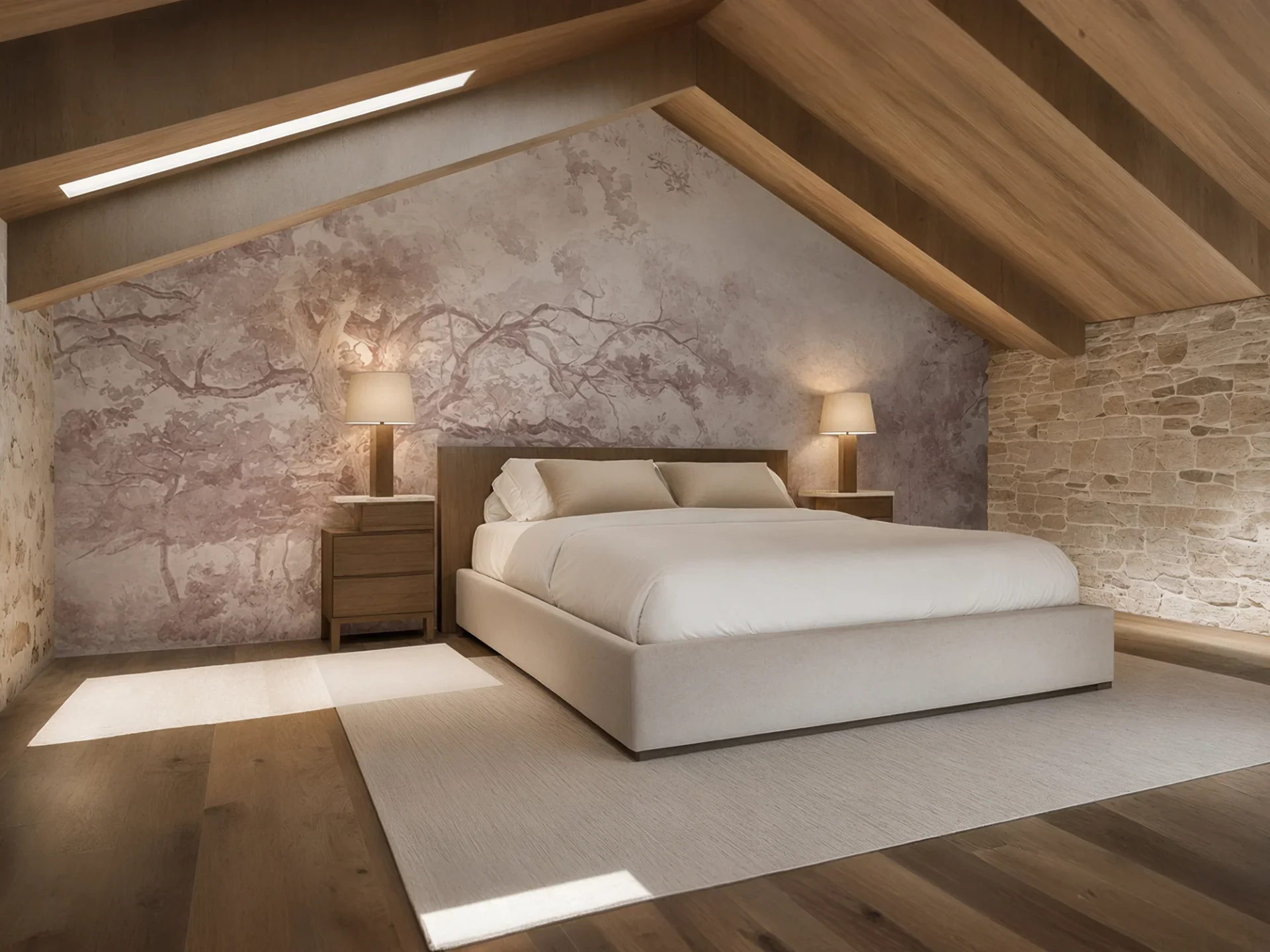
The mezzanine is the most secluded part of the house, nestled under the pitched roof alongside exposed wooden beams, stone walls, and skylights. The space is designed with a sense of serenity and intimacy, emphasizing light, materiality, and a feeling of shelter, while remaining clearly connected to the overall character of the home.
A studio apartment as a distinct yet connected entity
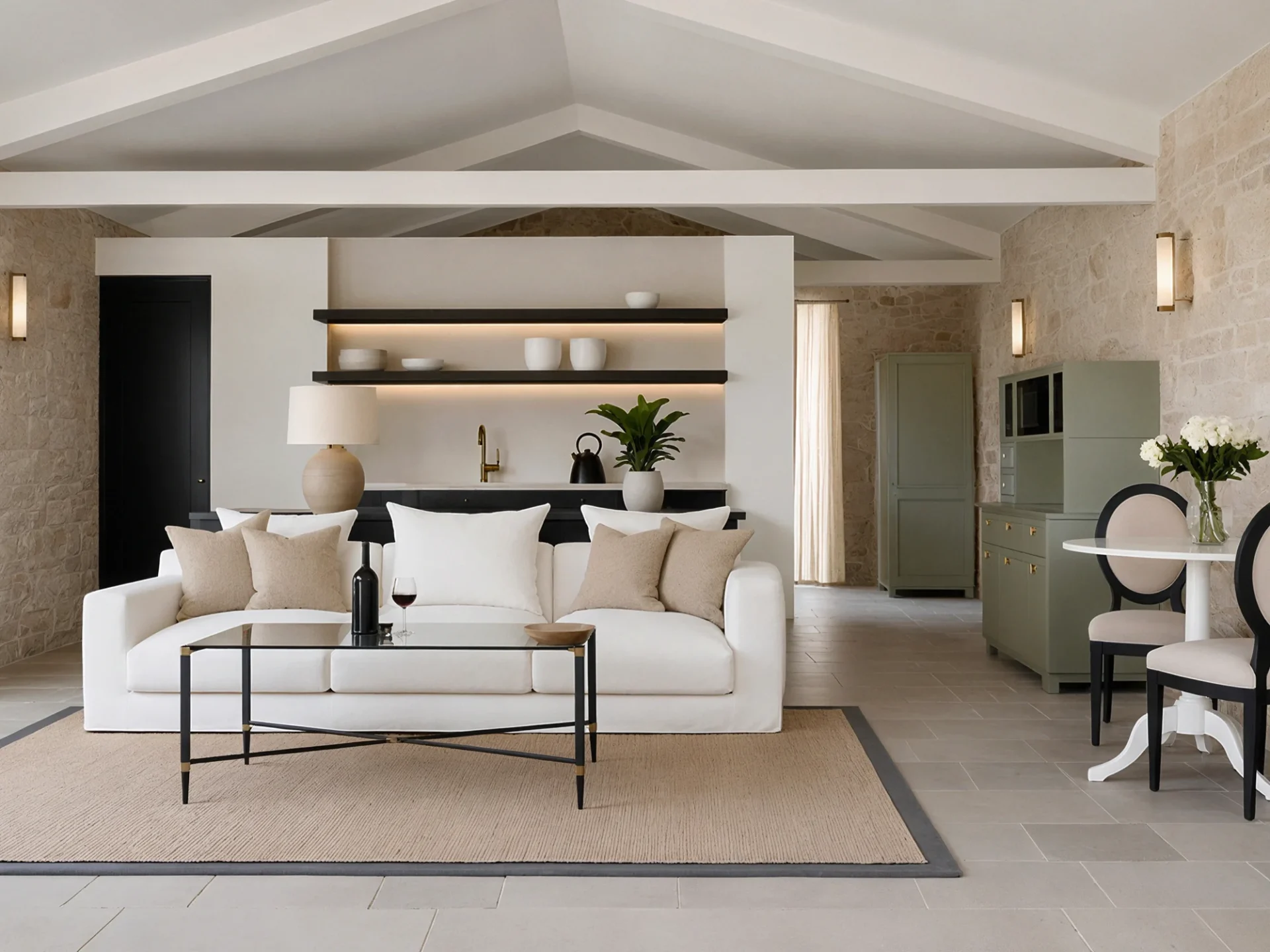
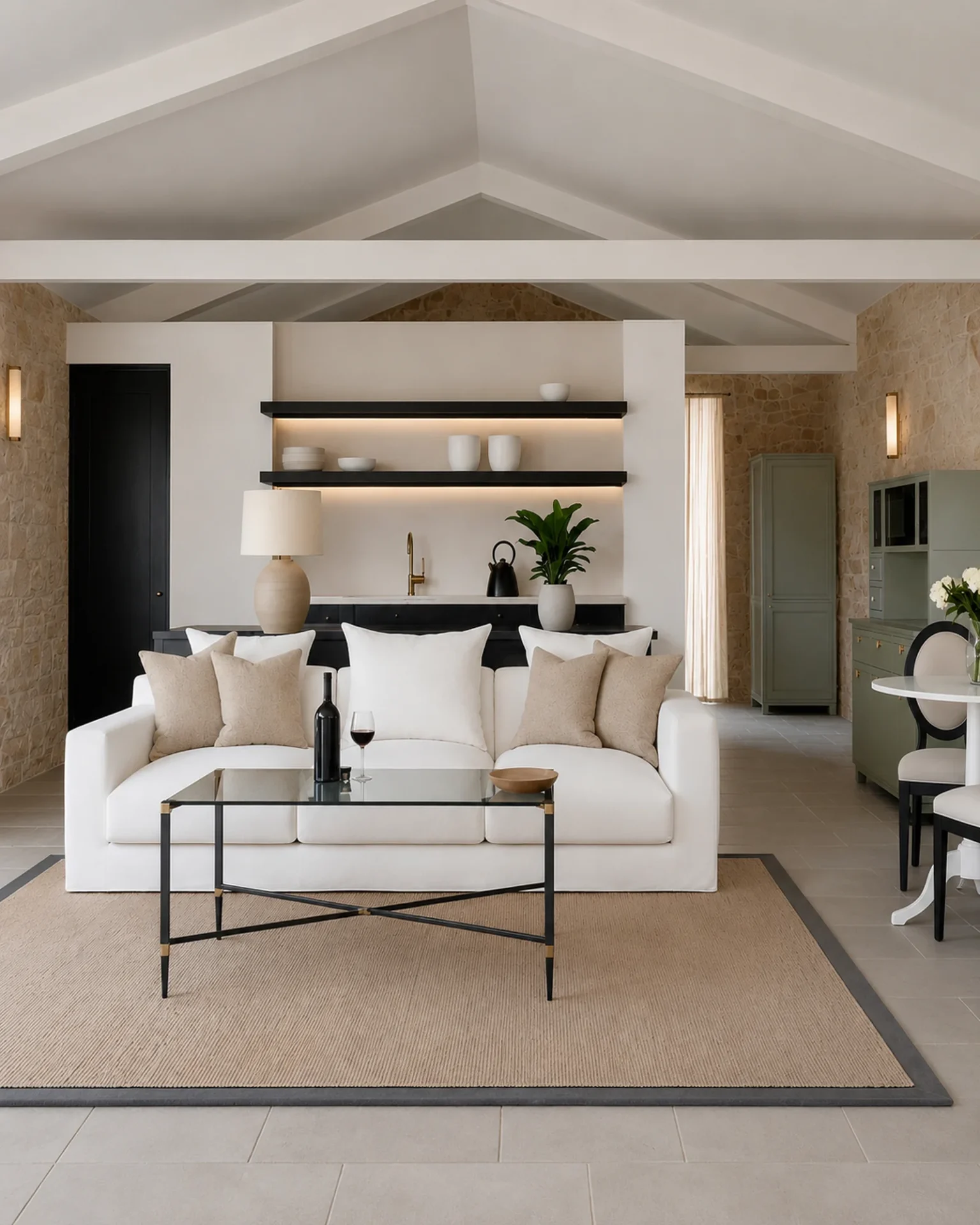
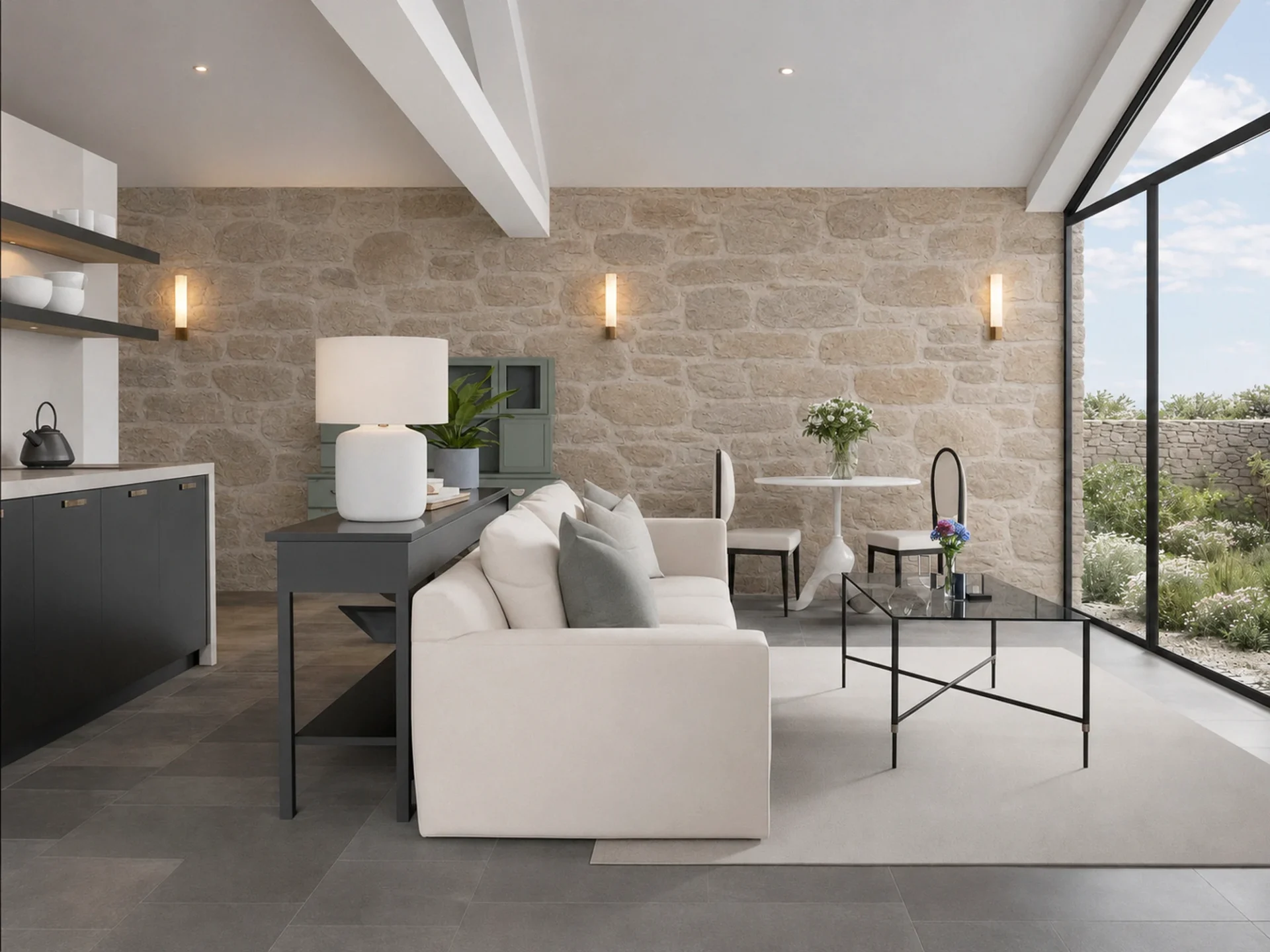
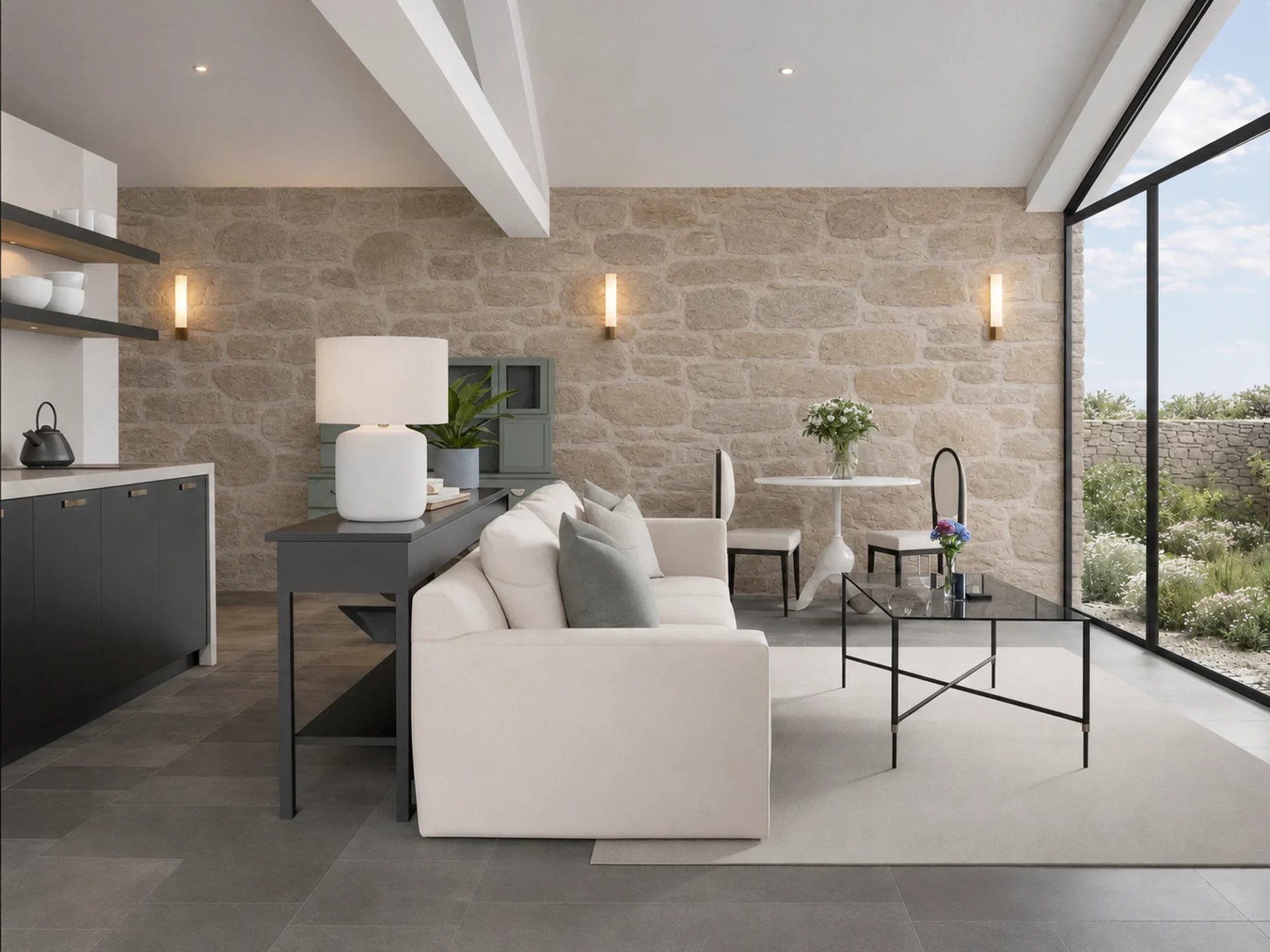
The auxiliary building is designed as a self-contained studio apartment featuring its own lounge, kitchenette, sleeping area, and bathroom. While functionally independent from the main house, it remains part of the same design narrative through its choice of materials, tones, and atmosphere.
The openness of the space, exposed stone walls, a serene palette, and carefully selected elements create a sense of comfort on a smaller scale. Thus, the studio does not feel like a secondary addition, but rather as an equally thoughtfully designed part of the property.
Outdoor spaces for living, gathering, and special occasions
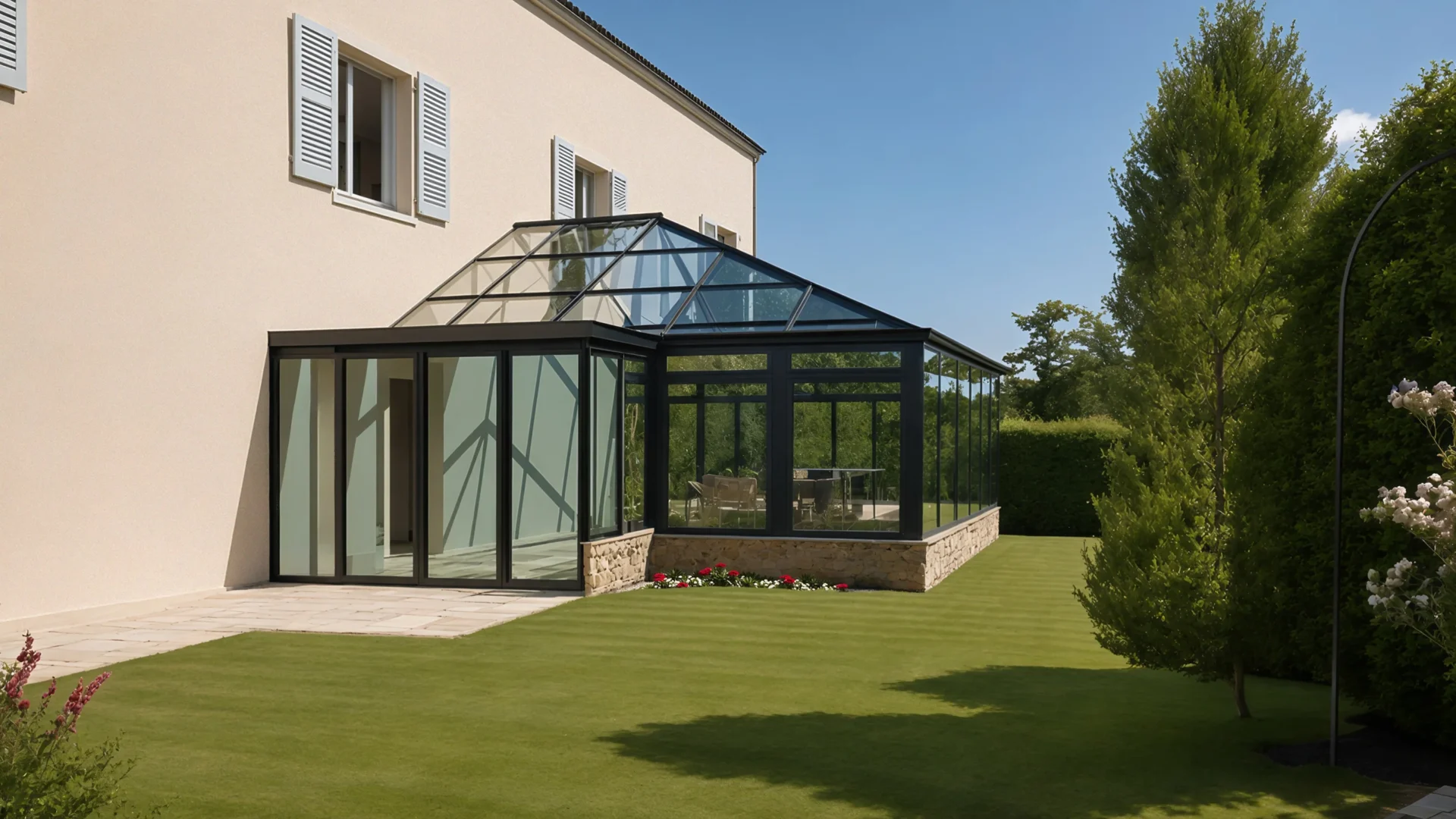
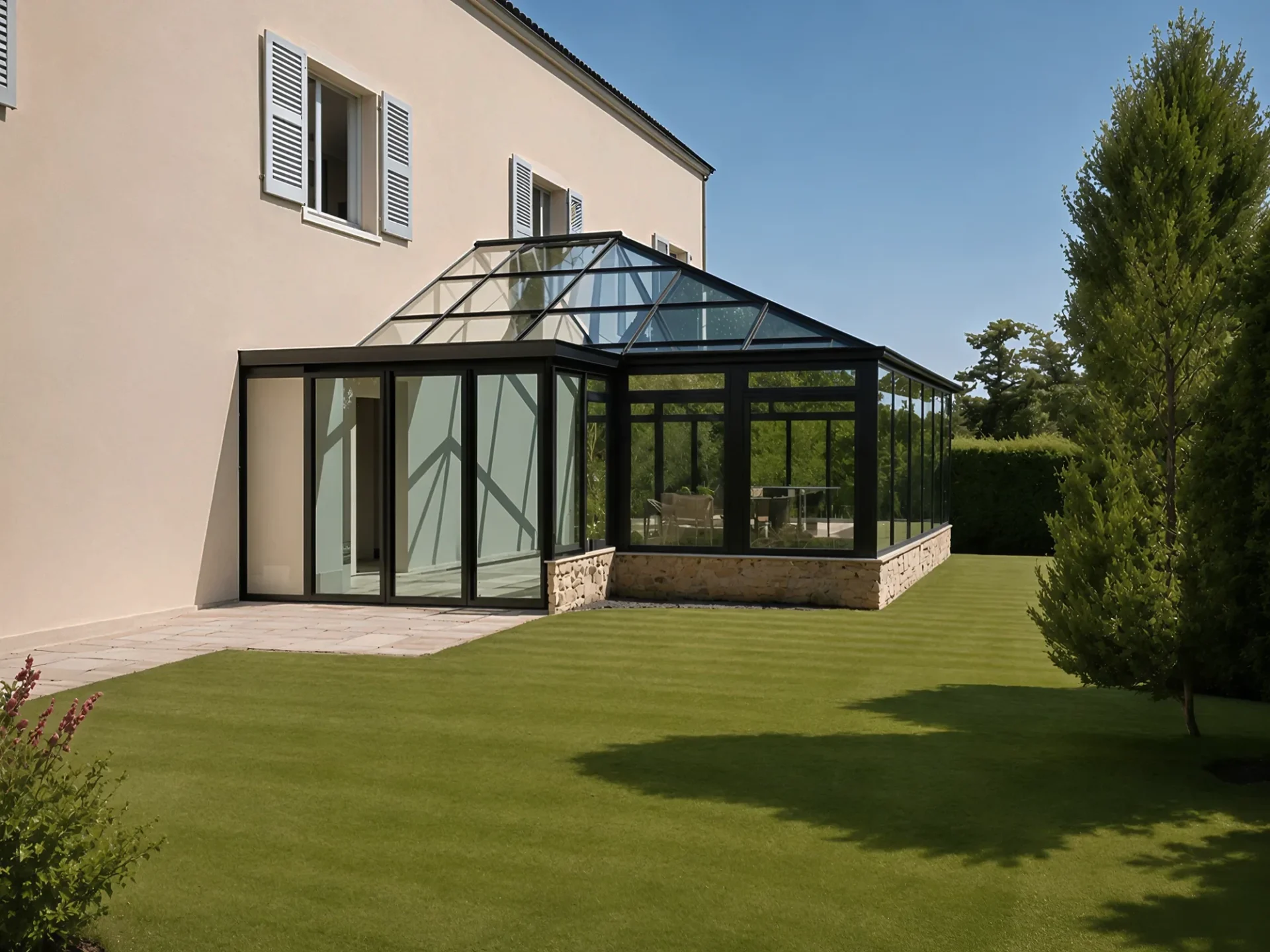
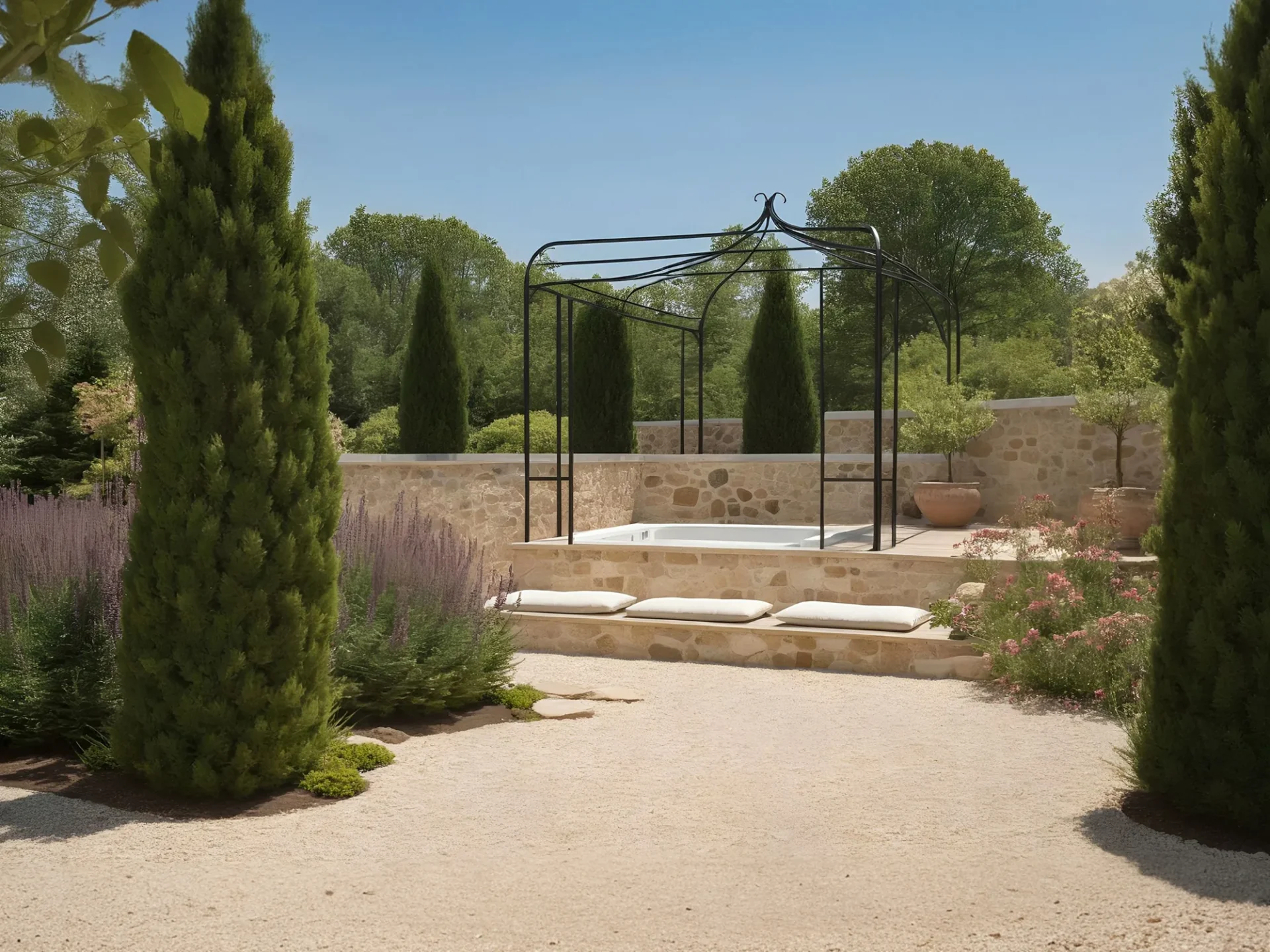
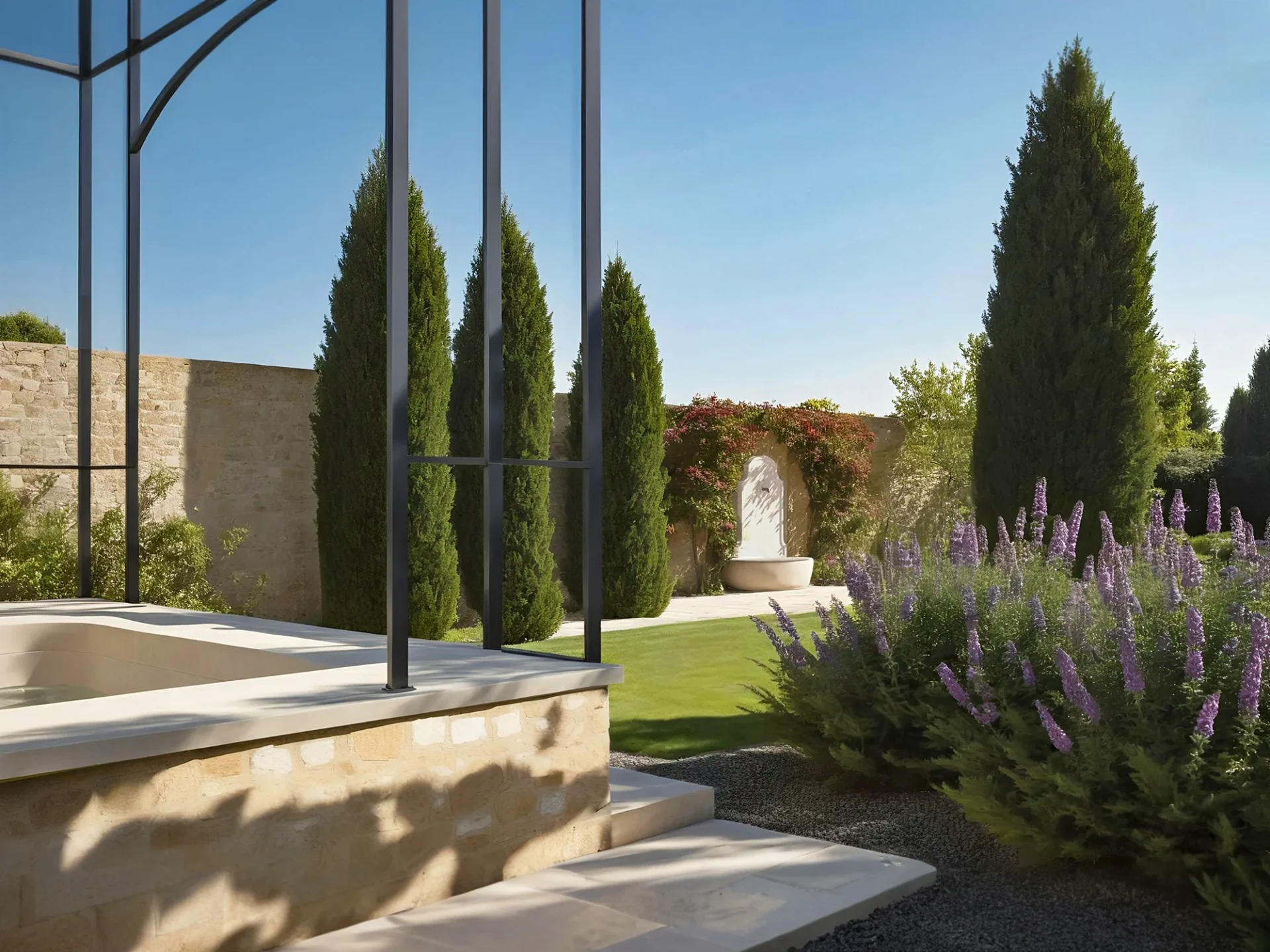
The exterior has been developed as an extension of the house, yet also as a space with its own distinct usage scenarios. The winter garden, jacuzzi zone, stone plateaus, and curated lounge areas create an ambiance perfect for everyday living, relaxation, and outdoor socializing.
The landscaped outdoor zones also serve a representative purpose. The space is ideal for small gatherings, intimate weddings, significant anniversaries, and other special occasions, where the landscape, stone, and architectural elements create a series of natural photographic frames.
A landscape that guides you through the property
Stone pathways, garden arches, lavender, cypresses, and existing walls create a rhythm of movement throughout the property. The landscape is not merely a backdrop for the house, but an integral part of the spatial organization, featuring intimate passages, green frames, and more open zones for living, socializing, and photography.
Details that preserve the memory of the space
The project incorporates custom-made furniture, a careful selection of materials, and the reinterpretation of existing pieces. The house is not treated as a neutral backdrop, but as a space with memory, character, and new functional value.
Wood, stone, metal, ceramics, and restored elements have been used with restraint. Rather than relying on overt decoration, the character of the space emerges from its proportions, materials, lighting, and the details that bridge the gap between the traditional structure and a contemporary way of living.
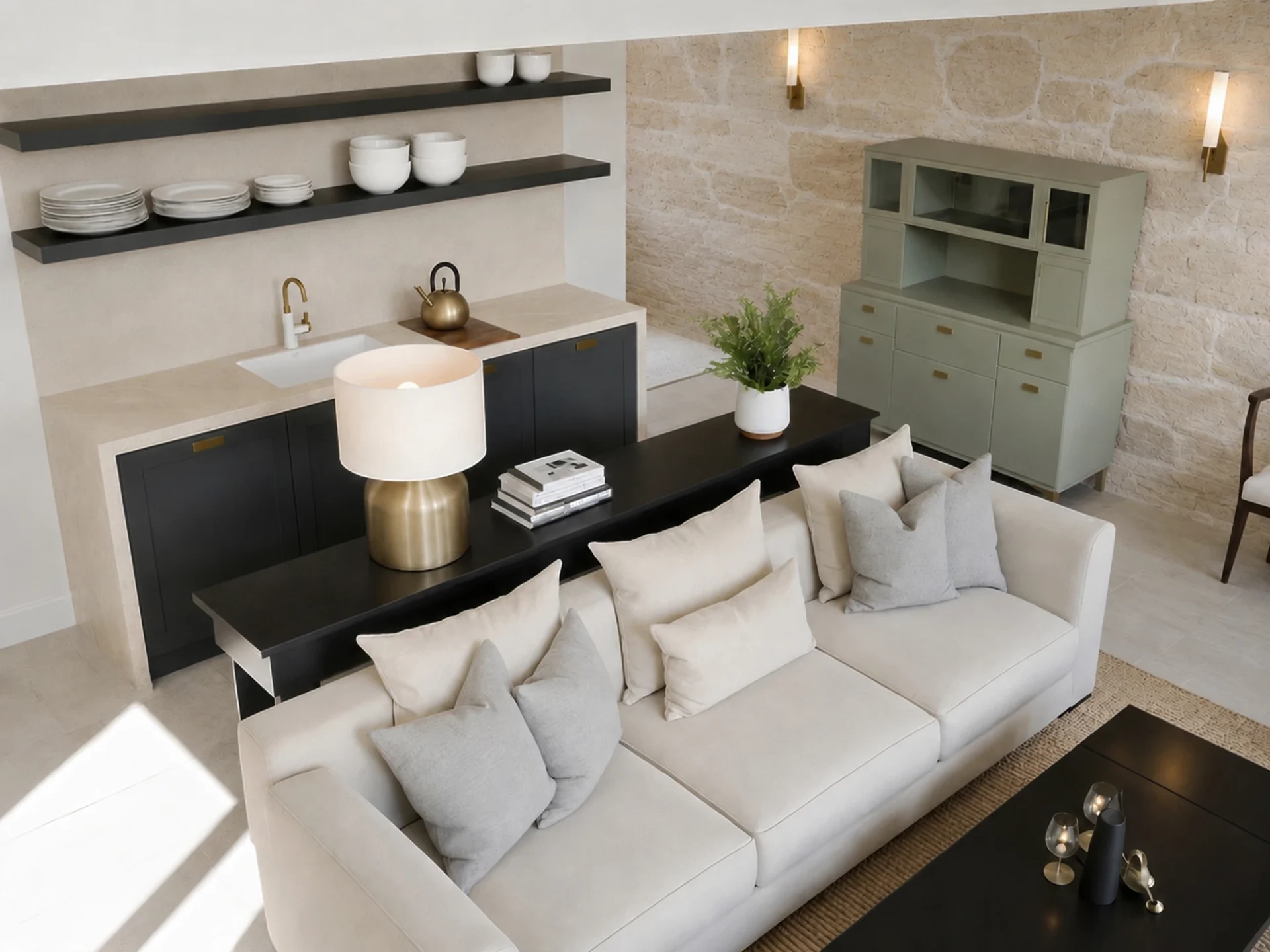
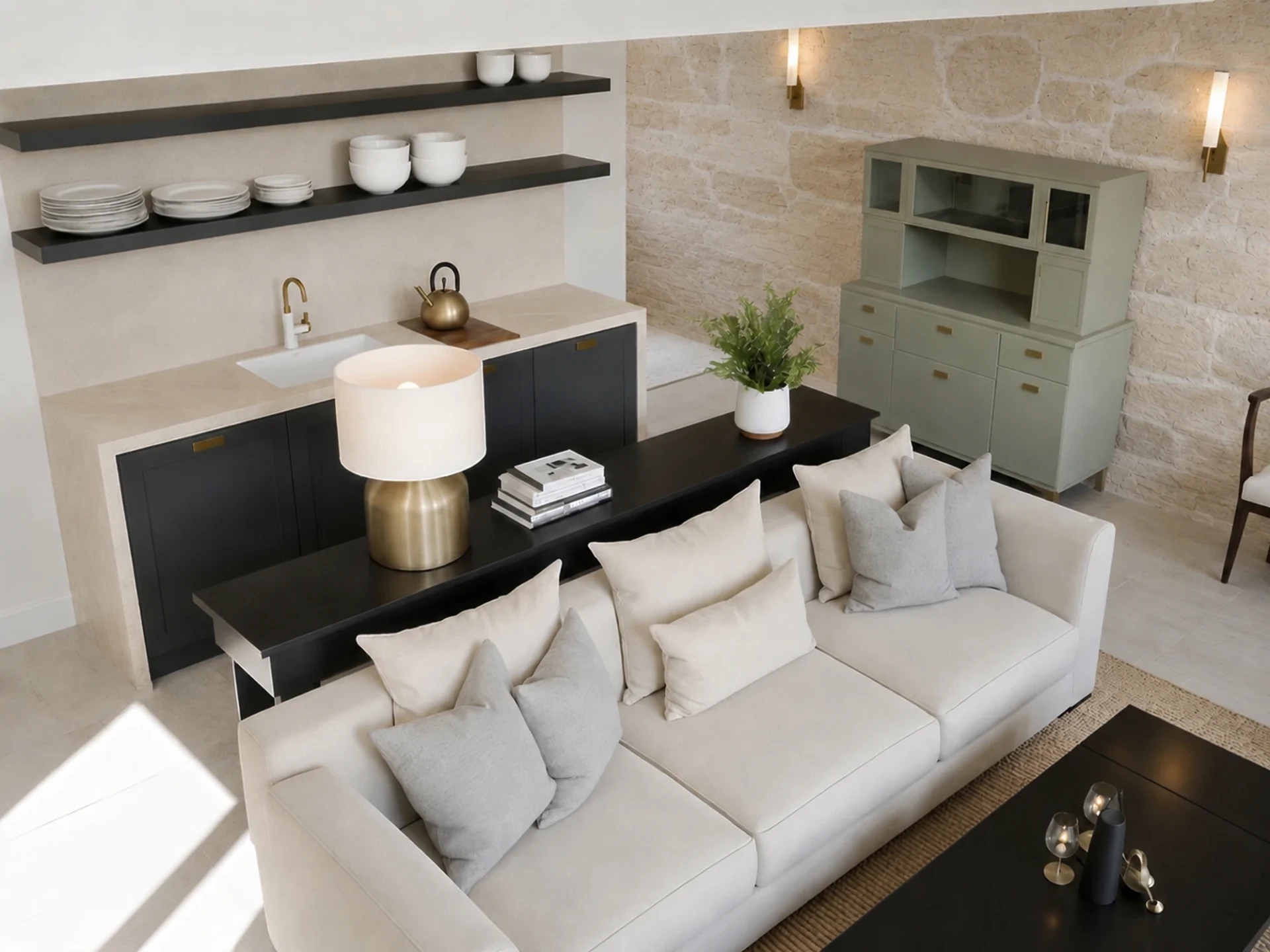
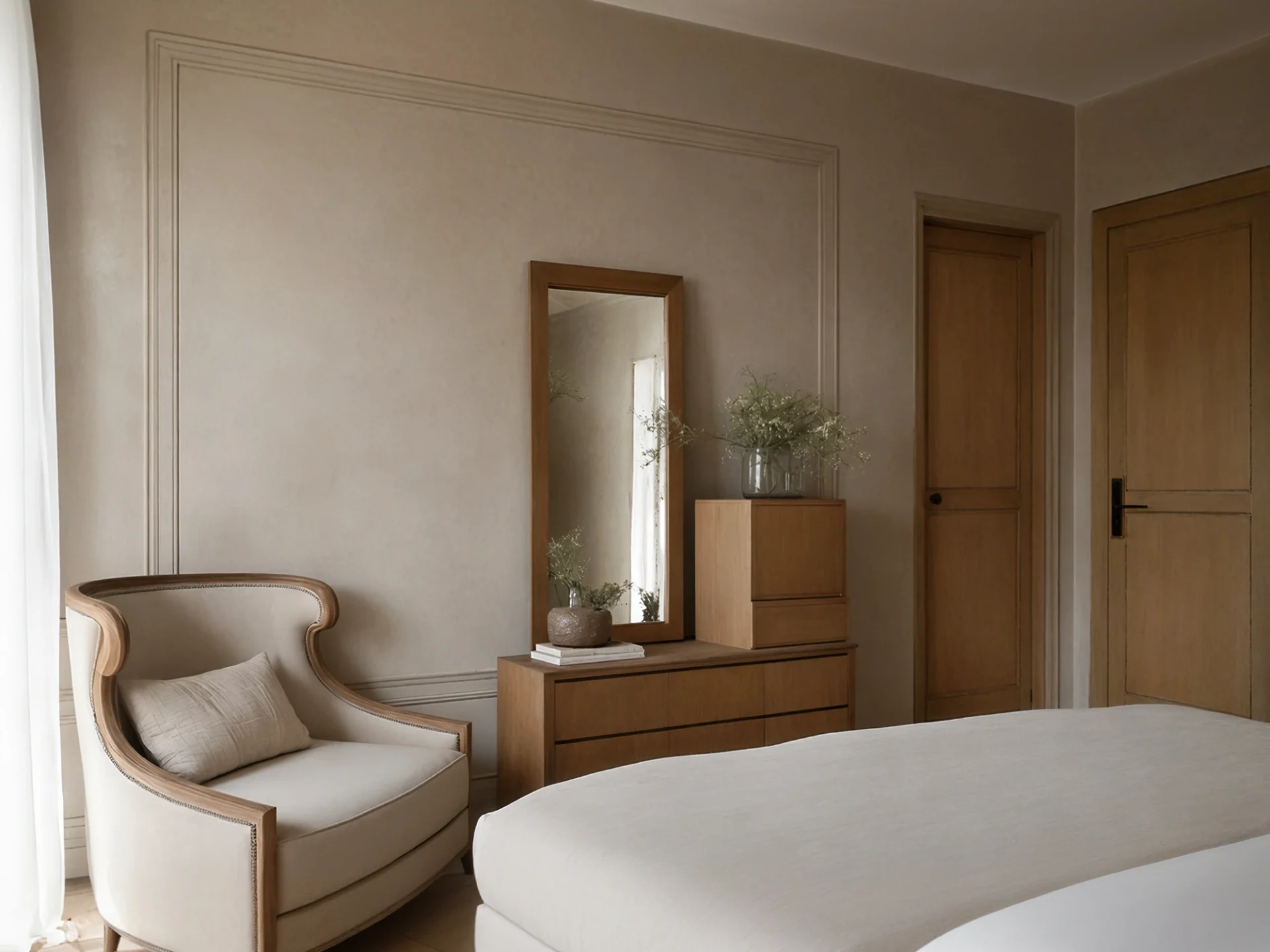
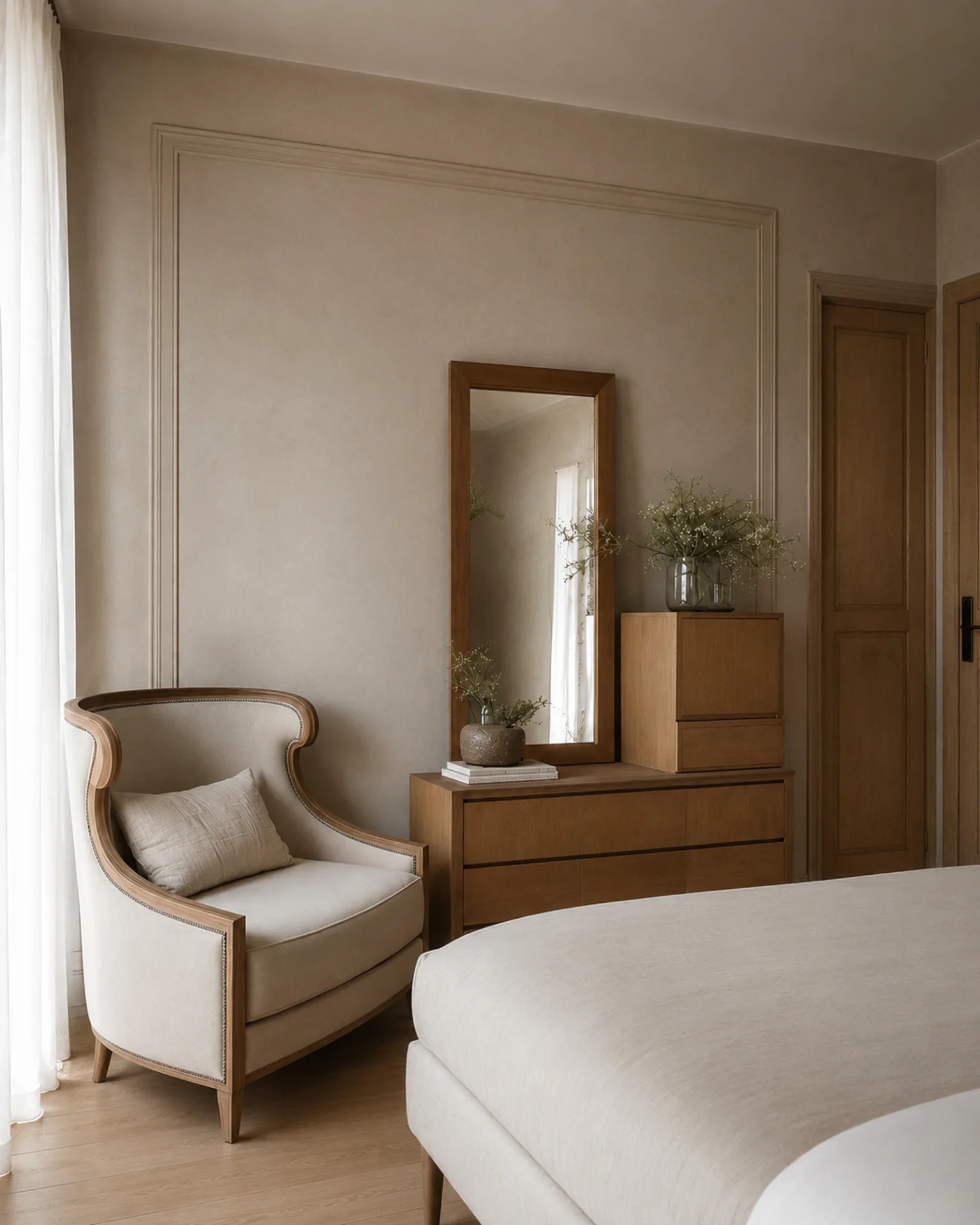
The stone house in Bokordići is designed as a space where existing architecture is not hidden, but instead becomes the foundation for a new way of life. The interior, exterior, auxiliary building, and landscape work together to create a serene, functional, and thoughtfully curated residential whole.